 Ghatkopar (East), Mumbai)


Home > Gastroenterology > Endoscopy and Colonoscopy
Endoscopy and Colonoscopy
Advanced Diagnostic and Therapeutic Gastrointestinal Procedures
Endoscopy and colonoscopy are essential diagnostic procedures for detecting and treating conditions of the digestive tract.
At Shree Hospitals, our specialist gastroenterologists perform advanced upper and lower GI endoscopic procedures using the latest high-definition technology to deliver accurate diagnoses and effective treatment with minimal discomfort.
Digestive Symptoms? Get an Expert Endoscopy Assessment Today
Quick facts
Procedure Type: Diagnostic and Therapeutic
Upper GI Endoscopy Duration: 15 to 30 minutes
Colonoscopy Duration: 30 to 60 minutes
Hospital Stay: Outpatient (same day discharge)
Type of Anaesthesia: Conscious sedation or general anaesthesia
Support Team: Gastroenterologists, endoscopy nurses, anaesthetists
Key Benefit: Accurate diagnosis and treatment of digestive conditions in a single procedure
What is Endoscopy and Colonoscopy?
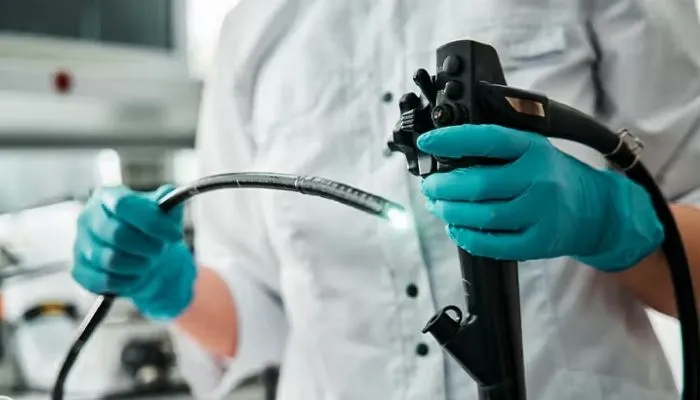
Upper GI endoscopy (also called gastroscopy) is a minimally invasive procedure in which a thin, flexible tube fitted with a high-definition camera called an endoscope is passed through the mouth to examine the oesophagus, stomach, and the upper part of the small intestine (duodenum). It is used to diagnose conditions such as GERD, gastritis, peptic ulcers, and oesophageal cancer.
Colonoscopy is a procedure in which a longer, flexible endoscope is passed through the rectum to examine the full length of the large intestine (colon). It is the gold standard for detecting polyps, colorectal cancer, inflammatory bowel disease, ulcers, and lower GI bleeding. During colonoscopy, biopsies can be taken and polyps can be removed at the same session.
At Shree Hospitals, our experienced gastroenterologists perform both upper and lower GI endoscopic procedures using high-definition equipment in a dedicated endoscopy suite. All procedures are performed under conscious sedation or general anaesthesia for maximum patient comfort and safety.
When Should You Consult a Gastroenterologist?
You should seek specialist evaluation if you experience:
- Persistent heartburn, acidity, or acid reflux not controlled by medication
- Unexplained abdominal pain or bloating
- Blood in vomit or stools
- Unexplained weight loss or loss of appetite
- Difficulty swallowing (dysphagia)
- Change in bowel habits lasting more than 2 weeks
Do not delay assessment of these symptoms as early diagnosis significantly improves outcomes.
Is Endoscopy or Colonoscopy Right for You?
Endoscopy or colonoscopy may be recommended if you:
- Have symptoms suggesting upper GI disease such as GERD, gastritis, or peptic ulcers
- Require screening colonoscopy (age 45+ or family history of colon cancer)
- Have been diagnosed with inflammatory bowel disease requiring regular monitoring
- Have had a positive stool blood test (FOBT or FIT)
- Have your doctor recommend endoscopy or colonoscopy based on your individual symptoms
Our gastroenterologists will determine the most appropriate procedure for your case.
Why Expert Endoscopic Assessment Matters?
Early endoscopic detection of gastrointestinal conditions provides significant clinical advantages:
- Colorectal cancer detected early has a survival rate of over 90%
- Biopsies enable accurate tissue diagnosis without surgery
- Polyps can be removed at the same session preventing cancer development
- Therapeutic procedures such as banding and haemostasis are performed immediately
- Avoids unnecessary surgery through non-invasive, same-session treatment
Colorectal cancer detected early through colonoscopy has a survival rate of over 90%.
24×7 Emergency Care
Our Approach to Endoscopy and Colonoscopy
At Shree Hospitals, our gastroenterology team combines advanced endoscopic technology with a patient-centred approach to every procedure.
From pre-procedure preparation and sedation to real-time high-definition imaging and immediate therapeutic intervention, we ensure every patient receives the highest standard of diagnostic and therapeutic endoscopic care.
24×7 Emergency Care
Thorough Pre-Procedure Assessment
Before every endoscopy or colonoscopy, our gastroenterologists review your medical history, current medications, and specific clinical concerns. Detailed instructions on bowel preparation (for colonoscopy) and fasting requirements are provided to ensure optimal procedure conditions and image quality.
High-Definition Endoscopic Technology
We use the latest high-definition endoscopy systems with narrow band imaging (NBI) capability to detect subtle mucosal changes that may be missed on standard equipment. This significantly improves polyp detection rates and early cancer identification.
Diagnostic and Therapeutic Capability
Our endoscopy suite is fully equipped to perform both diagnostic and therapeutic procedures in a single session. Biopsies, polyp removal, bleeding control, banding, and stenting can all be performed without the need for a separate procedure or hospital admission.
Comfort-Focused Patient Care
All procedures are performed under conscious sedation or general anaesthesia for maximum patient comfort. Our experienced endoscopy nursing team ensures you are fully informed, comfortable, and well-supported before, during, and after your procedure.
Top Gastroenterologists in Mumbai at Shree Hospitals
Every specialist at Shree Hospitals is board-certified and has an average of 15+ years of clinical experience in diagnostic and therapeutic endoscopy, colonoscopy, and gastrointestinal disease management.
24×7 Emergency Care

Dr. Keyur A. Sheth
Gastroenterologist, Hepatologist & Advanced GI

Dr. Sandeep Kirit Davavala
Gastroenterology, Therapeutic Endoscopy
Gastroenterology Services at Shree Hospitals
We offer a full range of gastroenterology and hepatology services including upper and lower GI endoscopy, colonoscopy, ERCP, polypectomy, endoscopic banding, liver biopsy, hepatitis treatment, and IBD management, all supported by specialist gastroenterologists and a dedicated endoscopy suite.
Polypectomy (Colon Polyp Removal)
Safe and effective endoscopic removal of colon polyps during colonoscopy. Removing pre-cancerous adenomatous polyps reduces colorectal cancer risk by up to 80% without the need for surgery.
ERCP (Bile Duct Procedure)
Specialised endoscopic procedure for diagnosis and treatment of bile duct stones, strictures, and biliary obstruction. ERCP achieves non-surgical stone removal and biliary stenting in over 90% of cases.
Antiviral Therapy (Hepatitis)
Evidence-based antiviral treatment for chronic hepatitis B and C. Modern direct-acting antiviral therapy cures hepatitis C in over 95% of patients within 8 to 12 weeks, preventing cirrhosis and liver cancer.
Liver Biopsy
Definitive ultrasound-guided liver tissue diagnosis for accurate staging of liver disease and fibrosis. Results guide antiviral, immunosuppressive, or other treatment decisions for chronic liver conditions.
Step by Step Process of Endoscopy and Colonoscopy at Shree Hospitals
Thousands of successful endoscopic procedures performed by our specialists over 25+ years
Step 1 - Consultation and Procedure Planning
Your gastroenterologist reviews your symptoms, medical history, and any previous investigations. The most appropriate procedure (upper GI endoscopy, colonoscopy, or both) is recommended. Instructions on preparation, fasting, and medication adjustments are provided.
Step 2 - Pre-Procedure Preparation
For colonoscopy, a bowel preparation solution is taken the day before to fully cleanse the colon for clear visualisation. For upper endoscopy, you fast for 6 to 8 hours beforehand. An IV cannula is placed and pre-procedure checks are completed on admission.
Step 3 - Sedation and Patient Comfort Conscious sedation or general anaesthesia is administered by a qualified anaesthetist. Most patients drift into a relaxed, drowsy state and have no memory of the procedure. Oxygen saturation and heart rate are monitored continuously throughout.
Step 4 - Endoscopic Examination
The endoscope is passed gently through the mouth (upper GI) or rectum (colonoscopy). The gastroenterologist examines the mucosal lining in detail using high-definition imaging. The entire procedure is recorded and documented.
Step 5 - Biopsy or Therapeutic Intervention
If required, biopsies are taken from suspicious areas using forceps passed through the endoscope. Polyps are removed, bleeding is controlled, and other therapeutic interventions are performed at the same session. All specimens are sent for histological analysis.
Step 6 - Recovery and Post-Procedure Report
You recover in our endoscopy recovery area until the sedation has fully worn off. A detailed procedure report and, where applicable, biopsy result instructions are provided before discharge. A follow-up appointment is arranged for results and further management.
Patient Questions About Endoscopy and Colonoscopy
Do I need to be sedated for endoscopy or colonoscopy?
Sedation is strongly recommended for both upper GI endoscopy and colonoscopy for maximum comfort. We offer conscious sedation (a relaxing, pain-relieving combination of medications) and in some cases general anaesthesia. Most patients have little or no memory of the procedure and find it far more comfortable than they anticipated. You will need to arrange transport home as you will not be able to drive after sedation.
How do I prepare for a colonoscopy?
Colonoscopy preparation involves following a low-residue diet for 1 to 2 days before the procedure and taking a bowel preparation solution the day before to clear the colon. Good bowel preparation is essential for a high-quality examination. Your care team will provide detailed written preparation instructions. Tell your doctor about all medications you take, particularly blood thinners, as these may need to be temporarily stopped.
How long does an endoscopy or colonoscopy take?
A diagnostic upper GI endoscopy typically takes 15 to 30 minutes. A colonoscopy takes 30 to 60 minutes, though this varies depending on how many polyps are found and removed. Allow 2 to 3 hours in total for the procedure, including preparation, recovery, and discharge. You should plan to rest for the remainder of the day after the procedure.
When will I get my results?
Your gastroenterologist will provide a verbal summary of visual findings immediately after the procedure before you leave the recovery area. If biopsies were taken, laboratory results typically take 5 to 10 working days. A follow-up appointment will be arranged to discuss biopsy results and any recommended next steps in detail.

Evidence-Based Case Studies by Our Specialists
Would Recommend Us
"I had no symptoms at all but my doctor recommended an endoscopy after my father was diagnosed with stomach cancer.
The team at Shree Hospitals found an early lesion. Catching it at this stage has made all the difference."
Mr. Ramesh K.
"My colonoscopy found three polyps. The doctor removed them all at the same time and the results showed they were pre-cancerous.
I am so glad I had the procedure. The Shree Hospitals team made me feel completely at ease."
Mrs. Sunita D.
"I was anaemic for months and nobody could find the cause.
After endoscopy at Shree Hospitals, a peptic ulcer was found immediately. With the right treatment I have made a complete recovery."
Mr. Vikram P.
Patient
Resources

Schedule
consultation

Billing &
Payments

Hospital
Facilities
24×7 Emergency Care

1800-268-4000

Follow Us

Shree
Hospitals

Shree
Hospitals
