 Ghatkopar (East), Mumbai)


Reconstructive Urology Surgery in Mumbai
Expert Repair for Complex Urinary Conditions
Some urological problems do not respond to a simple procedure or a course of medication – they require rebuilding. Reconstructive urology surgery in Mumbai at Shree Hospitals exists for the patients that standard treatments could not reach: the man with a recurrent urethral stricture that has narrowed his urethra to a thread after years of dilations; the patient who needs bladder reconstruction following cancer surgery; and the woman with a complex vesicovaginal fistula after obstetric injury.
This is complex urology surgery at its most demanding - drawing on microsurgical technique, tissue transfer, and an intimate knowledge of the anatomy and physiology of the entire urinary tract.
Our reconstructive urology team at Shree Hospitals specialises in exactly these presentations - the cases where precision matters most and experience is the critical variable.
Don't Ignore Urinary Symptoms. Get Timely Urology Care Today.
Quick facts
Type & Duration: Urethroplasty, bladder reconstruction, or urinary tract reconstruction; 2 to 6 hours depending on complexity
Hospital Stay: 3 to 7 days; catheter-dependent period may extend to 3 to 6 weeks post-operatively
Recovery Time: Return to light activity in 3 to 6 weeks; full recovery 2 to 3 months
Type of Anaesthesia: General anaesthesia; spinal for shorter lower tract cases
Type of Surgery: Open or laparoscopic-assisted reconstruction - incision complexity varies with anatomy
Type of Assistance: Pre-operative urethrogram / cystoscopy / MRI mapping, reconstructive surgical procedure, catheter management, voiding cystourethrogram confirmation of repair integrity, long-term surveillance
What is Reconstructive Urology Surgery?
Reconstructive urology is the subspecialty that restores normal urinary function when disease, injury, cancer surgery, or prior failed procedures have damaged the structures of the urinary tract beyond what endoscopic or medical treatment can address.
It encompasses a spectrum of operations - from a straightforward anterior urethroplasty for a single urethral stricture in a young man to complex bladder reconstruction with the creation of a continent urinary reservoir after radical cystectomy for bladder cancer.
The most common reconstructive urology procedure is urethroplasty - open surgical repair of a urethral stricture. The urethra is a tube that carries urine from the bladder to the outside; scarring from infection, trauma, instrumentation, or radiation causes it to narrow, producing a progressively weakening urinary stream, straining to void, and in severe cases, urinary retention.
Direct vision internal urethrotomy (DVIU) - incising the scar endoscopically - is a common first step, but strictures above 1.5cm rarely respond to a single urethrotomy and recur repeatedly. Urethroplasty excises or bypasses the scarred segment using the patient's own tissue - either local penile skin or buccal mucosa harvested from the inside of the cheek - achieving long-term patency rates above 85% for primary cases.
Beyond urethral stricture, urinary tract reconstruction at Shree Hospitals includes: ureteric stricture repair, pyeloplasty, vesicovaginal fistula closure, neobladder creation, urinary diversion, and vas deferens reconstruction for male fertility.
Each of these represents a distinct technical challenge, but they share the common principle that precise anatomy, meticulous tissue handling, and long-term follow-up are the foundations of success.
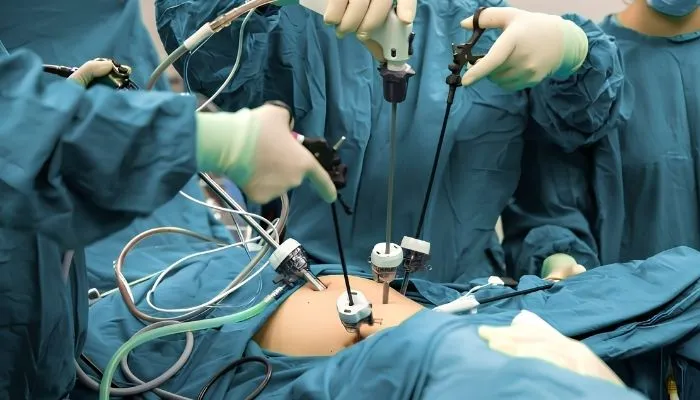
Conditions We Treat With Reconstructive Surgery
- Urethral stricture - bulbar, penile, membranous, panurethral
- Vesicovaginal fistula - abnormal connection between bladder and vagina
- Ureteric stricture - benign or post-oncological
- Pelviureteric junction (PUJ) obstruction - requiring pyeloplasty
- Bladder neck contracture - post-prostatectomy or post-TURP
- Urinary fistula following pelvic surgery, radiation, or obstetric injury
When Is Reconstructive Surgery the Right Path?
- Urethral stricture confirmed on retrograde urethrogram - length, location, and depth defined
- Failure of two or more dilatations or DVIU procedures - definitive repair required
- Complex urology surgery indication following cancer surgery: cystectomy, prostatectomy, or pelvic radiotherapy
- Vesicovaginal fistula not healing with conservative management
- Ureteric injury following pelvic or retroperitoneal surgery requiring urinary tract reconstruction
- Patient desire to move beyond endoscopic temporising to definitive anatomical correction
Why Reconstructive Urology Requires Specialist Referral?
- Stricture length, location, and associated spongiofibrosis determine which urethroplasty technique is appropriate - not all urologists plan this decision correctly
- Buccal mucosal graft harvest requires specific technique to avoid donor site complications
- Bladder reconstruction - neobladder vs ileal conduit vs continent diversion - is a multidisciplinary decision with long-term quality-of-life consequences
- Redo surgery after failed reconstruction requires knowledge of prior technique and resulting anatomy
- Oncological history (radiation, previous surgery) significantly complicates tissue healing - and must inform surgical planning
- Long-term surveillance after urethral stricture repair prevents late recurrence from becoming symptomatic obstruction
If you have been dilated three times for the same stricture and the stream has narrowed again within 6 months each time, you are not on the wrong treatment schedule - you are on the wrong treatment.
Urethroplasty solves what dilation manages.
24×7 Emergency Care
Our Approach to Reconstructive Urology Surgery
Reconstructive urology is built on pre-operative planning, technique selection, and long-term follow-up.
We do not offer a single technique for all strictures - we assess each case fully, select the appropriate reconstruction, and measure the outcome at every follow-up visit.
24×7 Emergency Care
Comprehensive Pre-Operative Stricture Mapping
Before every urethroplasty, a retrograde urethrogram and ascending urethrogram (combined study) defines the full stricture anatomy - length, location (anterior or posterior urethra), calibre at the narrowest point, and length of healthy urethra above and below. MRI urethrogram is increasingly used for complex membranous strictures following prostatectomy - mapping the length of posterior urethral distraction defects that determine whether a spatulated anastomosis is achievable.
Technique Selection Based on Stricture Length
Short bulbar strictures (under 2cm) are treated by excision and primary anastomosis - the gold standard for bulbar disease, with 10-year patency rates above 90%. Longer strictures require augmentation urethroplasty using buccal mucosal graft - harvested from the inner cheek and inlaid or onlaid onto the opened urethral plate. Penile and panurethral strictures, posterior urethral stricture, and radiation-damaged urethra each have specific technique considerations that our team maps before making the surgical plan.
Bladder Reconstruction Planning With Multidisciplinary
Input Bladder reconstruction following cystectomy - whether neobladder (using bowel to create a new bladder connected to the urethra) or ileal conduit (urine diverted to a stoma) - is a decision with major quality-of-life implications. Our team presents both options with honest data on continence rates, complication profiles, and long-term function. Complex urology surgery of this magnitude requires patient education, bowel preparation, nutritional optimisation, and a detailed post-operative nursing and rehabilitation plan.
Post-Operative Catheter Management and Voiding Confirmation
After urethroplasty, the urethra is splinted with a urethral catheter for 3 to 6 weeks - allowing the anastomosis or graft to heal before the patient voids. Catheter duration is determined by stricture complexity. Voiding cystourethrogram - a post-operative imaging study - confirms the repair is watertight and patent before the catheter is removed. Uroflowmetry at 3, 6, and 12 months confirms sustained patency and detects early recurrence.
Top Reconstructive Urologists in Mumbai
Complex urology surgery is a field where experience is the determining variable between a good outcome and a failed repair. Our reconstructive urology team at Shree Hospitals manages referred urethral stricture cases from across Maharashtra - including redo procedures after failed urethroplasty elsewhere - and participates in the full spectrum of urinary tract reconstruction including post-cystectomy diversion, vesicovaginal fistula repair, and pyeloplasty.
24×7 Emergency Care

Dr. Shyam Mohan
Robotic Urological Surgery, Uro-Oncology

Dr. Alap Mehendale
Urologist, Andrologist, Kidney Transplant Surgeon
Related Urology Treatments at Shree Hospitals
Reconstructive urology addresses the most complex urinary tract problems - but our programme spans the full urology spectrum from simple stone surgery to cancer care
Robotic Urology Surgery
Robot-assisted radical prostatectomy and cystectomy; the oncological surgery that sometimes necessitates subsequent reconstruction.
TURP Surgery
For BPH-related obstruction; bladder neck contracture post-TURP is a specific reconstructive challenge.
Varicocele Surgery
Includes vas deferens reconstruction for male fertility - part of our reproductive reconstruction programme.
Laser Kidney Stone Surgery
For concurrent stone disease in patients with urinary tract abnormalities addressed by our reconstructive team.
Step by Step Process of Reconstructive Urology Surgery
Step 1 - Stricture Mapping, Multidisciplinary Review & Surgical Planning
Retrograde urethrogram and voiding cystourethrogram are reviewed to map stricture length, location, and posterior urethral anatomy. Prior operative notes, dilatation history, and any relevant oncological history (radiation, prostatectomy) are reviewed. The urethroplasty technique is selected - anastomotic for short bulbar strictures, buccal mucosal graft augmentation for longer or penile strictures. Buccal mucosal graft harvest requires dental consultation to confirm no oral mucosal disease. Pre-operative optimisation includes smoking cessation advice (critical for tissue healing), nutritional assessment, and antibiotic prophylaxis planning.
Step 2 - Anaesthesia, Positioning & Approach
General anaesthesia is administered. You are positioned in the lithotomy position. Cystoscopy is performed to assess the stricture from above - confirming length and confirming no concurrent pathology in the bladder or posterior urethra. The perineal incision is made for bulbar urethral access; a combined penile-perineal approach for more extensive strictures. The urethra is dissected free of surrounding scar and the stricture identified.
Step 3 - Urethroplasty - Excision and Reconstruction
For excision and anastomosis: the strictured segment is excised and the two spatulated healthy urethral ends are anastomosed over a urethral catheter. For buccal mucosal graft urethroplasty: the strictured urethra is incised longitudinally (opened) and the graft, harvested from the inner cheek, is sutured along the defect - inlay or onlay position depending on stricture anatomy. The graft is quilted to the underlying corpus spongiosum for vascular ingrowth. The urethra is closed around the catheter.
Step 4 - Catheter Management, Healing Period & Voiding Confirmation
A urethral catheter (16 to 18 French) is left for 3 to 6 weeks - the healing period required for the anastomosis or graft to mature. Suprapubic catheter is added in complex reconstructions. At the planned catheter removal date, a voiding cystourethrogram confirms the repair is patent and watertight before the catheter is removed and the patient voids. Uroflowmetry at 3, 6, and 12 months provides objective confirmation of stricture-free patency over time.
Patient Questions About Reconstructive Urology Surgery
Why does my urethral stricture keep coming back after dilatation?
Urethral dilatation stretches the stricture open - it does not remove or repair the underlying scar tissue. The scar tissue contracts again, typically within weeks to months of each dilation. The longer and denser the scar (urethral stricture above 1.5cm, or with deep spongiofibrosis on MRI), the higher the recurrence rate after any endoscopic intervention. Urethroplasty - open surgical excision of the scar and reconstruction of the urethral lumen using healthy tissue - removes or replaces the scar rather than stretching it. This is why long-term patency rates after urethroplasty vastly exceed those of dilatation and urethrotomy for anything beyond the shortest strictures.
What Is buccal mucosa and why is it used for urethral reconstruction?
Buccal mucosa is the lining tissue of the inner cheek - the wet, pink surface you can feel with your tongue. It is uniquely suited for urethral stricture repair for several reasons: it is accustomed to a wet, bacteria-rich environment; it has a thick epithelium that resists contracture; it has an excellent submucosa that allows vascular ingrowth from surrounding tissue; and the cheek donor site heals predictably with minimal long-term morbidity. The graft is harvested from the inner cheek under the same general anaesthetic - a 4 to 5cm strip is sufficient for most repairs. Most patients have transient mild mouth opening restriction for 1 to 2 weeks after harvest. Buccal mucosal graft urethroplasty is now the international standard for anterior urethral reconstruction longer than 2cm.
Can a reconstructive procedure be performed after failed prior surgery?
Yes - redo urethroplasty after a failed primary repair is feasible, though technically more demanding due to scarring from the prior surgery. Our team accepts referrals for failed urethroplasty and approaches redo cases with complete pre-operative anatomical mapping to understand what was done previously and what tissue remains available for reconstruction. Similarly, bladder reconstruction after prior pelvic surgery or radiation requires careful assessment of blood supply, tissue quality, and bowel availability. Complex urology surgery in the redo setting has a lower success rate than primary reconstruction - but it offers the only realistic chance of anatomical restoration for patients who have exhausted endoscopic options.
Patient
Resources

Schedule
consultation

Billing &
Payments

Hospital
Facilities
24×7 Emergency Care

1800-268-4000

Follow Us

Shree
Hospitals

Shree
Hospitals
