 Ghatkopar (East), Mumbai)


PCNL Surgery in Mumbai - Percutaneous Nephrolithotomy
Large Stone Specialists | Mini-PCNL Available | High Stone Clearance Rate
Some kidney stones are simply too large, too complex, or too numerous for endoscopic laser techniques alone. For these cases - stones above 2cm, partial or complete staghorn calculus, and those in difficult anatomical positions - PCNL surgery in Mumbai at Shree Hospitals delivers the highest stone clearance rate of any treatment approach.
Percutaneous nephrolithotomy accesses the kidney directly through a small puncture in the back - no large incision, no open surgery - and removes even the most challenging stone burdens efficiently. Our urologists have performed hundreds of PCNL procedures, including the ultra-minimally invasive mini-PCNL technique, consistently achieving stone-free outcomes that other methods cannot match for large stone disease.
Don't Ignore Urinary Symptoms. Get Timely Urology Care Today.
Quick facts
Type & Duration: Percutaneous nephrolithotomy (standard or mini-PCNL); 60 to 120 minutes
Hospital Stay: 2 to 4 days
Recovery Time: Return to light activity in 1 to 2 weeks; full recovery in 3 to 4 weeks
Type of Anaesthesia: General anaesthesia
Type of Surgery: Percutaneous (small back puncture) - nephrostomy tract approach to kidney
Type of Assistance: Pre-operative CT stone mapping, fluoroscopic and ultrasound-guided access, stone fragmentation and extraction, nephrostomy tube management, post-operative imaging
What is PCNL (Percutaneous Nephrolithotomy)?
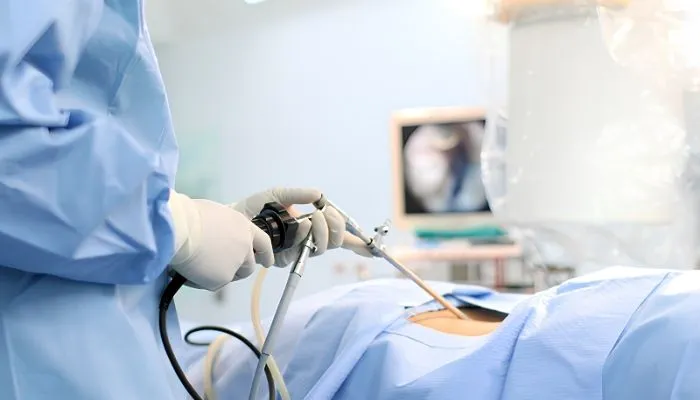
Percutaneous nephrolithotomy is the gold standard treatment for large and complex kidney stones. It involves creating a direct working channel - a nephrostomy tract - into the kidney through a small (1 to 3cm) puncture in the patient's flank, guided by fluoroscopy and ultrasound.
Through this tract, a rigid nephroscope is introduced and the stone is visualised directly. An ultrasonic probe, pneumatic lithotripter, or laser fibre is used to fragment the stone, and the pieces are actively removed through the tract, leaving no fragments behind to cause future obstruction.
The key advantage of PCNL over flexible ureteroscopy (RIRS) for large stones is fragment extraction. When a 3cm staghorn calculus is fragmented by a laser inside the kidney, the resulting pieces cannot all pass through the ureter naturally - they must be removed. PCNL's large working tract allows direct suctioning and retrieval of all fragments, achieving stone clearance rates above 95% in a single session for stones up to 3 to 4 cm.
At Shree Hospitals, mini-PCNL - using a 15 to 18mm tract rather than the standard 24 to 30mm - is our preferred approach for stones between 2 and 3cm. The smaller tract reduces blood loss, decreases post-operative flank discomfort, and shortens recovery time while maintaining the same stone clearance capability. Large kidney stone removal via mini-PCNL represents the best balance of efficacy and patient experience for the majority of our PCNL patients.
When Is PCNL the Right Choice?
- Kidney stones larger than 2cm - where RIRS alone is insufficient
- Staghorn calculus - partial or complete - filling the renal pelvis
- Lower pole stones above 1.5cm with an unfavourable anatomy for RIRS clearance
- Multiple calyceal stones requiring simultaneous multi-calyceal clearance
- ESWL failure or contraindication in the presence of large stone burden
- Obstruction with associated infection requiring urgent drainage and clearance
Is PCNL Right for You?
- CT-confirmed large or complex renal stone burden above 2cm
- Medically fit for general anaesthesia and 2 to 4 days of hospital stay
- No uncorrected coagulopathy or anticoagulation unable to be managed
- Stone disease causing recurrent pain, obstruction, or impaired kidney function
- Failed prior conservative or endoscopic management
- Patient preference for high single-session stone-free rates
RIRS Advantages Over Other Stone Techniques
- Direct kidney access allows immediate, active stone removal - not just fragmentation
- Stone-free rates above 95% in one session - ESWL may need 3 to 5 sessions for the same stone
- All fragments are physically removed - not left to pass through the ureter
- Suitable for the most complex staghorn calculus presentations
- Mini-PCNL reduces blood loss and recovery compared to standard PCNL
- Preferred option internationally for stones above 2cm in most urological guidelines
A large kidney stone inside a functioning kidney is not an issue that improves with time.
PCNL clears it completely - in a single, well-planned procedure led by surgeons who do this every week. The wait is the only thing that makes it harder.
24×7 Emergency Care
Our Approach to PCNL Surgery
PCNL is the highest-impact stone procedure in urology - and the most technically demanding. Our approach combines meticulous pre-operative planning, image-guided access, and a track-tract-to-clearance protocol that prioritises complete stone removal in a single anaesthetic.
24×7 Emergency Care
Pre-Operative CT Planning for Tract Positioning
The access tract position is not chosen arbitrarily - it determines which stone-bearing calyces the surgeon can reach. Our urologists plan the nephrostomy tract location on pre-operative CT, targeting the calyx that provides the most direct line to the stone burden and the least risk to surrounding structures (colon, pleura, major vessels). This planning takes 20 minutes and dramatically reduces intraoperative difficulty.
Fluoroscopic and Ultrasound-Guided Access
Renal access is performed under combined fluoroscopic and ultrasound guidance - improving first-puncture success and reducing the risk of vascular or visceral injury compared to fluoroscopy-alone techniques. The tract is dilated progressively to the working size and a nephrostomy sheath placed. Real-time imaging throughout access is non-negotiable in our programme.
Mini-PCNL as Default for 2–3cm Stones
For stones between 2 and 3cm, mini-PCNL using a 15 to 18mm tract is our standard approach. The smaller tract preserves more renal parenchyma, reduces transfusion risk, and allows earlier discharge - without compromising stone clearance. Standard 24 to 30mm PCNL is reserved for the largest stone burdens or staged second-look procedures where the tract is already established.
Post-Operative Nephrostomy Management
A nephrostomy tube - a small drainage tube exiting through the back puncture - is left in place post-operatively for 24 to 48 hours in most cases, allowing any bleeding or urine extravasation to drain safely. In tubeless PCNL - appropriate for uncomplicated single-access cases - the tube is omitted entirely, further shortening recovery. Post-operative X-ray or CT confirms stone clearance before discharge.
Top PCNL Surgeons in Mumbai
Percutaneous nephrolithotomy is a high-stakes procedure that demands technical proficiency in fluoroscopic access, nephroscopy, and stone fragmentation under demanding conditions.
Our urology team at Shree Hospitals has dedicated clinical volume to PCNL and large kidney stone removal - including complex bilateral, re-do, and staghorn cases that test the limits of single-session stone clearance.
24×7 Emergency Care

Dr. Shyam Mohan
Robotic Urological Surgery, Uro-Oncology

Dr. Alap Mehendale
Urologist, Andrologist, Kidney Transplant Surgeon
Related Stone Treatments at Shree Hospitals
PCNL handles the largest stone burdens - but the right treatment depends on your specific stone size and location. Our complete programme covers every presentation
RIRS (Retrograde Intrarenal Surgery)
Preferred for stones 1 to 2cm; flexible ureteroscopy with laser, no puncture.
Laser Kidney Stone Surgery
Endoscopic laser for ureteric and smaller renal stones; same-day discharge.
Ureteroscopy (URS)
For ureteric stones specifically; semi-rigid approach, faster procedure.
ESWL
External shockwave for stones under 2cm in suitable positions; fully non-invasive.
Step by Step Process of PCNL Surgery
Step 1 - Pre-Operative Planning, Access Mapping & Optimisation
CT images are reviewed the day before surgery to plan the nephrostomy tract position. Blood tests, coagulation studies, and urine culture are reviewed - any infection is treated first. You are admitted the morning of surgery. Your urologist confirms the planned approach and answers any remaining questions. Antibiotic prophylaxis is administered before theatre.
Step 2 - Patient Positioning & Renal Access
Under general anaesthesia, a ureteral catheter is placed cystoscopically to inject contrast into the kidney - opacifying the collecting system for fluoroscopy. You are positioned prone (face down). Under combined fluoroscopic and ultrasound guidance, a needle punctures the planned calyx. A guidewire is advanced. The tract is dilated progressively to working size (15mm for mini-PCNL or 24 to 30mm for standard) and a nephroscope sheath secured in place.
Step 3 - Nephroscopy & Stone Fragmentation
The nephroscope is introduced through the tract under irrigation. The stone is visualised and fragmented using an ultrasonic lithotripter, pneumatic probe, or holmium laser - chosen based on stone hardness and fragment size preferences. Fragments are actively suctioned out or removed with forceps. The entire collecting system is inspected systematically - a flexible nephroscope may be passed to check secondary calyces inaccessible from the primary tract.
Step 4 - Nephrostomy Tube Placement, X-Ray Check & Recovery
A nephrostomy tube is secured through the tract. Post-operative X-ray confirms stone clearance and tube position. You are returned to the ward and monitored for 24 to 48 hours. The nephrostomy tube is clamped progressively and removed on day 2 or 3 if drainage is clear. Discharge follows with post-operative CT arranged at 4 to 6 weeks to confirm complete large kidney stone removal.
Patient Questions About PCNL Surgery
Is PCNL dangerous?
PCNL carries a higher complexity than flexible ureteroscopy or ESWL - because it involves creating a direct tract into the kidney. The primary risks include bleeding (significant bleeding requiring transfusion occurs in approximately 1 to 3% of cases), injury to adjacent structures (very rare with ultrasound-guided access), and urinary leak. However, in experienced hands, PCNL has an excellent safety record and remains the international guideline-recommended treatment for large kidney stone removal - because the risk of leaving a large stone untreated (infection, obstruction, renal damage) is far greater than the procedural risk.
Can PCNL be performed for stones on both sides at once?
Bilateral simultaneous PCNL is technically feasible but is generally avoided due to the increased anaesthetic duration and bilateral nephrostomy tube management complexity. Our preference is to stage bilateral cases - treating the more symptomatic or higher-burden side first, and the contralateral side 4 to 8 weeks later. This approach reduces overall risk, allows each kidney to recover independently, and produces equivalent long-term stone-free outcomes with greater safety.
Will I have a scar after PCNL?
The nephrostomy tract puncture in the flank leaves a small skin scar - typically 1 to 1.5cm for mini-PCNL and 2 to 3cm for standard PCNL. These are significantly smaller than the 10 to 15cm flank incision of historic open nephrolithotomy. Patients are often surprised by how small the access point is. Most scars fade significantly over 6 to 12 months and are largely hidden by the flank and lumbar region.
Patient
Resources

Schedule
consultation

Billing &
Payments

Hospital
Facilities
24×7 Emergency Care

1800-268-4000

Follow Us

Shree
Hospitals

Shree
Hospitals
