 Ghatkopar (East), Mumbai)


Laser Prostate Surgery in Mumbai - HOLEP for BPH
Size-Independent | Minimal Bleeding | Safe on Blood Thinners
TURP has served men with enlarged prostates for decades - but a newer standard has emerged. Laser prostate surgery in Mumbai at Shree Hospitals using holmium laser enucleation (HoLEP) represents the most significant advance in prostate enlargement treatment in a generation.
Where traditional resection chips away at obstructing prostate tissue, HoLEP enucleates - separating the entire adenoma (obstructing inner gland) from its capsule in one clean surgical plane, the same way open prostatectomy did before minimally invasive techniques existed.
The result is complete adenoma removal, not partial debulking. No size limit. No blood transfusion risk. Safe for patients on anticoagulants. And outcomes that are durable because there is no adenoma left to regrow.
Don't Ignore Urinary Symptoms. Get Timely Urology Care Today.
Quick facts
Type & Duration: Holmium laser enucleation (HoLEP); 60 to 120 minutes depending on prostate size
Hospital Stay: 1 to 2 days
Recovery Time: Return to light activity in 1 week; full recovery in 2 to 3 weeks
Type of Anaesthesia: Spinal or general anaesthesia
Type of Surgery: Endoscopic - transurethral, no external incision; laser prostatectomy technique
Type of Assistance: Pre-operative prostate mapping, HoLEP with morcellation, post-operative catheter management, histopathology of enucleated tissue
What is Laser Prostate Surgery (HoLEP)?
The most common surgical question men ask after being told they need prostate surgery is: "Is there something better than TURP?" For most patients - particularly those with larger prostates, those on blood thinners, or those who want the most complete treatment available - the answer is now yes.
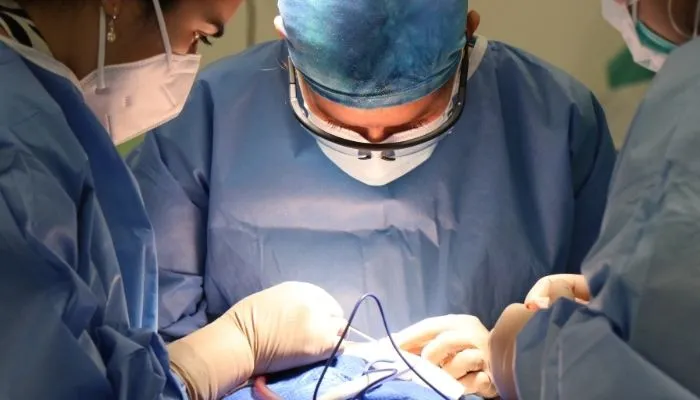
Holmium laser enucleation of the prostate (HoLEP) uses a high-powered holmium laser delivered through a resectoscope to find and follow the anatomical plane between the adenoma (the obstructing inner gland tissue) and the prostate's outer capsule.
The adenoma is separated from the capsule lobe by lobe and pushed into the bladder. A morcellator then cuts the displaced tissue into small pieces that are suctioned out completely. The urethral channel - previously strangled by the growing gland - is left widely open.
The critical difference from TURP is completeness. BPH laser surgery via HoLEP removes essentially all adenoma tissue in a single session - there is nothing left to regrow and narrow the channel again.
Long-term reoperation rates after HoLEP are significantly lower than after TURP. This matters most for younger men (who have decades for residual adenoma to grow), men with very large prostates, and those who want the most durable solution available.
Who Is Best Suited to HoLEP?
- Very large prostate (above 80ml) - where TURP is limited and open surgery was previously the only option
- Patients on warfarin, NOACs, or antiplatelet therapy who cannot safely stop anticoagulation
- Younger men (under 65) who want durable results with low reoperation risk
- Patients who have failed prior TURP and have residual adenoma
- Men with prostate enlargement treatment need combined with anatomically challenging glands
- Any suitable BPH patient who wants the most thorough surgical option available
Is HoLEP Right for You?
- BPH confirmed on ultrasound with obstructive symptoms or urinary retention
- Prostate volume confirmed on TRUS or MRI
- PSA checked and prostate cancer excluded or managed
- Medical fitness for spinal or general anaesthesia
- Patient understands retrograde ejaculation is a common outcome
- No contraindication to endoscopic urological surgery
HoLEP vs TURP - The Key Differences
- HoLEP removes all adenoma; TURP removes only the most obstructing portion
- No prostate size limit with holmium laser enucleation; TURP limited to prostates under 80ml
- BPH laser surgery produces minimal bleeding - TURP has higher transfusion rate
- HoLEP safe on anticoagulation; TURP requires anticoagulant cessation in most cases
- Long-term reoperation rate lower with HoLEP due to complete adenoma removal
- Laser prostatectomy recovery similar to TURP - catheter out within 24 to 48 hours
Not every prostate surgery is the same - and the right procedure for a 100ml prostate is not the same as for a 50ml gland.
If you have been told your prostate is "too large for TURP," HoLEP is built for exactly that situation.
24×7 Emergency Care
Our Approach to Laser Prostate Surgery
HoLEP is one of the most technically demanding procedures in endoscopic urology. Accurate identification and dissection of the enucleation plane requires a surgeon who performs this operation regularly.
Our approach is built on precise pre-operative planning, experienced laser dissection, and a thorough post-operative pathway.
24×7 Emergency Care
Pre-Operative Volume and Anatomy Mapping
Prostate volume, shape, and lobe anatomy vary considerably between patients - and they directly influence the enucleation strategy. Our team reviews transrectal ultrasound volume measurements and MRI where available to understand lobe configuration, median lobe size, and bladder neck anatomy before every holmium laser enucleation procedure. Operative time and laser energy requirements are planned accordingly.
Anatomical Enucleation Technique
The enucleation is performed following the capsular plane - the natural surgical boundary between adenoma and the prostatic capsule. Our surgeons work lobe by lobe, developing the plane precisely with the HoLEP laser at low cutting energy to avoid thermal capsular injury. The apical dissection - near the external urinary sphincter - is performed with particular care to protect continence.
High-Efficiency Morcellation
Once all adenoma lobes are displaced into the bladder, a morcellator cuts and suctions the tissue fragments at high speed. The entire morcellated tissue is retrieved for histopathological examination - a significant advantage over TURP chips, as the complete specimen allows thorough examination for any unexpected cancer. Laser prostatectomy adenoma tissue is sent in its entirety, not sampled.
Short Catheter Duration and Early Discharge
One of the most appreciated practical benefits of BPH laser surgery via HoLEP is the short catheter duration. Because laser coagulation provides continuous haemostasis during resection, post-operative bleeding is minimal and irrigation is rarely required. The catheter is removed in most cases at 12 to 24 hours - and patients who void well are discharged on day 1 or day 2.
Top Laser Prostate Surgeons in Mumbai
Holmium laser enucleation is a high-volume subspeciality skill; proficiency requires a dedicated learning curve of 50 to 80 cases before consistent enucleation efficiency is achieved.
Our urology team at Shree Hospitals has invested significantly in this learning and currently performs HoLEP as the default procedure for large prostates and anticoagulated patients. Complex cases referred from elsewhere form a meaningful part of our practice.
24×7 Emergency Care

Dr. Shyam Mohan
Robotic Urological Surgery, Uro-Oncology

Dr. Alap Mehendale
Urologist, Andrologist, Kidney Transplant Surgeon
Related Prostate Treatments at Shree Hospitals
Laser prostate surgery treats BPH - but prostate problems in men are varied. Our urology programme covers the full spectrum
TURP Surgery
Gold standard surgical resection for prostates between 30 and 80ml; the most widely performed BPH procedure globally.
Robotic Urology Surgery
For prostate cancer requiring radical prostatectomy; robot-assisted for precision nerve-sparing.
Varicocele Surgery
Male reproductive health; separate from prostate disease but within our complete men's urology programme.
Reconstructive Urology
For urethral stricture - a different cause of obstructive urinary symptoms requiring urethroplasty.
Step by Step Process of Laser Prostate Surgery (HoLEP)
Step 1 - Prostate Mapping, Consent & Pre-Operative Preparation
TRUS prostate volume, uroflowmetry, post-void residual, PSA, and MRI, where indicated, are reviewed. Anticoagulation management is confirmed – a key strength of BPH laser surgery is that many anticoagulants can be continued through the procedure, but your team will advise your specific plan. Anaesthetic assessment is completed. You fast from midnight. Your surgeon explains the enucleation process, the expected outcomes, and the certainty of retrograde ejaculation.
Step 2 - Anaesthesia, Positioning & Resectoscope Placement
Spinal or general anaesthesia is administered. You are positioned in the lithotomy position. The resectoscope is introduced through the urethra and advanced to the prostatic urethra. The anatomy is assessed – lobe configuration, median lobe, and bladder neck identified. The holmium laser fibre is deployed and the enucleation plane is established.
Step 3 - Lobe Enucleation and Displacement Holmium laser enucleation
Proceeds systematically - the right lateral lobe is developed first, separated from the capsule from bladder neck to apex. The left lateral lobe follows. The median lobe is enucleated last. Each lobe is freed entirely and pushed into the bladder. The enucleation cavity - the now-open prostatic capsule - is inspected for bleeding and haemostasis secured with the laser. The procedure typically takes 60 to 90 minutes depending on prostate volume.
Step 4 - Morcellation, Tissue Recovery & Catheter Placement
The morcellator is introduced through the resectoscope sheath and the displaced adenoma lobes are rapidly cut and suctioned out – the entire tissue specimen retrieved for histopathology.
A urethral catheter is placed. You are monitored in recovery for 1 to 2 hours. Catheter irrigation is rarely needed due to minimal post-operative bleeding. The catheter is removed at 12 to 24 hours; a successful void confirms early recovery. Discharge follows on day 1 or 2 in most cases.
Patient Questions About Laser Prostate Surgery
How is HoLEP different from regular laser prostate treatment?
The word "laser" is used for several different prostate procedures - and they are not equivalent. Holmium laser enucleation (HoLEP) is anatomical enucleation of the entire adenoma - it removes all the obstructing tissue. Other laser techniques such as PVP (photoselective vaporisation) vaporise or ablate prostate tissue rather than enucleating it - leaving the capsular plane intact but removing tissue less completely. HoLEP has the strongest long-term evidence of all laser prostatectomy techniques and has the lowest long-term reoperation rate because the adenoma is removed in totality, not partially treated. At Shree Hospitals, when we say laser prostate surgery, we mean enucleation - not vaporisation.
Will I be incontinent after HoLEP?
Temporary stress urinary incontinence - leaking urine with coughing, sneezing, or physical activity - affects approximately 10 to 20% of patients in the weeks immediately following HoLEP as the external sphincter re-establishes function after surgery. In the vast majority of patients, this resolves completely within 4 to 12 weeks with pelvic floor exercises. Permanent incontinence following BPH laser surgery by experienced surgeons occurs in less than 1% of cases. Patients are given pelvic floor exercise instructions pre-operatively to begin preparation before surgery.
Can HoLEP be performed if I have had a previous prostate procedure?
Yes - holmium laser enucleation can be performed in patients who have had prior TURP, PVP, or other prostate procedures, although the anatomical plane may be more difficult to identify due to scarring. Prior prostate surgery is not a contraindication to HoLEP, but it requires a surgeon experienced with re-do cases. At Shree Hospitals, we manage referred patients who require repeat surgery after inadequate relief from initial prostate enlargement treatment elsewhere.
Patient
Resources

Schedule
consultation

Billing &
Payments

Hospital
Facilities
24×7 Emergency Care

1800-268-4000

Follow Us

Shree
Hospitals

Shree
Hospitals
