 Ghatkopar (East), Mumbai)


Robotic Urology Surgery in Mumbai
Precision Outcomes for Complex Urological Conditions
When the stakes are highest - a prostate cancer diagnosis, a kidney tumour, a complex bladder reconstruction - the margin for error shrinks to zero. Robotic urology surgery in Mumbai at Shree Hospitals brings surgical precision to its most exacting standard.
Robot-assisted surgery places a 10x-magnified, tremor-filtered camera and four instrument arms inside the body through incisions smaller than a centimetre - giving the surgeon a view and dexterity that no human hand, however skilled, can replicate through an open incision.
For radical prostatectomy, robotic kidney surgery, and complex reconstructive procedures, the robotic platform translates into less blood loss, preserved nerve function, and outcomes measured in years of quality life.
Don't Ignore Urinary Symptoms. Get Timely Urology Care Today.
Quick facts
Type & Duration: Robot-assisted surgery for prostate, kidney, or bladder; 2 to 4 hours depending on procedure
Hospital Stay: 2 to 4 days
Recovery Time: Return to light activity in 2 to 3 weeks; full recovery in 4 to 6 weeks
Type of Anaesthesia: General anaesthesia
Type of Surgery: Robotic-laparoscopic - 4 to 5 small (8mm) port incisions; no large open incision
Type of Assistance: Multidisciplinary oncology assessment, robotic surgical console procedure, pathology, post-operative oncological follow-up and surveillance
What is Robotic Urology Surgery?
Modern urology has been transformed by the robotic surgical platform - most widely associated with the da Vinci system, which is now the international standard for urological cancer surgery.
Robot-assisted surgery in urology is not fully autonomous - the surgeon drives every movement at a console, translating their hand and finger motions into scaled, tremor-filtered movements of the robotic instruments inside the patient's body. The result is an operative view and precision of tissue dissection that conventional laparoscopic urology cannot match.
The most common robotic urological procedure is radical prostatectomy - removal of the prostate gland for prostate cancer. The robotic approach allows the surgeon to see and preserve the neurovascular bundles that run along each side of the prostate, controlling post-operative continence and erectile function - structures invisible at the scale of open surgery.
Robotic prostatectomy consistently delivers lower positive surgical margin rates, less blood loss, shorter catheter duration, and faster continence recovery compared to open radical prostatectomy in experienced centres.
Beyond prostate cancer, robotic kidney surgery encompasses partial nephrectomy (kidney-sparing removal of a renal tumour), radical nephrectomy, and pyeloplasty. Robot-assisted partial nephrectomy achieves oncological outcomes equivalent to open surgery while preserving functional kidney tissue with precision that conventional laparoscopy cannot reliably deliver in complex tumour locations.
At Shree Hospitals, our robotic urology programme integrates urological oncology, pathology, and radiology in a multidisciplinary framework that benchmarks outcomes at every stage.
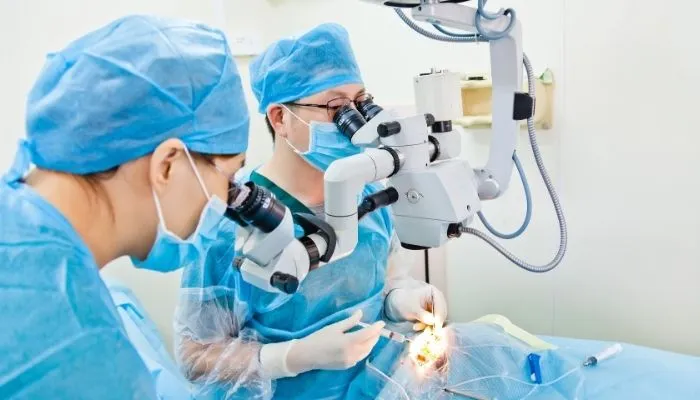
When Is Robotic Surgery the Right Urological Choice?
- Prostate cancer requiring surgical removal - all risk categories
- Kidney tumour (renal cell carcinoma) suitable for partial or radical nephrectomy
- Bladder cancer requiring radical cystectomy and urinary diversion
- Adrenal tumours requiring adrenalectomy
- Ureteropelvic junction obstruction (UPJO) requiring pyeloplasty
- Complex ureteric or bladder reconstruction where laparoscopic dexterity is critical
What Makes Robotic Better Than Open Surgery?
- 10x magnification - surgical anatomy visible at a detail impossible in open surgery
- Tremor-free instrument control - precision at the millimetre level
- Articulated instrument wrists - 7 degrees of freedom versus 4 in conventional laparoscopy
- Less blood loss - reducing transfusion requirement and associated risks
- Smaller incisions - lower wound infection risk and faster return to activity
- Accelerated recovery - most patients home within 2 to 3 days versus 5 to 7 for open surgery
Robotic Urology's Role in Quality of Life Preservation
- Nerve-sparing radical prostatectomy preserves erectile function in 70 to 80% of suitable patients
- Continence recovery after robotic prostatectomy: 90%+ pad-free by 12 months
- Robotic kidney surgery via partial nephrectomy preserves functioning kidney - avoiding dialysis risk from total nephrectomy
- Reduced blood loss in robotic cystectomy - a complex procedure where blood conservation is critical
- Earlier mobilisation post-operatively reduces thromboembolic and pulmonary complications
- Oncological outcomes equivalent to open surgery - quality of life superior
A cancer diagnosis requires the clearest information, the best surgical team, and a treatment plan that looks as far ahead as outcomes data allows.
Our robotic urology team at Shree Hospitals does not outsource the complexity - we are built for it.
24×7 Emergency Care
Our Approach to Robotic Urology Surgery
Robotic surgery is a platform, not a guarantee. The surgeon's anatomical knowledge, technical precision, and judgement around nerve-sparing and oncological margins determine what the robot actually achieves.
Our approach combines the platform's capabilities with a surgical standard that measures every outcome.
24×7 Emergency Care
Multidisciplinary Cancer Decision-Making
Every patient referred for robotic urological cancer surgery is discussed at our multidisciplinary team (MDT) meeting - urological oncology, medical oncology, radiology, and pathology reviewing imaging, biopsy results, and the patient's overall health to confirm that robotic surgery is the optimal treatment and define the surgical intent (nerve-sparing, lymph node dissection extent, surgical margins strategy).
Nerve-Sparing Technique for Prostatectomy Robotic prostatectomy
At Shree Hospitals uses a strict nerve-sparing approach for appropriate candidates - men with organ-confined cancer and pre-operative erectile function. The neurovascular bundles are dissected free from the prostate under the 10x robotic magnification using a retrograde technique that minimises thermal and mechanical injury. Intraoperative frozen sections are used in selected cases to confirm margins before the nerve bundles are released.
Robotic Partial Nephrectomy for Kidney Tumours
For renal tumours amenable to partial nephrectomy, our robotic kidney surgery programme uses intraoperative ultrasound for tumour margin definition and aims for the shortest possible warm ischaemia time during tumour excision. Kidney function preservation is measured at 3 and 12 months post-operatively, and results are audited against international benchmarks for partial nephrectomy outcomes.
Post-Operative Oncological Surveillance
Surgery is one part of a long-term cancer management plan. Our team maintains structured PSA surveillance after radical prostatectomy, CT and renal function monitoring after robotic kidney surgery, and cystoscopy surveillance where indicated after bladder procedures. Patients are not discharged from follow-up prematurely - because cancer management outcomes are only meaningful when followed long enough to matter.
Top Robotic Urology Surgeons in Mumbai
Robot-assisted surgery proficiency requires a dedicated learning curve and sustained case volume to deliver consistent, high-quality outcomes.
Our team has performed robotic urological procedures across prostate, kidney, and bladder - including complex nerve-sparing and redo cases - as part of a structured multidisciplinary oncology programme. We welcome referrals of complex urological cancer cases from across Maharashtra.
24×7 Emergency Care

Dr. Shyam Mohan
Robotic Urological Surgery, Uro-Oncology

Dr. Alap Mehendale
Urologist, Andrologist, Kidney Transplant Surgeon
Related Urology Treatments at Shree Hospitals
Robotic surgery addresses the most complex urological conditions - but our programme spans the full spectrum of urology from cancer to reconstruction
Laser Prostate Surgery (HoLEP)
For benign prostatic enlargement (BPH); different from radical prostatectomy for cancer.
TURP Surgery
TURP treats BPH obstruction; robotic prostatectomy treats prostate cancer - important distinction for patients.
Reconstructive Urology
Complex urinary tract reconstruction following cancer surgery, trauma, or stricture disease.
Step by Step Process of Robotic Urology Surgery
Step 1 - Diagnosis, MDT Review & Pre-Operative Planning
Biopsy results, staging imaging (MRI prostate, CT chest/abdomen/pelvis), and performance status are reviewed at MDT. The surgical plan is confirmed - nerve-sparing intent, lymph node dissection strategy, and surgical approach (transperitoneal or extraperitoneal for robotic prostatectomy). You meet your anaesthetist, your surgical nurse, and your team. Blood group and save, full blood count, and coagulation are checked. Anticoagulation is managed.
Step 2 - Anaesthesia, Positioning & Port Placement
General anaesthesia is induced. You are positioned - Trendelenburg (head down) for prostatectomy, lateral decubitus for robotic kidney surgery. The camera port (12mm) and four 8mm working ports are placed in the abdomen. The da Vinci robotic arms are docked to each port. Pneumoperitoneum is established. The surgeon moves to the console; the assistant manages the ports bedside.
Step 3 - Robotic Dissection & Organ Removal or Reconstruction For radical prostatectomy
The bladder neck is opened, seminal vesicles dissected, neurovascular bundles preserved, and the prostate separated from the urethra. For robotic kidney surgery: the renal hilum is identified, tumour excised with clear margins, and the collecting system repaired. The specimen is placed in an endocatch bag and retrieved through an extended port site. Haemostasis is confirmed throughout under robotic magnification.
Step 4 - Drain Placement, Recovery & Post-Operative Pathway
A drain is placed in the pelvis or renal bed. Ports are closed. You recover in the post-anaesthesia care unit and are transferred to the ward within 2 hours. The drain is removed when output is low - typically day 1 to 2 for robot-assisted surgery.
For prostatectomy, the urethral catheter remains for 7 to 14 days. Early mobilisation begins on day 1. Histopathology results are reviewed at the post-operative clinic visit and form the basis of your ongoing cancer management plan.
Patient Questions About Robotic Urology Surgery
Is the robot actually performing the surgery?
This is the most common misconception about robot-assisted surgery - and it is important to correct it. The da Vinci robotic system has no autonomy. Every movement of the four robotic arms inside the patient's body is driven in real time by the surgeon at the console, translating their hand and finger motions through a computer interface. The robot provides magnification, tremor filtration, and increased instrument dexterity - but the surgical judgement, the decision to spare or sacrifice nerve tissue, the management of bleeding - all of this is performed by the surgeon. The robot is a precision tool, not an operator.
What is the recovery like after robotic prostatectomy?
Recovery after robotic prostatectomy is faster than after open surgery because the port incisions are small and abdominal wall trauma is minimal. Most patients are mobile the day after surgery, discharged at 2 to 3 days, and return to desk work within 2 to 3 weeks. The urethral catheter remains for 7 to 14 days. Urinary continence typically improves progressively over 3 to 12 months - most men are fully continent by 12 months. Early pelvic floor exercises, initiated before surgery and continued post-operatively, are the single most important factor in accelerating continence recovery.
Does robotic surgery guarantee cancer-free margins?
No surgical technique - robotic, laparoscopic, or open - can guarantee cancer-free surgical margins in every case. The margin status depends primarily on tumour pathology: whether the cancer has penetrated the prostatic capsule and how close it is to the dissection plane. What robot-assisted surgery provides is the best available visual access and instrument precision to dissect as close to the oncological margin as tumour anatomy permits. At experienced centres, robotic prostatectomy achieves positive surgical margin rates below 10% for pT2 (organ-confined) disease - the benchmark metric for surgical quality in this procedure.
Patient
Resources

Schedule
consultation

Billing &
Payments

Hospital
Facilities
24×7 Emergency Care

1800-268-4000

Follow Us

Shree
Hospitals

Shree
Hospitals
