 Ghatkopar (East), Mumbai)

Table Of Content
Patient Resources
Billing, Insurances & Estimates
Admission & Discharge
Visitors’ Rules
International Patients
Hospital Facilities
Health Packges

For Appointment/Query
1800-268-4000

Search or
Find Specialist
Knee Replacement: Is It Worth It, and When Is the Right Time?
Is knee replacement worth it? For many people with advanced knee arthritis, yes. It can bring lasting pain relief and better movement when simpler treatments no longer work. It is still major surgery with real risks and a long recovery. The right answer depends on how much pain limits your life, what you have already tried, and your overall health.
This guide covers the signs that suggest it is time, which doctor to see, how surgery compares with injections and physiotherapy, and what to know about age, diabetes and heart conditions.
Reviewed By: Dr Jay Mehta, DNB, Robotic Gynaecology Surgeon with 15+ Years of Experience
Condition:
Heart Attack
Treatment:
CABG
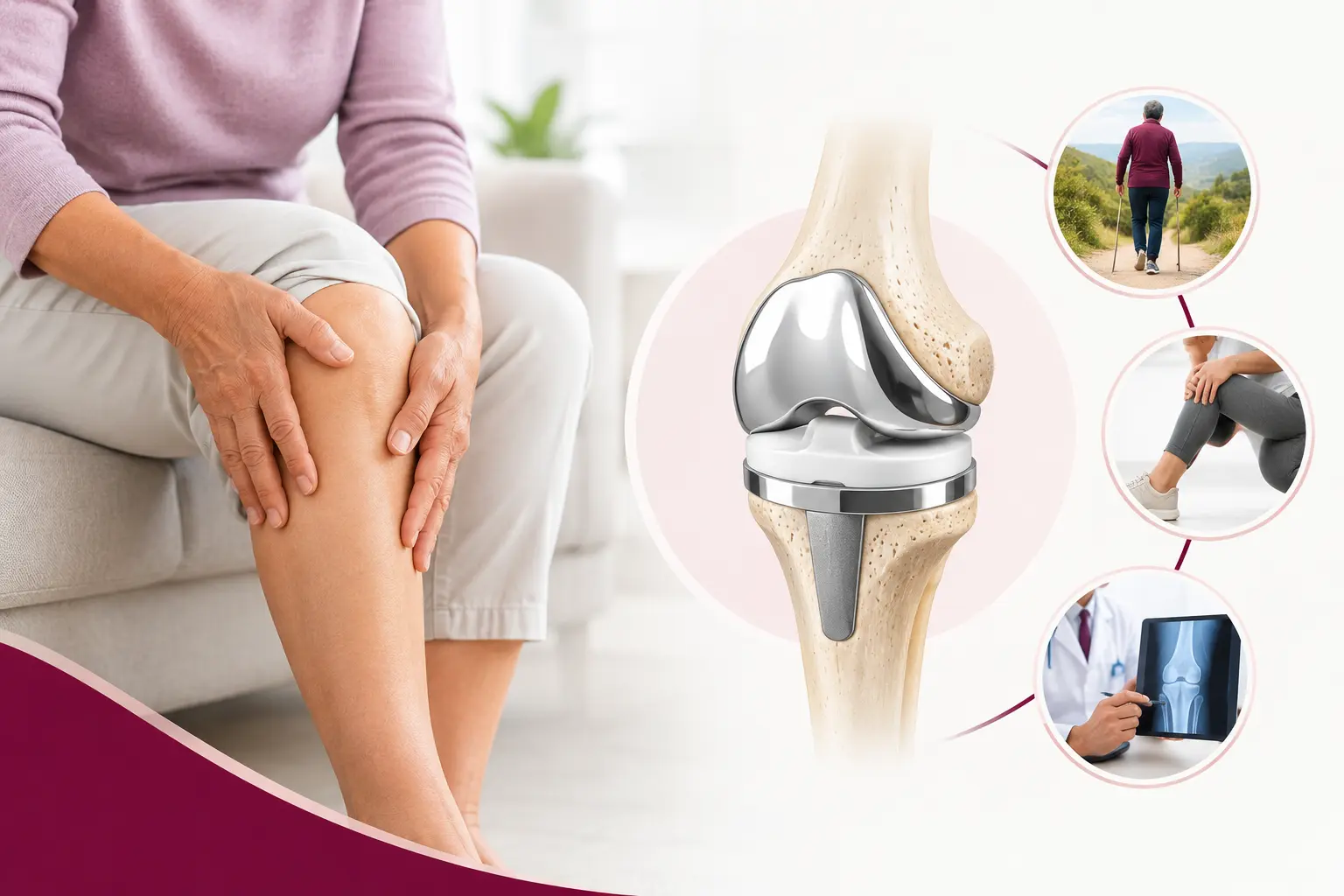
Consider knee replacement when:
- Pain limits walking, stairs, sleep or work.
- Medicines, exercise, weight management, a walking stick or brace have stopped helping.
- X-rays show advanced arthritis.
- You and an orthopaedic surgeon agree the benefits outweigh the risks.
The American Academy of Orthopaedic Surgeons (AAOS) says surgery is worth considering once non-surgical measures such as medicines and walking supports no longer help.
Key takeaways
- Age alone does not decide it. Function, pain and health do.
- Injections give short-term relief at best. They do not rebuild cartilage.
- Arthritis cannot be cured without surgery, but many people manage it for years.
- Diabetes and heart disease do not automatically rule surgery out. They need to be optimised first.
Is knee replacement worth it?
Most people get a big drop in pain and an easier daily life. AAOS reports that most patients see a dramatic reduction in knee pain and a significant improvement in everyday activities.
It is not a perfect result for everyone. A UK NHS hospital patient booklet lists persistent pain as a possible long-term problem. Stiffness, infection and blood clots can also happen.
Ask yourself:
- Is pain controlling my day, not just bothering me?
- Have I given non-surgical care a fair try?
- Can I commit to months of physiotherapy?
- Do I understand the risks?
If you answer yes to the first three, speak to a surgeon.
What are the signs you need a knee replacement?
|
Sign |
Why it matters |
|
Pain on most days despite medicines |
Non-surgical options may be running out |
|
Pain at rest, at night, or when lying or sitting |
One NHS specialist centre says this is when surgery should be considered |
|
Difficulty with stairs, standing up or short walks |
Shows real loss of function |
|
Stiffness or a knee that will not fully bend or straighten |
Suggests advanced joint damage |
|
Visible bow-leg or knock-knee shape |
Deformity can make the joint wear unevenly |
|
Swelling that keeps returning |
Ongoing joint inflammation |
|
Injections or tablets that now last only briefly |
Treatment benefit is fading |
Pain alone is not enough. Your surgeon will also look at your X-rays and examine the knee.
When is it time for a knee replacement?
Think of it as a ladder. Most people move up one step at a time.
- Self-care: Weight management, strengthening and low-impact exercise.
- Medical care: Pain relief, topical or oral anti-inflammatories as advised by your doctor.
- Support: Walking stick, knee brace, footwear changes.
- Injections: Selected cases, for short-term relief.
- Surgery: When the steps above no longer give acceptable quality of life.
Timing is a shared decision. AAOS describes it as a joint decision between you, your family, your primary care doctor and your orthopaedic surgeon.
Knee pain when climbing stairs: which doctor to see?
Start with a general physician or family doctor if the pain is new. See an orthopaedic surgeon if it has lasted weeks, keeps returning, or comes with swelling, locking or instability.
|
Doctor |
Best for |
|
Orthopaedic surgeon |
Diagnosis, X-ray or MRI review, surgery decisions |
|
Physiotherapist |
Strengthening, gait and exercise plan |
|
Rheumatologist |
Suspected inflammatory arthritis, such as rheumatoid arthritis |
Stair pain has many causes. These include arthritis, kneecap problems, tendon irritation and meniscus tears. Do not assume you need a replacement.
Knee replacement vs injections
|
Injections |
Knee replacement |
|
|
Goal |
Short-term pain relief |
Long-term pain and function |
|
Recovery |
Minimal |
Weeks to months |
|
Repairs the joint? |
No |
Replaces the worn surfaces |
|
Main limit |
Benefit fades |
Surgical risks |
The 2019 American College of Rheumatology and Arthritis Foundation guideline found corticosteroid injections help pain and function only in the short term. The same guideline advises against platelet-rich plasma and stem cell injections. It also gives a conditional recommendation against hyaluronic acid injections for knee arthritis.
Some patients still choose these injections after talking to their doctor. Just know the evidence is limited.
Knee replacement vs physiotherapy for arthritis
Physiotherapy comes first, not instead of surgery forever. The same guideline puts exercise, tai chi and self-management programmes as first-line care. It also notes that knee braces can reduce pain and improve walking speed.
Physiotherapy works best for mild to moderate arthritis. It also prepares you for surgery and is essential afterwards.
If your knee is badly worn and pain persists after a proper physiotherapy trial, surgery may help more.
Can knee arthritis be cured without surgery?
No. Cartilage loss cannot currently be reversed with tablets, supplements or injections. But arthritis can often be managed well:
- Strengthening the thigh and hip muscles
- Weight loss if you are overweight
- Activity pacing and low-impact exercise
- Pain relief as advised by your doctor
Be careful with ads promising a "cure". The guideline above advises against several popular biologic injections because they have not shown clear benefit.
Grade 4 knee arthritis and "bone-on-bone" knee: what to do?
Grade 4 usually means severe arthritis with major cartilage loss on a grading scale such as Kellgren-Lawrence. "Bone-on-bone" means the joint space has nearly disappeared on X-ray.
Do this:
- Get an X-ray and a surgeon's examination.
- Judge by symptoms, not just the picture. Some people with severe X-rays cope better than others.
- Try structured physiotherapy, weight control and pain management if you can.
- Discuss surgery if pain, deformity or stiffness is limiting your life.
Grade 4 on X-ray does not mean you must operate tomorrow. It does mean non-surgical care has less to work with.
How long can I delay knee replacement?
There is no fixed deadline. You can wait as long as pain stays manageable and you stay mobile and safe. There is no set date to aim for.
What happens if you never have it? Arthritis may slowly progress. You may become less active, which can weaken muscles and affect weight, mood and heart health. One health publication summarising AAOS advice says surgery may be advised to prevent problems such as knee deformity and reduced range of motion.
Delay is reasonable if you are coping. It is unwise if you are avoiding care because of fear and your function is falling.
Am I too young or too old ? Knee replacement at 50, 60, 70 or 80
AAOS states there are no absolute age or weight limits.
|
Age |
What to know |
|
50s |
Surgeons try alternatives first. The NHS booklet notes implants may last a shorter time in patients under 55. |
|
60s |
A common age for surgery when arthritis is advanced. |
|
70s |
Very common. The NIHR notes the average age in the UK is around 70. |
|
80+ |
Still possible. Older age or weak bones may affect risks and outcomes but need not rule surgery out. |
How long do implants last? A large NIHR-summarised review reported about 82% of total knee replacements lasting 25 years, and about 70% of partial replacements. These are group figures, not a promise for any one person.
Is knee replacement safe for diabetics and heart patients?
It can be, with preparation.
Diabetes. A large Kaiser Permanente registry study of over 40,000 knee replacements found no significantly higher risk of revision, deep infection or clots in patients with diabetes. But a review in American Family Physician notes infection risk rises as perioperative HbA1c rises, and there is no single proven target. Better sugar control before surgery is the practical goal.
Heart disease. AAOS notes that some health problems may need to be addressed before elective knee replacement to lower the risk of serious complications. In practice this means:
- Heart review by a cardiologist
- A medicine plan, including blood thinners
- A cleared anaesthesia assessment
Timing after a stent or heart attack matters, so your cardiologist and surgeon should decide together.
Benefits vs Risks
|
Possible benefits |
Possible risks |
|
Less pain |
Infection |
|
Better walking and stairs |
Blood clots |
|
Straighter, more stable leg |
Stiffness or scar tissue |
|
Better sleep and independence |
Persistent pain in some people |
|
Long-lasting implant for many |
Implant wear or loosening, possible revision |
Infection, blood clots and stiffness are listed risks that your surgeon will discuss with you.
Recovery and cost: what to expect
Recovery. You usually start walking with support soon after surgery. Physiotherapy is central. Full recovery can take longer than people expect. One NHS specialist centre says it can take over a year to fully recover.
Cost. Costs vary by hospital, room type, implant, one or both knees, and whether robotic assistance is used. Ask for a written estimate that lists what is included, and check insurance cover and cashless options before admission. Do not rely on a single advertised price.
When to see a doctor urgently
Get urgent help for:
- Hot, red, very swollen knee with fever
- Sudden inability to bear weight after a fall
- Calf pain or swelling, or breathlessness or chest pain after surgery
- A wound that is leaking pus or opening up
Knee replacement in Mumbai: where to start
If you are in Ghatkopar or the eastern suburbs of Mumbai, an orthopaedic consultation can tell you whether you need surgery now, later or not at all. Shree Hospitals' website lists an Orthopaedics department and a Joint Replacement Surgery Clinic. It also states it has installed the CORI robotic-assisted system for knee replacement. Ask any surgeon whether robotic assistance suits your knee, since it is a surgical tool and no technology guarantees a result.
Bring your X-rays, medicine list and diabetes or heart reports. Write down your questions. A good consultation should explain your options, including not operating.
Frequently Asked Question
Is knee replacement painful?
Pain is expected early on and is managed with planned pain control and physiotherapy. It usually improves steadily.
What is the success rate?
Many patients do well, but results vary. Ask your surgeon about outcomes for someone with your age, weight and health.
Can I walk after knee replacement?
Yes. Most people begin assisted walking soon after surgery, as directed by the team.
How long does a knee replacement last?
Often 15 to 25 years or longer, but it varies. Younger or more active patients may wear implants faster.
Can both knees be done together?
Sometimes. It carries more strain on the body, so surgeons choose carefully.
Is partial knee replacement better?
Only if the damage is limited to one part of the knee. It has quicker recovery for the right patient, but it may last less long than total replacement.
Do I need surgery if X-ray looks bad but pain is mild?
Not necessarily. Treatment follows symptoms and function, not just the image