 Ghatkopar (East), Mumbai)


Home >Critical Care & Emergency Services > Emergency Surgery Support
Emergency Surgery Support in Mumbai
Seamless Surgical and Critical Care Integration When Operating Cannot Wait
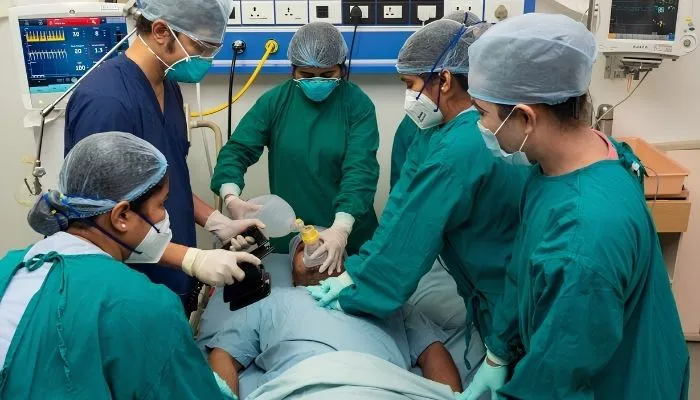
Some of the most critically ill patients in the ICU require emergency surgery - not despite their instability but because of it. Managing a critically ill patient through an emergency operative intervention demands the highest level of surgical, anaesthetic, and critical care coordination. Emergency surgery support in Mumbai at Shree Hospitals provides expert ICU to operating theatre coordination for critically ill surgical patients - ensuring every patient requiring emergency operative intervention for life-threatening surgical conditions in critical care receives safe, seamless perioperative management from the ICU bed to the operating table and back, without losing any of the haemodynamic, respiratory, or pharmacological stability that kept them alive in the ICU.
Receive fast, advanced emergency and critical care from our expert medical team. Book emergency assistance now.
Quick facts
Type of Support: ICU-to-OR continuity of critical care management during emergency surgical procedures
Conditions Requiring Emergency Surgery: Septic source control, bowel perforation, abdominal compartment syndrome, haemorrhage
Anaesthesia: No anaesthesia - catheter insertion under local anaesthesia
Support Team: Intensivist, emergency surgeon, anaesthesiologist, critical care nurse, and theatre team
Type of Procedure: Emergency laparotomy, damage control surgery, vascular repair, or endoscopic intervention
Type of Treatment: Daily CRRT prescription review with transition to intermittent haemodialysis when haemodynamic stability allows
Type of Treatment: Return to ICU post-surgery with seamless continuation of critical care management
What is Emergency Surgery Support?
Emergency surgery support in the critical care context refers to the structured coordination of surgical intervention for ICU patients - ensuring that the haemodynamic monitoring, vasopressor infusions, ventilator management, renal replacement therapy, and pharmacological support that the patient depends on in the ICU are maintained without interruption throughout the journey to and from the operating theatre. ICU to operating theatre coordination for critically ill surgical patients at Shree Hospitals addresses the full range of emergency surgical indications in critically ill patients - perforated viscus requiring emergency laparotomy, abdominal compartment syndrome requiring decompressive laparotomy, vascular haemorrhage requiring emergency repair, necrotising fasciitis requiring radical debridement, and anastomotic leak or intra-abdominal collection requiring surgical source control for refractory septic shock.
Damage control surgery - the deliberate limitation of operative intervention to life-saving haemorrhage control and contamination control, deferring definitive repair to a staged second procedure after resuscitation - is a core component of our emergency surgical support approach for the most physiologically compromised patients where prolonged surgery would be fatal. Emergency surgery support in Mumbai at Shree Hospitals integrates our ICU intensivist, emergency surgeon, and anaesthesiologist as a unified perioperative team - with the intensivist remaining clinically responsible for the patient's haemodynamic and ventilatory management throughout the operative procedure and providing a structured handover to the ICU nursing team on return from theatre.
When is Emergency Surgery Required in an ICU Patient?
- Refractory septic shock from an uncontrolled surgical source - bowel perforation, abscess, or anastomotic leak
- Abdominal compartment syndrome with intra-abdominal pressure above 20 mmHg causing organ dysfunction
- Active haemorrhage from vascular injury, post-operative bleeding, or trauma requiring operative control
- Necrotising soft tissue infection requiring urgent radical surgical debridement to control the infective source
- Intestinal ischaemia from mesenteric thrombosis requiring resection and damage control laparotomy
What Surgical Procedures are Performed?
- Emergency laparotomy for bowel perforation, anastomotic leak, abdominal sepsis, and mesenteric ischaemia
- Damage control surgery - haemorrhage packing, bowel stapling without anastomosis, and temporary abdominal closure
- Necrotising fasciitis debridement - radical resection of all infected and necrotic tissue with planned relook in 24 to 48 hours
- Emergency vascular repair for aortic, mesenteric, or peripheral vascular haemorrhage
- Percutaneous or open drainage for uncontrolled intra-abdominal collections requiring surgical source control
Why Perioperative Critical Care Continuity Determines Surgical Outcome?
- Vasopressor interruption during transfer to theatre causes haemodynamic collapse in vasopressor-dependent patients
- Ventilator disconnection during transport risks hypoxaemia and lung derecruitment in ARDS patients
- Perioperative critical care continuity maintains the organ support that allows the patient to survive surgery
- Post-operative return to the ICU with a structured handover prevents information loss and treatment gaps
- Damage control surgery philosophy - do less, do it faster, and return to ICU for resuscitation before definitive repair
A critically ill patient who needs emergency surgery needs the full expertise of both surgical and critical care teams working as one.
At Shree Hospitals, that integration is built into every emergency operative decision from the first discussion to the last stitch.
24×7 Emergency Care
Our Approach to Emergency Surgery Support at Shree Hospitals
At Shree Hospitals, emergency surgery support in Mumbai is delivered through a unified surgical-intensivist perioperative team model - where the intensivist retains clinical responsibility for the patient's organ support throughout the surgical procedure, the surgeon focuses entirely on operative technique, and the anaesthesiologist manages pharmacological anaesthesia with constant communication between all three throughout.
24×7 Emergency Care
Pre-Operative Risk Assessment and Decision Briefing
Before any emergency operation on an ICU patient, a joint intensivist-surgeon briefing assesses operative benefit versus physiological cost. Haemodynamic status, vasopressor requirements, ventilatory parameters, coagulation profile, and renal function are reviewed. Acceptable haemodynamic targets during surgery, maximum anaesthetic time, and specific conversion-to-damage-control criteria are agreed before the patient leaves the ICU.
Perioperative Haemodynamic and Ventilator Continuity
The patient's vasopressor infusions, monitoring lines, and ventilator management are maintained without interruption throughout transport and the operative procedure. The ICU ventilator or a fully equivalent theatre ventilator with identical settings continues lung-protective ventilation throughout. Vasopressor infusion rates are documented at ICU departure and confirmed unchanged on theatre arrival before anaesthetic induction.
Damage Control Surgery Philosophy
For the most haemodynamically compromised patients, the operative approach follows damage control surgery principles - operating for the minimum time necessary to achieve haemorrhage control and contamination control, accepting temporary measures including abdominal packing, bowel stapling without anastomosis, and temporary abdominal closure with a vacuum dressing - to return the patient to the ICU for resuscitation before a planned relook operation in 24 to 48 hours.
Structured Post-Operative ICU Handover
On return to the ICU, the intensivist provides a structured verbal and written handover to the ICU nursing team - covering intraoperative events, blood products given, fluid balance, vasopressor changes, surgical findings, drain outputs expected, analgesic plan, and the next planned surgical intervention date. Post-operative orders are written immediately to prevent any gap in ICU management during the handover period.
Top Critical Care Specialists in Mumbai
Our intensivist team at Shree Hospitals brings subspecialty expertise in advanced haemodynamic monitoring, shock resuscitation, and goal-directed therapy - applying the latest evidence from international critical care guidelines to every complex haemodynamic challenge in our ICU.
Book Expert Consultation

Dr. Sameer Jagdish Kanakiya
Internal Medicine, Critical Care
Critical Care and ICU Services at Shree Hospitals
Emergency surgery support at Shree Hospitals is the procedural bridge between our critical care and surgical programmes - ensuring every ICU patient requiring operative intervention receives the same standard of organ support in theatre as they receive at the ICU bedside.
Mechanical Ventilation
Ventilator continuity from ICU through theatre and back - lung-protective settings maintained without interruption throughout the operative procedure.
Vasopressor Support
Vasopressor infusion continuity and intraoperative titration - avoiding the blood pressure instability of vasopressor interruption during transport and anaesthetic induction.
Step by Step Process of Emergency Surgery Support at Shree Hospitals
- Surgical Indication Assessment and Joint Decision Making
The emergency surgeon reviews the clinical indication for operative intervention with the intensivist. The risks of operating versus the risks of not operating are explicitly discussed and documented. The decision to proceed is made jointly, the surgical approach is agreed - including whether damage control surgery is planned from the outset - and the consent process is initiated with the family.
- Pre-Operative Stabilisation and Resuscitation
Before theatre transfer, the patient is optimised - vasopressors titrated to the highest achievable MAP, blood products transfused to correct coagulopathy, mechanical ventilation confirmed on stable lung-protective settings, and CRRT paused or maintained as clinically appropriate. A target haemoglobin, INR, and platelet count are confirmed before anaesthesia induction where time allows.
- Theatre Transfer with Monitoring Continuity
The patient is transferred to theatre with the intensivist or senior critical care nurse accompanying throughout. Transport ventilator with identical settings replaces the ICU ventilator. Vasopressor infusions are maintained via syringe pumps on battery backup. Invasive blood pressure monitoring is maintained continuously - a lapse in monitoring during theatre transfer is unacceptable in a vasopressor-dependent patient.
- Intraoperative Management
Anaesthesia is induced by the anaesthesiologist using haemodynamically stable agents - ketamine or etomidate rather than propofol in haemodynamically compromised patients. The intensivist and anaesthesiologist manage vasopressor titration, fluid balance, ventilator settings, and blood product administration throughout the operative procedure. The surgeon performs the agreed procedure - with damage control conversion if the patient deteriorates beyond pre-defined haemodynamic thresholds.
- Damage Control Closure and ICU Return
If damage control surgery has been performed, the abdomen is temporarily closed with a vacuum-assisted wound dressing - allowing rapid closure and return to ICU without the time cost of definitive repair. On return to the ICU, vasopressor infusions are reconnected to ICU pumps and the ICU ventilator is reinstated on identical settings. CRRT is reconnected if it was paused during the operative procedure.
- Post-Operative ICU Management and Planned Relook
A structured handover covers all intraoperative events, findings, and ongoing surgical plan. Post-operative analgesia using multimodal IV agents is initiated. The second-look operation for damage control surgery patients is planned for 24 to 48 hours after the initial procedure when resuscitation targets have been achieved. The surgical team and intensivist maintain daily joint review until the patient is discharged from ICU.
Family Questions About Emergency Surgery Support
What are the benefits of integrated ICU-surgical emergency care?
- Seamless vasopressor and ventilator continuity from ICU through theatre prevents the haemodynamic collapse that transport interruptions cause
- Joint intensivist-surgeon decision making ensures every emergency operation is risk-benefit justified against the patient's current physiological status
- Damage control surgery philosophy reduces operative time in the most unstable patients - matching the surgical intervention to what the physiology will tolerate
- Structured post-operative ICU handover prevents information loss and treatment gaps that compromise post-surgical recovery
- Perioperative critical care by the intensivist in theatre maintains organ support that the anaesthesiologist alone cannot provide
- Integrated team approach allows earlier surgical intervention when the intensivist is confident in perioperative support capability
What are the risks of emergency surgery in critically ill patients?
- Intraoperative haemodynamic collapse from anaesthetic vasodilation compounding pre-existing vasopressor dependence
- Post-operative respiratory failure requiring ventilator escalation from anaesthetic and surgical lung injury
- Wound healing failure and surgical site infection from immunocompromise and malnutrition in critically ill patients
- Anastomotic leak from bowel surgery in haemodynamically compromised patients with poor tissue perfusion
- Emergency laparotomy mortality in vasopressor-dependent septic shock is significant - risk accepted when non-operative mortality is higher
- Post-operative AKI escalation requiring CRRT initiation or dose escalation after surgical stress
What should families ask the surgical and critical care team?
- Why is surgery necessary now - what will happen if my family member does not have the operation?
- What specific procedure is planned and how long will it take?
- Is this a definitive operation or a damage control procedure with a second planned operation?
- How will the critical care support - breathing machine, blood pressure medications - be managed during surgery?
- What is the expected risk of the surgery given my family member's current condition?
- When will the surgical team and intensivist review my family member's progress after the operation?
Beyond Emergency Surgery - Full Surgical and Critical Care Programme at Shree Hospitals
- Emergency general surgery - emergency laparotomy for bowel perforation, obstruction, ischaemia, and haemorrhage
- Vascular surgery - emergency aortic, mesenteric, and peripheral vascular repair for haemorrhage and ischaemia
- Cardiothoracic surgery - emergency cardiac and thoracic operative intervention with ICU post-operative support
- Necrotising fasciitis programme - staged radical debridement with planned relook and eventual plastic surgical reconstruction
- Trauma surgery - damage control surgery and staged trauma reconstruction for polytrauma patients in the ICU
- Post-operative ICU rehabilitation - early physiotherapy, mobilisation, and nutritional support following emergency surgery

Evidence-Based Case Studies by Our Specialists
Would Recommend Us
A 52-year-old male with refractory septic shock from an anastomotic leak following colonic resection underwent emergency surgery support in Mumbai at Shree Hospitals. The intensivist accompanied the patient to theatre maintaining vasopressor continuity throughout. Emergency laparotomy achieved source control with stoma formation in 65 minutes. Vasopressors were weaned within 24 hours of successful source control and the patient was discharged from ICU on day 9.
Mr. Ravi . T
A 38-year-old trauma patient with grade IV liver laceration and haemodynamic instability underwent damage control surgery at Shree Hospitals - hepatic packing, splenectomy, and temporary abdominal closure in 48 minutes. The patient was returned to ICU for resuscitation and rewarming. A planned relook at 36 hours achieved definitive repair with pack removal and abdominal closure after complete haemostasis.
Mr. Kamlesh .l
A 65-year-old diabetic female with necrotising fasciitis of the perineum required staged emergency debridement with ICU to operating theatre coordination for critically ill surgical patients at Shree Hospitals. Three sequential debridements over 6 days were performed with full ICU haemodynamic and ventilatory support continuity maintained throughout each procedure. Wound bed preparation allowed skin grafting on day 14 and the patient was discharged to the ward on day 21.
Mr . komal . T
Patient
Resources

Schedule
consultation

Billing &
Payments

Hospital
Facilities
24×7 Emergency Care

1800-268-4000

Follow Us

Shree
Hospitals

Shree
Hospitals
