 Ghatkopar (East), Mumbai)


Home > Critical Care & Emergency Services Post-Surgical ICU Care
Post-Surgical ICU Care
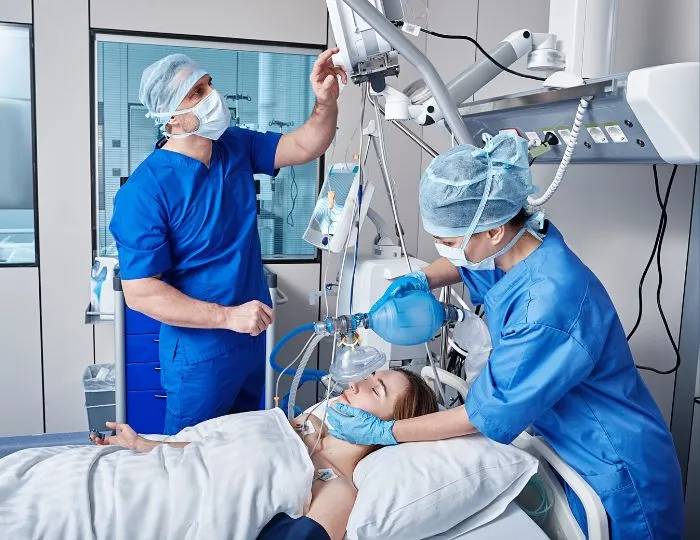
Surgery solves problems. The ICU prevents new ones from undoing that solution. The immediate post-operative period - particularly after major cardiac, vascular, thoracic, abdominal, or neurosurgical procedures - is when physiological homeostasis is most fragile. Bleeding, haemodynamic instability, respiratory compromise, infection, and organ dysfunction can all emerge in the hours to days following surgery, and each requires the capacity to detect and respond immediately. At Shree Hospitals, our post-surgical ICU care in Mumbai is structured around one principle: proactive monitoring is more valuable than reactive management. Post-operative monitoring at the intensity our surgical ICU provides is not a luxury - it is what determines whether a technically successful operation produces a clinically successful outcome.
(24×7 Emergency Care)
(24×7 Emergency Care)
Our Approach
(24×7 Emergency Care)
Our Approach In Managing Post-Surgical ICU Care
Every patient arriving in the surgical ICU comes with a known procedure, a known intraoperative course, and a predictable risk profile for specific complications. Our post-operative critical care specialist team in Mumbai, India uses this information to anticipate - not just respond. A cardiac surgery patient who required prolonged bypass is at high risk of atrial fibrillation, low cardiac output, and AKI. A major abdominal resection patient is at risk of anastomotic leak, ileus, and pulmonary atelectasis. The care is customised before the complication happens.
- Admission Assessment & Handover
The surgical ICU handover is a clinical transfer of responsibility - not a brief summary.
- Structured handover: procedure performed, intraoperative findings, estimated blood loss, fluid balance, vasopressor and anaesthetic agents used, antibiotic timing, intraoperative complications
- Immediate admission vitals: HR, BP, SpO2, respiratory rate, temperature, urine output, drainage output
- 12-lead ECG for cardiac surgical patients - immediately post-admission baseline
- ABG within 30 minutes of admission - assesses ventilation, oxygenation, lactate, and metabolic status
- Point-of-care ultrasound (POCUS) - cardiac function, lung assessment, volume status
- Haemodynamic Monitoring & Management
- Arterial line - continuous BP monitoring in all post-major-surgery ICU patients; blood sampling without repeated venipuncture
- Central venous catheter - CVP monitoring, vasopressor administration, fluid management
- Advanced cardiac monitoring - PICCO, oesophageal Doppler, or pulmonary artery catheter for post-cardiac surgery patients with impaired function
- Vasopressor management - Noradrenaline for post-operative hypotension; Dobutamine for low cardiac output; Vasopressin for vasodilatory states after prolonged bypass or anaphylaxis
- Post-operative monitoring of cardiac output and systemic vascular resistance guides fluid and vasopressor decisions more accurately than CVP alone
- Respiratory Management & Ventilator Weaning
Ventilator weaning after surgery is the most common activity in the surgical ICU and must be systematic.
- Lung-protective ventilation during the immediate post-operative period - 6–8ml/kg tidal volume, PEEP 5–8 cmH2O, SpO2 target 94–98%
- Spontaneous Breathing Trial (SBT) - initiated when patient is haemodynamically stable, vasopressors minimal, conscious and cooperative, FiO2 ≤0.40; T-piece or low-level pressure support trial for 30 minutes
- Extubation criteria: passes SBT, protective cough and gag reflex present, secretions manageable, GCS ≥13
- Post-extubation support - HFNC or NIV as bridge; reduces re-intubation rates in high-risk patients
- Pulmonary physiotherapy - incentive spirometry, early mobilisation, positioning; surgical complication prevention for atelectasis and pneumonia
- Tracheostomy - for patients anticipated to require >14 days ventilation; reduces ICU complications and sedation requirements
- Pain Management & Sedation
Adequate analgesia is not comfort care - it is physiology. Pain drives tachycardia, hypertension, splinting (breathing against chest or abdominal pain), and oxygen consumption.
- Multimodal analgesia - IV Paracetamol, NSAIDs (where renal function permits), opioids at lowest effective dose
- Epidural analgesia - gold standard for thoracic and abdominal surgery; superior analgesia with reduced systemic opioid requirement
- Regional nerve blocks - particularly for thoracic surgery (serratus anterior block, PECS II) and orthopaedic procedures
- RASS sedation score targeting 0 to -2 - lightest effective sedation; daily SAT (Spontaneous Awakening Trials)
- Delirium prevention and management - ABCDEF bundle: Assess, Both SAT and SBT, Choose minimal sedation, Delirium management, Early mobility, Family engagement
- Surgical Complication Prevention & Detection
Surgical complication prevention requires knowing what to look for and when.
- Bleeding - hourly drain output monitoring; thresholds for re-exploration vary by procedure
- Anastomotic leak - days 5–7 post-bowel surgery; fever, rising CRP, drain fluid amylase, CT with contrast
- Surgical site infection - daily wound inspection; culture swabs for any signs of erythema or discharge
- Venous thromboembolism - LMWH DVT prophylaxis from 12–24 hours post-operatively; early ambulation
- Acute kidney injury - hourly urine output, creatinine every 12–24 hours; dose-adjust all medications
- Ileus - enteral nutrition initiation within 24 hours accelerates return of bowel function; avoid excess opioids
- Post-cardiac surgery atrial fibrillation - continuous rhythm monitoring; beta-blockers and amiodarone for rate and rhythm control
- Early Mobilisation & ICU Discharge Planning
- ABCDEF bundle - systematic early rehabilitation from ICU day 1 reduces ICU stay, delirium, and long-term functional impairment
- Physiotherapy from ICU day 1 - passive range of motion progressing to active sitting, standing, and walking
- ICU discharge criteria - haemodynamically stable without vasopressors, breathing independently or on minimal support, pain controlled on oral medications, tolerating enteral feeds
- Step-down to HDU rather than direct ward transfer where possible - intermediate monitoring for 24–48 hours post-ICU
Happy Patients & Their Case Stories
Post-coronary artery bypass grafting patient transferred to surgical ICU. Intraoperative bypass time was 142 minutes. On ICU admission, cardiac output was low at 2.1 L/min/m². Dobutamine was initiated alongside Noradrenaline. Atrial fibrillation developed at 8 hours - rate-controlled with Amiodarone. CRRT was initiated for AKI on day 2. Ventilator weaning after surgery was achieved by day 5 after respiratory physiotherapy and SBT success.
Mr.Ketan
My son was diagnosed with Type 1 diabetes at the age of 12. The team at our [Type 1 and Type 2 diabetes hospital in Mumbai] educated our entire family about insulin management and CGM device use, giving us the confidence to handle his condition at home every day. Today, he leads a completely normal and active life.
Mr. Shay
How to Identify When Post-Surgical ICU Care Is Needed?
Not every surgery requires ICU admission - but certain procedure types, patient profiles, and intraoperative events reliably predict the need for intensive monitoring.
Factors that indicate a surgical ICU bed rather than a ward bed:
- Major cardiac surgery - valve replacement, CABG, aortic procedures; all require ICU post-operatively
- Major abdominal surgery - oesophagectomy, hepatectomy, pancreatectomy, colectomy in high-risk patients
- Thoracic surgery - pneumonectomy, sleeve resection, major mediastinal procedures
- Vascular surgery - aortic aneurysm repair, carotid endarterectomy in unstable patients
- Neurosurgery - craniotomy, spinal cord surgery, posterior fossa procedures
- Intraoperative complications - significant haemorrhage, prolonged hypotension, unexpected cardiac event during procedure
- Significant pre-operative comorbidities - CKD stage 4–5, severe COPD, cardiac failure, cirrhosis
- Surgical complication prevention for diabetes - major surgery in poorly controlled diabetics requires glycaemic management in a monitored setting
Post-operative deterioration follows predictable timelines - haemorrhage in the first 6 hours, respiratory complications in 24–48 hours, anastomotic or wound complications at 5–7 days. Post-operative monitoring in a surgical ICU is structured around catching each of these windows, not waiting for clinical deterioration to become obvious. Seek post-surgical ICU care in Mumbai at a centre where the surgical ICU team knows the procedure, knows the patient's risk, and has already planned for what might go wrong.
Post-Surgical ICU Care at Shree Hospitals
Comprehensive surgical ICU management and recovery in Mumbai - proactive monitoring, early complication detection, and systematic rehabilitation.
Advanced Haemodynamic Monitoring
Arterial line, CVP, and PICCO-based cardiac output monitoring - providing real-time post-operative monitoring data that drives vasopressor titration, fluid decisions, and early detection of low cardiac output states.
Ventilator Weaning Programme
Structured daily SBT assessment with lung-protective ventilation - ventilator weaning after surgery using standardised readiness criteria, HFNC post-extubation support, and respiratory physiotherapy from day one.
Multimodal Analgesia Protocol
Epidural, regional nerve blocks, IV Paracetamol, and low-dose opioids - structured analgesia reducing respiratory splinting, ICU delirium, and length of stay as part of surgical complication prevention.
Early Mobilisation & ABCDEF Bundle
ICU physiotherapy from day 1 - passive to active mobilisation, delirium prevention, daily SAT and SBT coordination; reducing ICU-acquired weakness and long-term functional impairment.
Top Surgical ICU & Critical Care Specialists in Mumbai

Dr. Sameer Jagdish Kanakiya
Internal Medicine, Critical Care
Every doctor and specialist at Shree Hospitals is board-certified and brings an average of 15 or more years of clinical experience in their area of subspecialty.

For Appointment/Query
1800-268-4000

Tele consultation/2nd Opinion
Schedule Consultation
Important FAQs: Post-Surgical ICU Care
How long do patients typically stay in the surgical ICU?
It varies by procedure. Cardiac surgery typically requires 2–5 ICU days. Major abdominal surgery 1–3 days for uncomplicated cases. Complications can extend the stay significantly. ICU discharge occurs when monitoring intensity can safely be reduced.
Is ICU admission after surgery always planned?
Elective major surgeries have planned ICU admissions arranged before the procedure. Emergency surgeries or intraoperative complications may result in unplanned ICU admission post-operatively.
What is the ABCDEF bundle in ICU?
A systematic evidence-based framework: Assess and treat pain, Both SAT and SBT daily, Choose minimal sedation, Delirium monitoring and management, Early mobilisation, and Family engagement. Following the bundle reduces ICU stay duration and long-term complications.
Can a patient be extubated the same day as surgery?
Yes - fast-track extubation within 6 hours of cardiac surgery is standard practice for stable patients. Major abdominal and thoracic surgeries often allow extubation within 12–24 hours in uncomplicated cases.
Why does delirium happen in the ICU after surgery?
ICU delirium results from anaesthesia, pain, disrupted sleep, sedative medications, immobility, and physiological stress. It affects up to 80% of mechanically ventilated patients. The ABCDEF bundle specifically addresses delirium prevention with significant outcome benefit.
(24×7 Emergency Care)

News & Updates
Shree Hospitals Expands Paediatric Surgical Care With Latest Technology
Shree Hospitals Installs a Robotic-Assisted Surgical System for Better Patient Care


