 Ghatkopar (East), Mumbai)

Home >Dermatology >Fungal skin infection
Fungal Skin Infection
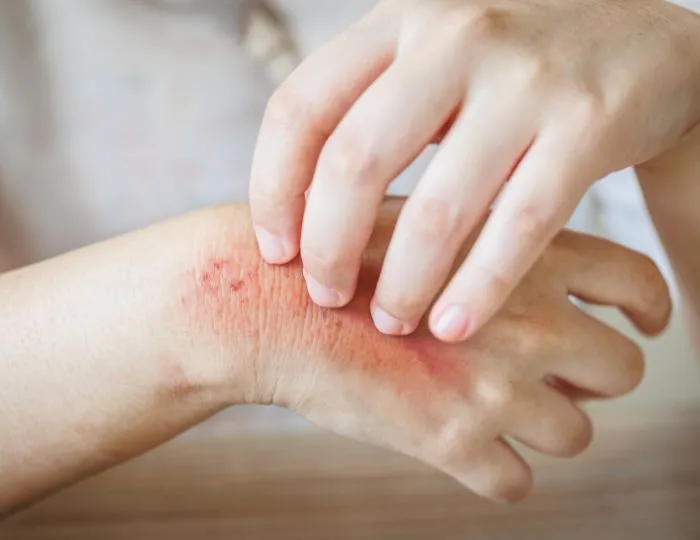
Fungal skin infections are among the most common dermatological presentations in Mumbai and among the most frequently undertreated. India carries one of the highest burdens of dermatophyte infection globally, and in recent years, a particularly alarming trend has emerged: the widespread use of combination topical steroids with antifungals sold over the counter and prescribed indiscriminately has created a generation of infections caused by Trichophyton indotineae, a newly identified species that is resistant to standard antifungal treatment.
At Shree Hospitals, our fungal skin infection treatment in Mumbai is built around accurate diagnosis, culture and sensitivity where treatment-resistant disease is suspected, and appropriate oral antifungal therapy — because topical steroid-contaminated fungal infections do not respond to topicals alone.
(24×7 Emergency Care)
Our Approach
(24×7 Emergency Care)
Our Approach in Fungal Skin Infections
Shree Hospitals — Life-saving care
The first question with any suspected fungal skin infection in India in 2025 is: has this patient been using a combination steroid-antifungal cream? If yes the clinical presentation has been modified, the infection has been suppressed and enhanced simultaneously (steroids suppress the immune response that would limit spread, while the antifungal component is often sub-therapeutic), and standard topical treatment will fail. Our fungal infection specialist dermatologist team in Mumbai, India addresses this reality directly with diagnosis confirmation before prescribing.
1. Types of Fungal Skin Infections
-
- Tinea corporis (ringworm) : circular or annular scaly ring-shaped plaques on the body; dermatophyte infection
- Tinea cruris (jock itch) inguinal region, inner thighs; common in men; warm, moist environment dependent
- Tinea pedis (athlete's foot) interdigital maceration, scaling, and fissuring of the feet; most common fungal infection globally
- Tinea capitis scalp fungal infection; common in children; can cause permanent scarring alopecia if untreated; oral therapy mandatory
- Tinea unguium / Onychomycosis nail fungal infection; thickened, discoloured, crumbling nails; requires prolonged oral antifungal therapy
- Tinea versicolor / Pityriasis versicolor Malassezia furfur; hypo or hyperpigmented non-scaly patches on trunk and shoulders; not a dermatophyte; responds to different antifungal agents
- Cutaneous candidiasis Candida albicans; intertriginous areas (submammary, groin, axilla); bright red, macerated, satellite papules; associated with diabetes, obesity, immunosuppression
- Diagnosis : Confirmation Before Treatment
- KOH (Potassium Hydroxide) microscopy skin scraping from the active border dissolved in KOH; visualises fungal hyphae and spores; rapid, inexpensive, and highly specific the essential diagnostic step before prescribing
- Fungal culture on Sabouraud dextrose agar species identification and sensitivity testing; essential in treatment-resistant or atypical presentations; results in 2–4 weeks
- Wood's lamp examination Microsporum species (now rare) fluoresce green; Malassezia: yellow-orange fluorescence; does not detect Trichophyton
- Dermoscopy in tinea capitis: comma hairs, corkscrew hairs, and black dots confirm the diagnosis and guide therapy intensity
3.Treating Standard Dermatophyte InfectionsAntifungal therapy for skin must be chosen based on infection site and extent. - Topical antifungals Clotrimazole, Miconazole, Terbinafine cream, Ketoconazole for limited tinea corporis, cruris, and pedis
- Apply 2cm beyond the visible border ; dermatophytes extend beyond the clinical margin
- Duration: minimum 4 weeks for tinea corporis; 6–8 weeks for tinea pedis; do not stop when it "looks better"
- Never use combination antifungal-steroid creams (Clotrimazole+Betamethasone) the steroid modifies the presentation, enables spread, and selects for resistant organisms
- Oral Terbinafine 250mg daily for 2–4 weeks for widespread tinea corporis, tinea cruris, or resistant topical cases
- Oral Itraconazole 200mg daily for 1–2 weeks for Pityriasis versicolor and Candida-related infections; also effective for tinea
4.Treating Resistant & Trichophyton Indotineae Infections
The emergence of Trichophyton indotineae resistant to Terbinafine and often Itraconazole has changed the landscape of tinea management in India.
- Suspect resistance when: tinea does not respond to 4+ weeks of appropriate topical therapy; patient has used combination steroid-antifungal creams; infection is extensive or rapidly spreading despite treatment
- Culture and sensitivity mandatory in these cases
- Oral Itraconazole, typically effective against T. indotineae when Terbinafine fails; 200–400mg daily for 3–6 weeks
- Voriconazole ;emerging option for T. indotineae refractory to Itraconazole; specialist prescription
- Counselling on steroid-antifungal combination avoidance, the most important preventive message for recurrent fungal skin infection
5.Onychomycosis Treatment
- Oral Terbinafine 250mg daily ; 6 weeks for fingernails, 12 weeks for toenails; pulse dosing also effective (500mg daily for 1 week per month × 3–4 pulses)
- Oral Itraconazole pulse ; 200mg twice daily for 1 week per month × 3 pulses (fingernails) or 4 pulses (toenails)
- Topical nail lacquers (Amorolfine, Ciclopirox) for mild superficial onychomycosis; poor penetration into nail plate for established infection; adjunct to oral therapy
- Nail avulsion partial or total for severe onychomycosis with thickened nail plate preventing antifungal penetration
- Laser treatment for onychomycosis evidence modest; adjunct to oral therapy in selected cases
6.Preventing Recurrent Fungal Skin Infection
Recurrent fungal skin infection is the norm rather than the exception when the precipitating factors are not addressed.
- Complete the full course : the most common cause of recurrence is premature treatment cessation
- Dry intertriginous areas thoroughly after bathing moisture elimination is primary prevention
- Breathable cotton clothing and footwear particularly in tinea cruris and pedis
- Shared contaminated surfaces mats, shoes, towels source of reinfection; footwear in communal changing rooms
- Treating household contacts tinea capitis particularly; untreated family members are ongoing sources of reinfection
- Glycaemic control in diabetics hyperglycaemia is the single most important predisposing factor for recurrent fungal skin infection in Indian patients
Happy Patients & Their Case Stories
He had been applying a combination clotrimazole-betamethasone cream to tinea on his groin and thighs for 8 months — the rash improved temporarily with each application and then spread further. By the time he came to Shree Hospitals, the tinea involved his entire inner thighs, buttocks, and lower abdomen. KOH microscopy confirmed dermatophyte infection. Culture grew Trichophyton indotineae with Terbinafine resistance. He was started on Itraconazole 200mg daily for 6 weeks. The combination cream was immediately stopped. Complete clearance was achieved at week 6 and has not recurred at 12 months.
Mr. Vinod T.
Had unilateral segmental vitiligo on the right forearm and hand — stable for 2 years. Phototherapy had produced minimal response. Vitiligo repigmentation through suction blister epidermal grafting was performed for the forearm patch under local anaesthesia. At 3 months, 85% repigmentation was achieved with excellent colour match. The hand was treated subsequently. He is now completing a second grafting session for residual areas.
Mr. Arun M.
How to Identify Fungal Skin Infections ?
Fungal skin infections are identifiable by their characteristic morphology but in India, steroid-modified presentations have made clinical recognition more challenging.
Classical features by infection type:
- Tinea corporis : ring-shaped scaly plaques with a raised advancing border and central clearing; pruritis variable
- Tinea cruris : bilateral inguinal involvement with a scalloped, sharply defined border extending to the inner thighs; spares the scrotum (distinguishing from candidal intertrigo)
- Tinea pedis : interdigital scaling, maceration, and fissuring between the 4th and 5th toes first; can spread to plantar surface and toenails
- Pityriasis versicolor : hypo or hyperpigmented macules on the upper trunk and shoulders; fine scale on scratching (coup d'ongle sign); not a dermatophyte infection Malassezia species
- Onychomycosis distal yellowing, thickening, and crumbling of nails; nail plate separation; affects toenails more than fingernails
- Tinea modified by steroid cream larger than expected lesions, reduced scaling, less obvious border, more erythema; clinician and patient may both think it is "getting better" when spread continues
The single most important question to ask any patient with a circular or ring-shaped skin rash in India: have you applied any cream to it, particularly a combination cream with a steroid? The answer determines both the expected clinical appearance and whether a culture for resistance testing is needed. Seek fungal skin infection treatment in Mumbai from a dermatologist who does KOH microscopy before prescribing — not one who treats all annular rashes with the same topical.
Important FAQs: Fungal Skin Infections
Why is my ringworm not getting better despite treatment?
The most common reasons are: premature treatment cessation, use of combination steroid-antifungal creams creating a modified/resistant infection, or Trichophyton indotineae resistant to standard antifungals. KOH microscopy and culture guide correct therapy.
Can I use clotrimazole-betamethasone combination cream for ringworm?
No , this combination is one of the most harmful practices in Indian dermatology. The steroid suppresses the immune response limiting fungal spread while providing apparent improvement; it enables the fungus to spread further and may select for resistant strains.
How long does oral antifungal treatment take for tinea?
Tinea corporis and cruris: 2–4 weeks of oral Terbinafine. Tinea pedis: 2–6 weeks. Onychomycosis: 3–6 months for toenails. Completing the full course is essential — premature stopping is the primary cause of recurrence.
Is fungal infection contagious?
Yes , dermatophytes spread by direct skin-to-skin contact, contaminated surfaces (floors, towels, clothing), and from animals. Household members should be examined and treated where necessary, particularly in tinea capitis.
Why do diabetics get more fungal infections?
High blood glucose creates a nutrient-rich environment for fungal growth, impairs neutrophil function, and reduces skin immune defences. Glycaemic control is the most effective long-term prevention strategy for fungal infections in diabetics.
Treatments For Fungal Skin Infections At Shree Hospitals
Treatments for Fungal Skin Infections at Shree Hospitals.Comprehensive tinea and ringworm diagnosis and management in Mumbai from KOH-confirmed topical therapy to oral antifungal programmes.
Top Fungal Infection & Dermatology Specialists in Mumbai

Dr. Snehal Thank
Pioneer Pediatric Physiotherapist & Neuro-Developmental
Dr. Yogesh Kalyanpad
Dermatology, Cosmetology and Hair Transplant
Every doctor and specialist at Shree Hospitals is board-certified and brings an average of 15 or more years of clinical experience in their area of subspecialty.

For Appointment/Query
1800-268-4000

Tele consultation/2nd Opinion
Schedule Consultation

News & Updates
Shree Hospitals is the first to perform robotic endo surgery.
Shree Hospitals Introduces Advanced Robotic Surgery for Better Patient Care
Shree Hospitals Expands Advanced Surgical Care With Latest Medical Technology


