 Ghatkopar (East), Mumbai)


Home > Gastroenterology >Coeliac Disease
Coeliac Disease
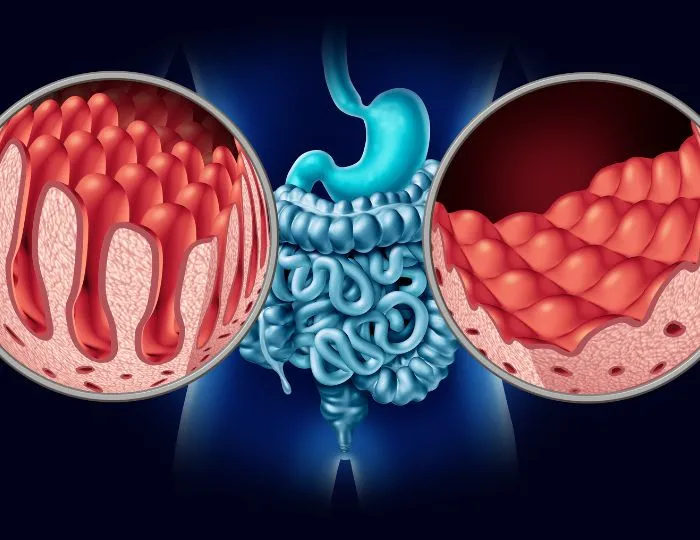
Coeliac disease is a chronic autoimmune condition in which the ingestion of gluten - the protein found in wheat, barley, and rye - triggers an abnormal immune response that damages the absorptive lining of the small intestine.
The resulting villous atrophy impairs the absorption of macronutrients and critical micronutrients - iron, folate, calcium, vitamin D, vitamin B12, zinc - producing a spectrum of consequences ranging from classic gastrointestinal symptoms to insidious systemic manifestations that go unrecognised for years.
In India, coeliac disease was long considered rare but is now recognised to be significantly prevalent - particularly in North Indian wheat-eating populations in Punjab, Haryana, and Uttar Pradesh, where seroprevalence studies report rates of 1 in 100 to 1 in 200 - comparable to global estimates.
At Shree Hospitals Ghatkopar East, we provide accurate serological and histological diagnosis, structured gluten-free dietary counselling, and long-term monitoring for nutritional recovery and rare complications.
(24×7 Emergency Care)
Our Approach
(24×7 Emergency Care)
Our Approach in Managing Coeliac Disease
Coeliac disease is a chronic autoimmune condition in which the ingestion of gluten - the protein found in wheat, barley, and rye - triggers an abnormal immune response that damages the absorptive lining of the small intestine.
The resulting villous atrophy impairs the absorption of macronutrients and critical micronutrients - iron, folate, calcium, vitamin D, vitamin B12, zinc - producing a spectrum of consequences ranging from classic gastrointestinal symptoms to insidious systemic manifestations that go unrecognised for years.
In India, coeliac disease was long considered rare but is now recognised to be significantly prevalent - particularly in North Indian wheat-eating populations in Punjab, Haryana, and Uttar Pradesh, where seroprevalence studies report rates of 1 in 100 to 1 in 200 - comparable to global estimates.
At Shree Hospitals Ghatkopar East, we provide accurate serological and histological diagnosis, structured gluten-free dietary counselling, and long-term monitoring for nutritional recovery and rare complications.
Happy Patients & Their Case Stories
"I was anaemic for seven years and took iron tablets that never worked. My doctor at Shree Hospitals tested me for coeliac disease - my tTG was very high and my biopsy showed Marsh 3c. On a gluten-free diet for one year, my iron is now normal for the first time."
Mr. Gurpreet K.
"My 8-year-old daughter wasn't growing properly. The paediatrician referred us to Shree Hospitals. She had coeliac disease. After six months on a gluten-free diet she grew 4 cm and her energy completely changed."
Mrs. Meena S.
How To Identify Coeliac Disease?
Coeliac disease is one of the most protean conditions in gastroenterology - it presents across an enormous clinical spectrum, from classical gastrointestinal malabsorption to entirely extra-intestinal manifestations with no bowel symptoms at all.
Classical presentation - which should prompt immediate coeliac testing - includes: chronic diarrhoea with pale, bulky, malodorous, difficult-to-flush stools (steatorrhoea from fat malabsorption); abdominal bloating and distension that worsens after eating wheat-containing foods; weight loss or failure to gain weight appropriately (particularly in children); and significant fatigue. In children, failure to thrive - inadequate height and weight gain for age - is the most common presentation and may be the only initial symptom.
However, classical malabsorption is not the most common presentation in clinical practice.
The majority of coeliac patients in India present with atypical or extra-intestinal manifestations that are not initially associated with gluten or the gut: iron-deficiency anaemia refractory to oral iron supplementation (because iron absorption in the proximal duodenum is impaired by villous atrophy - the most common presenting feature in Indian adult coeliac patients); osteoporosis or fractures at an unexpectedly young age; unexplained infertility or recurrent miscarriages; peripheral neuropathy; gluten ataxia (cerebellar ataxia related to anti-gliadin immune response in the cerebellum); aphthous mouth ulcers recurring frequently; delayed puberty; and chronic fatigue without clear cause.
Dermatitis herpetiformis - an intensely itchy blistering skin rash on extensor surfaces, elbows, knees, and buttocks - is the cutaneous manifestation of coeliac disease, with skin IgA deposits on biopsy confirming the diagnosis.
Who Should Be Tested for Coeliac Disease:
- First-degree relatives of confirmed coeliac patients - 10% prevalence in first-degree relatives
- Patients with Type 1 diabetes - 5–10% coeliac disease co-prevalence
- Autoimmune thyroid disease (Hashimoto's thyroiditis, Graves' disease)
- Down syndrome, Turner syndrome, Williams syndrome - all carry elevated coeliac prevalence
- Iron-deficiency anaemia without identified cause, particularly if refractory to oral iron
- Unexplained osteoporosis or low bone density in pre-menopausal women or men below 50
- Unexplained infertility or recurrent miscarriage
- IBS with diarrhoea-predominant pattern - coeliac disease is present in up to 5% of patients referred with IBS-D
Important FAQs: Coeliac Disease
Is coeliac disease the same as gluten intolerance or wheat allergy?
These are three distinct conditions. Coeliac disease is an autoimmune disorder - gluten ingestion triggers an immune response mediated by HLA-DQ2/DQ8 restricted CD4+ T cells that damages intestinal villi, causing measurable histological changes and serological antibodies. It carries long-term risks of malnutrition, osteoporosis, infertility, and lymphoma if untreated. Non-coeliac gluten sensitivity (NCGS) - also called non-coeliac wheat sensitivity - produces gluten-related symptoms (bloating, abdominal pain, fatigue) without the antibodies or villous atrophy of coeliac disease; its mechanism is not fully understood. Wheat allergy is an IgE-mediated immune response to wheat proteins causing typical allergic symptoms - urticaria, angioedema, and in severe cases anaphylaxis - within minutes to hours of wheat ingestion. Diagnosis distinguishes these conditions: anti-tTG serology and duodenal biopsy for coeliac disease; skin prick test and specific IgE for wheat allergy; and exclusion of both for NCGS.
Can coeliac disease develop in adults or only in children?
Coeliac disease can be diagnosed at any age from infancy to the ninth decade of life. There are two peak periods of diagnosis: in early childhood (typically 1–3 years, when gluten is introduced to the weaning diet), and in the fourth to sixth decades of life in adults. Adult-onset coeliac disease - presenting with anaemia, osteoporosis, fatigue, or atypical symptoms rather than childhood malabsorption - is increasingly the more common diagnostic scenario in India as awareness improves and testing is offered to symptomatic adults. The condition does not "develop" de novo - the genetic predisposition (HLA-DQ2/DQ8) is present from birth. What changes is the clinical expression - a trigger event (pregnancy, major illness, surgery, gastroenteritis) may unmask latent coeliac disease and produce clinical symptoms in a previously asymptomatic HLA-susceptible individual.
Will I need to follow a gluten-free diet forever even if I feel fine?
Yes - lifelong strict adherence to the gluten-free diet is required in all confirmed coeliac patients, including those who are clinically asymptomatic. This is one of the most important points in coeliac management. Silent coeliac disease - where gluten ingestion does not produce obvious gastrointestinal symptoms - is not "mild" disease; it continues to cause intestinal inflammation and villous damage that produces malabsorption of iron, calcium, and vitamins, drives progressive bone mineral density loss, maintains elevated cancer risk, and sustains the autoimmune inflammatory state. Anti-tTG antibody normalisation on the gluten-free diet is the serological confirmation that intestinal healing has occurred - and persistent anti-tTG elevation in an asymptomatic patient on a supposedly gluten-free diet identifies ongoing gluten ingestion that requires dietary review.
Can I eat oats if I have coeliac disease?
Pure oats - uncontaminated with wheat, barley, or rye - are tolerated by the majority of coeliac patients without provoking villous atrophy. However, the majority of commercially available oats in India are processed in shared facilities that also process wheat, making cross-contamination with gluten essentially universal in standard oat products. Certified gluten-free oats - processed in dedicated gluten-free facilities and tested to below 20 ppm gluten - are safe for most coeliac patients and are available in India from specialist health food suppliers. A small minority (estimated 1–5%) of coeliac patients have an immunological response to avenin (the oat storage protein) that mimics the gluten response - these patients cannot tolerate even pure uncontaminated oats. Oats should be introduced cautiously in coeliac patients already in serological and histological remission on a strict gluten-free diet, with monitoring of anti-tTG antibody during the introduction period.
What happens if I accidentally eat gluten?
Accidental gluten ingestion - common at social events, restaurants, and during Indian festival seasons - produces symptoms within minutes to hours in most symptomatic coeliac patients: abdominal cramping, bloating, diarrhoea, nausea, and sometimes vomiting. The severity varies considerably between individuals - some patients experience significant distress from tiny gluten exposures; others tolerate accidental exposures with minimal acute symptoms. The absence of acute symptoms after accidental ingestion does NOT mean no damage has occurred - silent coeliac patients experience the same histological inflammation as symptomatic patients without the acute symptoms that serve as a biological feedback signal. After accidental ingestion, symptoms typically resolve within 24–48 hours. The histological damage from a single significant exposure may take weeks to months to fully heal. There is no treatment for acute gluten ingestion in coeliac disease beyond supportive management - antiemetics, oral rehydration, and waiting for resolution.
Does my family need to be tested if I have coeliac disease?
Yes - first-degree relatives (parents, siblings, and children) of a confirmed coeliac patient have a 10% prevalence of coeliac disease - approximately 10 times the general population risk. Many are asymptomatically affected and unaware. Testing of first-degree relatives with anti-tTG IgA (with total IgA) is recommended for all adults. For children of coeliac parents, testing is typically begun at age 3 years or earlier if symptoms develop. HLA-DQ2/DQ8 testing can be used as a first-line screen in relatives - if negative, coeliac disease is effectively excluded and serological monitoring is not required. If HLA-DQ2 or DQ8 is positive (identifying the susceptible genotype), periodic serological monitoring every 2–5 years is recommended even in asymptomatic individuals, as coeliac disease can emerge at any age in susceptible individuals.
Treatments for Coeliac Disease
Anti-tTG Serology, Total IgA Testing & HLA Typing
Our coeliac disease diagnostic pathway includes anti-tTG IgA, total IgA, and anti-EMA IgA. In IgA deficiency, tTG-IgG and DGP-IgG are used. HLA-DQ2/DQ8 testing helps when patients have already started a gluten-free diet or results are unclear. A negative HLA-DQ2/DQ8 result excludes coeliac disease with over 99% negative predictive value. Patients should continue eating gluten until testing is complete to avoid false-negative results.
Duodenal Biopsy & Marsh Classification
At Shree Hospitals, duodenal biopsy is performed during upper GI endoscopy, with 4–6 samples from D2 and D3 to detect patchy disease. Biopsies are graded using the Marsh-Oberhuber classification (Marsh 0–3c). Positive coeliac serology with Marsh 3a–3c changes confirms diagnosis. Patients should follow a gluten-containing diet for at least 6 weeks before biopsy to avoid false-negative results.
Nutritional Deficiency Correction & Supplementation
At diagnosis, Shree Hospitals assesses and treats common nutritional deficiencies caused by malabsorption, including iron, vitamin D, folate, vitamin B12, and calcium. A DEXA scan may be done to assess bone density, with repeat testing after 1–2 years when needed. Nutritional status usually improves as the gluten-free diet restores intestinal absorption.
Lifelong Gluten-Free Dietary Programme & Adherence Support
The gluten-free diet is the only proven treatment for coeliac disease. At Shree Hospitals, a specialist GI dietitian provides guidance on safe Indian foods, hidden gluten, label reading, cross-contamination, eating out, and managing the diet during festivals. Annual reviews help maintain adherence and prevent accidental gluten exposure.
Top Coeliac Disease Specialists in Mumbai

Dr. Keyur A. Sheth
Gastroenterologist, Hepatologist & Advanced GI

Dr. Sandeep Kirit Davavala
Gastroenterology, Therapeutic Endoscopy
Board-certified Surgeons and Specialists with an average of 15+ years of experience in their areas of expertise.

For Appointment/Query
1800-268-4000

Tele consultation/2nd Opinion
Schedule Consultation


