 Ghatkopar (East), Mumbai)


Home > Gastroenterology >Endoscopic Banding and Sclerotherapy
Endoscopic Banding and Sclerotherapy
Minimally Invasive Treatment for Oesophageal Varices and GI Bleeding
Endoscopic banding and sclerotherapy are highly effective, minimally invasive procedures for treating oesophageal varices and managing gastrointestinal bleeding.
At Shree Hospitals, our specialist gastroenterologists perform these life-saving procedures with precision and expertise using advanced endoscopic technology, with 24x7 emergency endoscopy capability.
Variceal Bleeding Emergency? Call Our 24x7 Gastroenterology Team Now
Quick facts
Procedure Type: Therapeutic Endoscopic Procedure
Duration: 20 to 45 minutes
Hospital Stay: 1 to 2 days
Type of Anaesthesia: Conscious sedation
Indication: Oesophageal varices, gastric varices, GI bleeding
Support Team: Gastroenterologists, endoscopy nurses, anaesthetists
Key Benefit: Non-surgical control of GI bleeding with low risk of recurrence
What is Endoscopic Banding and Sclerotherapy?
Oesophageal varices are enlarged, swollen veins in the lining of the oesophagus that develop as a result of increased pressure in the portal vein (portal hypertension), most commonly caused by liver cirrhosis. When these veins rupture, they can cause life-threatening gastrointestinal bleeding that requires immediate specialist endoscopic intervention.
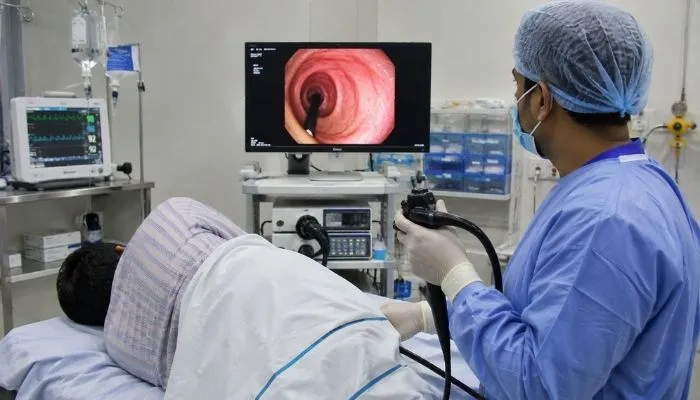
Endoscopic band ligation (EBL) involves the placement of small rubber bands around the variceal veins using an endoscope, cutting off their blood supply and causing them to shrink and disappear over time. Sclerotherapy involves the injection of a chemical sclerosant agent directly into the varix to cause scarring and permanent obliteration of the vessel. Both procedures are performed through an endoscope without any surgical incision.
At Shree Hospitals, our gastroenterology team performs endoscopic banding and sclerotherapy in a dedicated endoscopy suite equipped with advanced technology. Both emergency and elective procedures are available, with 24x7 emergency endoscopy capability for patients presenting with active or suspected variceal bleeding.
When Should You Seek Emergency or Specialist Care?
You should seek immediate medical evaluation if you have:
- Vomiting of blood or passing dark tarry stools
- Known liver cirrhosis with sudden dizziness or collapse
- Diagnosed oesophageal or gastric varices requiring follow-up
- Portal hypertension with elevated liver enzymes
- Previous episode of variceal bleeding requiring ongoing surveillance
Do not delay. Variceal bleeding is a medical emergency. Call 1800-268-4000 immediately.
Is Endoscopic Banding or Sclerotherapy Right for You?
This procedure may be right for you if:
- You have been diagnosed with oesophageal varices on endoscopy
- You have active variceal bleeding requiring emergency endoscopic treatment
- You require elective banding as secondary prevention after a previous bleed
- You have gastric varices that are unsuitable for banding, requiring sclerotherapy
- Your hepatologist or gastroenterologist has recommended endoscopic variceal treatment
Our specialists will assess your individual situation and select the safest, most effective approach.
Why Expert Endoscopic Treatment Matters?
Variceal bleeding is one of the most serious complications of liver cirrhosis.
Expert endoscopic management:
- Provides immediate control of life-threatening bleeding
- Reduces risk of re-bleeding by up to 70% with banding
- Requires no surgical incision with significantly faster recovery
- Can be performed as an emergency procedure within minutes of presentation
- Combines with medical therapy for complete variceal management
Endoscopic band ligation reduces the risk of variceal re-bleeding by up to 70%.
24×7 Emergency Care
Our Approach to Endoscopic Banding and Sclerotherapy
At Shree Hospitals, our gastroenterology and hepatology team provides expert, round-the-clock care for patients with oesophageal varices and GI bleeding.
Every patient receives a thorough assessment, a personalised endoscopic treatment plan, and structured follow-up to minimise the risk of recurrence and protect long-term liver health.
24×7 Emergency Care
Rapid Emergency Assessment
Our 24x7 emergency gastroenterology team is available to assess and treat patients presenting with active variceal bleeding at any hour. Immediate endoscopy is arranged alongside resuscitation, blood transfusion, and pharmacological therapy for the most critical cases.
Expert Endoscopic Technique
Our gastroenterologists are trained in both endoscopic band ligation and injection sclerotherapy, allowing selection of the most appropriate technique based on variceal size, location, and patient clinical status. Band ligation is the preferred first-line treatment for most oesophageal varices.
Elective Prevention Sessions
For patients with known varices who have not yet bled, we offer planned surveillance endoscopy and elective banding sessions to eradicate varices before a bleeding episode occurs. This primary prevention approach significantly reduces the risk of a first variceal haemorrhage.
Post-Treatment Monitoring and Liver Care
After treatment, patients receive structured follow-up endoscopy to confirm variceal eradication and detect any recurrence. Ongoing hepatology management of the underlying liver disease (cirrhosis) is provided to prevent new variceal formation.
Top Gastroenterologists in Mumbai at Shree Hospitals
Every specialist at Shree Hospitals is board-certified and has an average of 15+ years of clinical experience in diagnostic and therapeutic endoscopy, colonoscopy, and gastrointestinal disease management.
24×7 Emergency Care

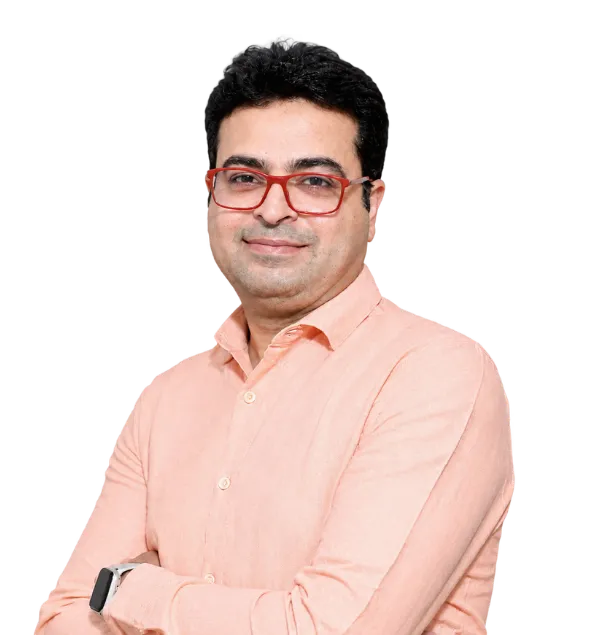
Dr. Keyur A. Sheth
Gastroenterologist, Hepatologist & Advanced GI
Dr. Sandeep Kirit Davavala
Gastroenterology, Therapeutic Endoscopy
Gastroenterology Services at Shree Hospitals
We offer a comprehensive range of gastroenterology and hepatology services including endoscopic banding, sclerotherapy, colonoscopy, ERCP, liver biopsy, antiviral therapy for hepatitis, and IBD management, all supported by specialist teams and advanced endoscopic facilities with 24x7 emergency availability.
Endoscopy and Colonoscopy
High-definition upper GI endoscopy and colonoscopy for accurate diagnosis and treatment of digestive conditions. Biopsies, polyp removal, and therapeutic procedures are performed at the same session without the need for further intervention.
ERCP (Bile Duct Procedure)
Specialised endoscopic procedure for diagnosis and treatment of bile duct stones, strictures, and biliary obstruction. ERCP achieves non-surgical stone removal and biliary stenting in over 90% of cases.
Antiviral Therapy (Hepatitis)
Evidence-based antiviral treatment for chronic hepatitis B and C. Modern direct-acting antiviral therapy cures hepatitis C in over 95% of patients within 8 to 12 weeks, preventing cirrhosis and liver cancer.
Liver Biopsy
Definitive ultrasound-guided liver tissue diagnosis for accurate staging of liver disease and fibrosis. Results guide antiviral, immunosuppressive, or other treatment decisions for chronic liver conditions.
Step by Step Process of Endoscopic Banding and Sclerotherapy at Shree Hospitals
Hundreds of successful variceal treatments performed by our specialists over 25+ years
Step 1 - Clinical Assessment and Diagnosis
Your gastroenterologist or hepatologist evaluates your liver disease status, portal hypertension severity, and bleeding history. Blood tests, ultrasound, and Doppler assessments of portal blood flow are arranged. Upper GI endoscopy is performed to identify and grade the size of oesophageal varices.
Step 2 - Pre-Procedure Preparation and Consent
You are prepared for the endoscopic procedure with IV access, blood group and crossmatch, and pharmacological therapy (terlipressin or octreotide) to reduce portal pressure. Consent is obtained with a full explanation of the procedure, technique chosen, and expected outcomes.
Step 3 - Endoscopic Visualisation
Under conscious sedation, the endoscope is passed into the oesophagus. The varices are carefully inspected and graded. The endoscope is fitted with a banding device (for EBL) or prepared with a sclerotherapy needle (for injection).
Step 4 - Banding or Sclerotherapy Procedure
For band ligation, rubber bands are applied directly to each varix starting from the gastro-oesophageal junction and working upward. For sclerotherapy, a sclerosant agent is injected into each varix. Typically 3 to 6 varices are treated per session. The procedure takes 20 to 45 minutes.
Step 5 - Post-Procedure Monitoring
You are monitored in the recovery ward for vital signs, bleeding, and pain. Most patients can tolerate liquids within a few hours and are transitioned to a soft diet. A short course of a proton pump inhibitor (PPI) is prescribed to protect the oesophageal lining while it heals.
Step 6 - Follow-Up Endoscopy and Surveillance
A follow-up endoscopy is arranged at 2 to 4 weeks to assess variceal healing and perform additional banding if required. Most patients require 2 to 4 sessions for complete variceal eradication. Thereafter, surveillance endoscopy every 6 to 12 months is recommended.
Patient Questions About Endoscopic Banding and Sclerotherapy
How many banding sessions will I need?
Most patients require 2 to 4 sessions of endoscopic band ligation to achieve complete variceal eradication. Sessions are typically spaced 2 to 4 weeks apart. The exact number depends on the size and number of varices. After eradication, surveillance endoscopy every 6 to 12 months monitors for variceal recurrence. Your gastroenterologist will give you an individual treatment plan.
Is endoscopic banding painful?
The procedure is performed under conscious sedation so you will not feel pain during banding. After the procedure, some patients experience mild chest discomfort or difficulty swallowing for 1 to 3 days as the banded tissue heals. This is usually managed with liquid diet and pain relief. Significant pain or new bleeding after the procedure should be reported to your care team immediately.
What is the difference between banding and sclerotherapy?
Endoscopic band ligation (EBL) is the preferred first-line treatment for oesophageal varices because it has fewer side effects and lower rates of complication compared to sclerotherapy. Sclerotherapy is generally reserved for situations where banding is technically difficult or for treatment of gastric varices or small residual varices after banding. Your gastroenterologist will select the most appropriate technique for your individual case.
Can varices come back after treatment?
Yes. Varices can recur after successful eradication, particularly if the underlying liver disease and portal hypertension are not well controlled. This is why structured surveillance endoscopy every 6 to 12 months is essential after completing a course of banding. Medications such as beta-blockers (propranolol or carvedilol) are often prescribed alongside endoscopic treatment to reduce portal pressure and lower re-bleeding risk.

Evidence-Based Case Studies by Our Specialists
Would Recommend Us
"I was rushed to Shree Hospitals vomiting blood in the middle of the night. The gastroenterology team was ready immediately. They performed emergency banding and stopped the bleeding. I owe them my life."
Mr. Suresh R
"My liver disease was causing varices that needed treatment before they bled. The team at Shree Hospitals completed three banding sessions over 2 months and my last endoscopy showed complete clearance. I feel very reassured."
Mr. Anil T.
"After my banding sessions, a small gastric varix was found. The team used sclerotherapy to treat it and my follow-up endoscopy was clear. The care and communication throughout has been excellent."
Mrs. Kamala V.
Patient
Resources

Schedule
consultation

Billing &
Payments

Hospital
Facilities
24×7 Emergency Care

1800-268-4000

Follow Us

Shree
Hospitals

Shree
Hospitals
