 Ghatkopar (East), Mumbai)

Home >Neonatology > Respiratory Distress Syndrome (RDS)
Respiratory Distress Syndrome Treatment
A preterm baby taking their first breath in a world the lungs weren't yet built for - this is the essence of Respiratory Distress Syndrome, the most common and most immediately life-threatening complication of premature birth. Without surfactant, the tiny air sacs in the immature lung collapse with each breath, forcing the baby to fight for every breath of air. Also known as hyaline membrane disease, RDS has been transformed from a frequently fatal condition into a highly manageable one by the development of surfactant therapy and modern respiratory support.
At Shree Hospitals, our preterm lung disease specialists deliver expert Respiratory Distress Syndrome treatment in Mumbai, India through advanced surfactant therapy and CPAP support for newborn RDS in Mumbai and comprehensive neonatal breathing difficulty diagnosis and ventilator care.
(24×7 Emergency Care)
Our Approach
(24×7 Emergency Care)
Our Approach to RDS Management
Support the breath. Replace the surfactant. Protect the developing lung.
Respiratory Distress Syndrome has a simple underlying mechanism - the immature lung lacks surfactant, the soapy substance that lines the air sacs and prevents them from collapsing between each breath. Without it, the baby must generate enormous negative pressure with every inspiration to reopen collapsed alveoli, quickly exhausting their respiratory muscles and depleting oxygen levels. The treatment, conceptually, is equally simple: replace the missing surfactant and support the breathing until the lungs mature enough to produce it themselves.
The clinical execution of this simple concept, however, demands extraordinary precision - particularly in the most premature and fragile infants. At Shree Hospitals, our approach to neonatal breathing difficulty diagnosis and ventilator care for RDS prioritises gentle, lung-protective strategies from the very first breath, recognising that how we support the lung in the first hours and days directly affects whether it recovers healthily or develops chronic lung disease.
- Antenatal Prevention - Starting Before Birth
The most effective treatment for RDS begins before delivery:
- Antenatal corticosteroids (betamethasone) administered to the mother when preterm delivery is anticipated - stimulating fetal lung maturation and surfactant production
- A single course of steroids given 24 to 48 hours before delivery reduces RDS severity, need for surfactant, and mortality
- Repeat courses are used selectively, balancing benefit against potential effects on fetal growth
- Delayed cord clamping at delivery - improving cardiopulmonary adaptation in the immediate newborn period
- Immediate Delivery Room Respiratory Support
- Positive pressure ventilation initiated gently for babies who don't establish spontaneous breathing - using a T-piece resuscitator with controlled inspiratory pressure
- Sustained inflation technique - a slow, prolonged initial inflation helping to establish functional residual capacity
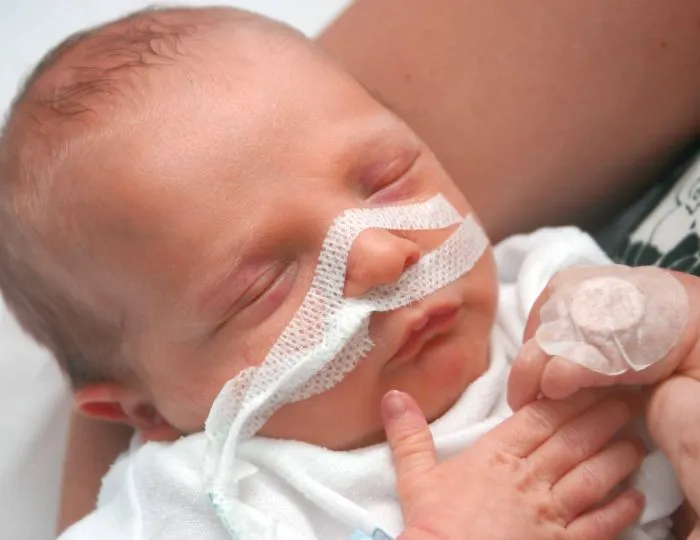
- CPAP (Continuous Positive Airway Pressure) applied immediately in the delivery room for spontaneously breathing preterm babies - keeping the alveoli open between breaths
- Avoidance of intubation in the delivery room whenever possible - babies managed on CPAP have better lung outcomes than those intubated routinely
- Surfactant Therapy - The Transformative Treatment
Surfactant therapy and CPAP support for newborn RDS in Mumbai at Shree Hospitals:
- Natural bovine-derived surfactant administered directly into the airway via a thin catheter - restoring lung compliance dramatically within minutes
- INSURE technique (Intubate, Surfactant, Extubate to CPAP) - brief intubation for surfactant delivery, immediately returning to CPAP
- LISA technique (Less Invasive Surfactant Administration) - delivering surfactant through a thin catheter while the baby continues breathing on CPAP, minimising intubation-related trauma
- Repeat surfactant dosing when the initial response is incomplete - guided by clinical assessment and chest X-ray findings
- Typically reduces oxygen requirement and breathing difficulty within 1 to 2 hours of administration
- Mechanical Ventilation When Required
For babies with severe neonatal respiratory failure not responding to surfactant and CPAP:
- Conventional mechanical ventilation using lung-protective settings - minimising tidal volumes to prevent ventilator-induced lung injury
- High-frequency oscillatory ventilation for severe RDS or air leak complications - delivering tiny, rapid breath volumes with continuous lung distension
- Volume guarantee ventilation - automatically limiting delivered tidal volume regardless of lung compliance changes, reducing barotrauma
- Permissive hypercapnia strategy - accepting mildly elevated CO₂ to allow lower ventilator pressures
- Supportive NICU Care
Comprehensive support alongside respiratory treatment:
- Temperature regulation in a closed incubator maintaining a thermoneutral environment
- Strict fluid balance management - avoiding excess fluid worsening pulmonary oedema
- Cardiovascular support addressing any haemodynamically significant patent ductus arteriosus (PDA)
- Anaemia treatment - regular blood transfusions in very preterm babies where low haemoglobin worsens oxygen delivery
- Infection prevention - RDS babies are highly vulnerable to secondary bacterial pneumonia
- Prevention of Chronic Lung Disease (BPD)
Bronchopulmonary dysplasia is the most significant long-term complication of RDS treatment:
- Minimising invasive ventilation duration - the most important modifiable risk factor for BPD development
- Vitamin A supplementation - evidence-based supplementation reducing BPD risk in very low birth weight babies
- Post-natal steroid use carefully restricted - used only for ventilator-dependent babies who fail all other weaning attempts, given adverse neurodevelopmental associations
- Pulmonary follow-up after NICU discharge - monitoring for reactive airway disease and supporting families in recognising any ongoing respiratory symptoms
Happy Patients & Their Case Stories
A 28-week baby girl developed classic RDS within two hours of birth. Surfactant therapy and CPAP support for newborn RDS in Mumbai at Shree Hospitals using the LISA technique avoided intubation entirely - she was breathing on room air by day seven and discharged at 36 weeks corrected age.
Mr & Mrs Khan
This 26-week boy required mechanical ventilation for severe hyaline membrane disease with significant air leak. High-frequency oscillatory ventilation in our NICU at Shree Hospitals stabilised his respiratory status, allowing gradual weaning over two weeks without chronic lung disease development.
Mr & Mrs Wadia
How to Identify Breathing Difficulty in Newborns?
Respiratory distress in a newborn has characteristic features that require prompt assessment:
- Grunting - a sound made on expiration as the baby tries to maintain positive airway pressure within the lungs to keep air sacs open between breaths - the most classic sign of RDS
- Chest retractions - skin pulling inward between the ribs, below the breastbone, or above the collarbone with each inspiration, reflecting excessive work of breathing
- Nasal flaring - widening of the nostrils with each breath as the baby attempts to reduce airway resistance
- Fast breathing rate - above 60 breaths per minute constitutes tachypnoea in a newborn, significantly above 60 indicating respiratory distress
- Cyanosis - blue tinting of the lips and tongue indicating insufficient oxygen reaching the blood
- See-saw breathing - chest falling while the abdomen rises during inspiration, a pattern indicating the respiratory mechanics are working against rather than with each other
- Apnoea - pauses in breathing of 20 seconds or more, more common in preterm babies but also a sign of distress in any newborn
Any newborn displaying these signs requires immediate NICU evaluation. For Respiratory Distress Syndrome treatment in Mumbai, India, our team responds within minutes of presentation.
Important FAQs : Respiratory Distress Syndrome
What causes RDS?
RDS is caused by deficiency of surfactant - the substance lining the alveoli that prevents them from collapsing. The immature lung of a preterm baby hasn't yet produced enough surfactant to function independently. Hyaline membrane disease is the older name for this same condition.
Can RDS be prevented?
Antenatal corticosteroids given to mothers before preterm delivery significantly reduce RDS severity and the need for surfactant treatment. While not always preventable, its severity and duration are dramatically reduced with timely surfactant therapy and CPAP support for newborn RDS in Mumbai.
How long does RDS last?
With appropriate treatment, most babies with RDS begin improving within 48 to 72 hours as the lungs start producing their own surfactant. Severe cases in extremely preterm babies may take weeks to resolve, and some develop chronic lung disease (BPD) requiring ongoing respiratory support.
What is LISA technique and why is it preferred?
LISA (Less Invasive Surfactant Administration) delivers surfactant through a thin catheter while the baby continues breathing on CPAP - avoiding full intubation. Evidence suggests babies managed with LISA have lower rates of chronic lung disease than those intubated for surfactant delivery.
Will my baby have long-term lung problems after RDS?
Most babies recover fully from RDS without long-term lung problems. A subset of very preterm babies with severe or prolonged RDS develop bronchopulmonary dysplasia, which our pulmonary follow-up programme at Shree Hospitals monitors and manages beyond discharge.
Treatments at Shree Hospitals
Surfactant Replacement Therapy
The most effective treatment for RDS - natural bovine surfactant delivered via INSURE or LISA technique, transforming lung compliance within minutes and reducing the need for mechanical ventilation as part of surfactant therapy and CPAP support for newborn RDS in Mumbai.
Non-Invasive CPAP
Continuous positive airway pressure keeping the alveoli open between breaths - first-line respiratory support for RDS and a critically important tool in reducing the intubation rate and associated lung injury risk.
Top Neonatology Specialists In Mumbai

Dr. Raghav Arora
Consultant Fetal Medicine Specialist
Every Surgeon & Specialist at Shree Hospitals brings years of specialised experience to each case.

For Appointment/Query
1800-268-4000

Tele consultation/2nd Opinion
Schedule Consultation

News & Updates
Shree Hospitals is the first to perform robotic endo surgery.
Shree Hospitals Introduces Advanced Robotic Surgery for Better Patient Care
Shree Hospitals Expands Advanced Surgical Care With Latest Medical Technology


