 Ghatkopar (East), Mumbai)

Gynecologic Cancer Surgery
Peritoneal spread of cancer was once considered uniformly incurable managed only with palliative systemic chemotherapy. That has fundamentally changed.
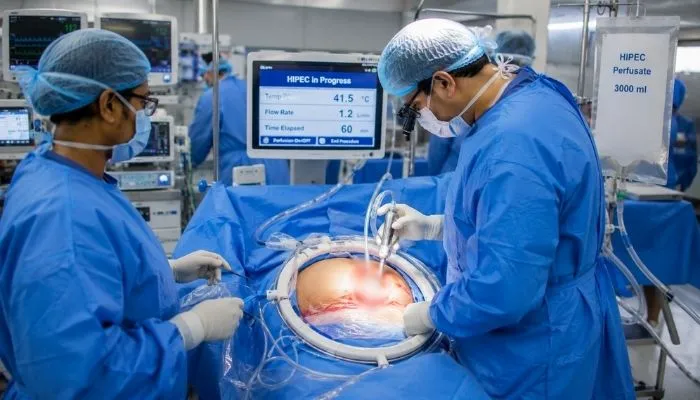
HIPEC Surgery in Mumbai at Shree Hospitals combines cytoreductive surgery (CRS) surgical removal of all visible peritoneal tumour deposits with hyperthermic intraperitoneal chemotherapy (HIPEC), a heated chemotherapy solution perfused directly into the abdominal cavity at the time of surgery.
This combined approach offers curative or long-term disease control in selected patients with peritoneal metastases from colorectal cancer, ovarian cancer, gastric cancer, and primary peritoneal carcinomatosis from mesothelioma and pseudomyxoma peritonei. Patient selection using the peritoneal cancer index (PCI) score is the most critical determinant of outcome, and all HIPEC candidates are reviewed at a dedicated MDT before surgery is offered.
Book Appointment | Find Specialists
Quick facts
Type & Duration: Cytoreductive surgery + HIPEC 6 to 12 hours total operative time depending on extent of peritoneal disease
Hospital Stay: 7 to 14 days; intensive care or high-dependency unit for first 2 to 3 days
Recovery Time: 6 to 8 weeks to return to normal activity; adjuvant chemotherapy typically commences 6 to 8 weeks post-HIPEC
Type of Anesthesia: General anaesthesia with epidural and central venous monitoring
Type of Surgery: Open laparotomy midline incision; peritonectomy procedures as required; HIPEC perfusion via dedicated closed or open technique
Type of Assistance: PCI scoring at diagnostic laparoscopy, MDT pre-operative selection, nutritional pre-habilitation, HIPEC perfusion team, post-operative intensive care, adjuvant chemotherapy coordination
What is HIPEC Surgery?
HIPEC (Hyperthermic Intraperitoneal Chemotherapy) surgery refers to the combined procedure of cytoreductive surgery (CRS) removing all visible peritoneal tumour deposits followed immediately by hyperthermic intraperitoneal chemotherapy circulating heated (41–43°C) chemotherapy solution throughout the abdominal cavity for 60 to 90 minutes.
Cytoreductive surgery may involve: omentectomy, pelvic peritonectomy, right and left diaphragmatic peritonectomy, lesser omentum resection, cholecystectomy, small bowel and colonic resection, total peritoneal stripping, splenectomy, and hysterectomy with bilateral salpingo-oophorectomy as required by the distribution of tumour deposits. The goal is complete removal of all visible disease (CC-0 cytoreduction) before HIPEC is administered.
Hyperthermic intraperitoneal chemotherapy exploits the pharmacokinetic advantage of direct intraperitoneal drug delivery (100–1,000× higher peritoneal drug concentration than systemic IV chemotherapy) and the synergistic effect of hyperthermia on cytotoxic drug activity. Cisplatin (for ovarian cancer), mitomycin C (for colorectal and gastric peritoneal metastases), and oxaliplatin (for colorectal cancer in the PRODIGE 7 trial now debated) are the most commonly used agents.
The peritoneal cancer index (PCI) is a validated scoring system assessing tumour burden in 13 peritoneal regions, each scored 0 to 3 for tumour size — giving a total score of 0 to 39. PCI is the primary tool for predicting completeness of cytoreduction and selecting appropriate HIPEC candidates. For colorectal peritoneal metastases, PCI >20 is generally associated with incomplete cytoreduction and poor survival; for ovarian cancer, higher PCI may still be completably resected with experienced surgical teams.
Which Peritoneal Cancers Are Treated with HIPEC?
- Colorectal peritoneal metastases: CRS + HIPEC with mitomycin C — for PCI ≤20 with no unresectable liver or lung metastases; evidence base from multiple centre series; preferred over palliative chemotherapy alone in selected patients
- Ovarian cancer: CRS + HIPEC with cisplatin — CHORUS trial and van Driel trial (NEJM 2018) confirmed improved 3-year survival versus CRS alone for stage III ovarian cancer at interval debulking; now standard in eligible patients
Gastric peritoneal metastases: CRS + HIPEC — selected cases with limited peritoneal disease (PCI <12); evidence base emerging; requires experienced high-volume centre Pseudomyxoma peritonei (PMP): appendiceal mucinous tumours spreading mucin throughout peritoneum — CRS + HIPEC with mitomycin C is the standard curative treatment; 10-year survival over 70% for low-grade PMP Malignant peritoneal mesothelioma: CRS + HIPEC — curative intent; cisplatin-based HIPEC; median survival 40–60 months versus 12–14 months with systemic therapy alone Appendiceal adenocarcinoma with peritoneal spread: CRS + HIPEC; outcomes dependent on histological grade and PCI
The Peritoneal Cancer Index — Patient Selection
- Peritoneal cancer index (PCI) divides the abdomen into 13 regions (9 abdominal, 4 small bowel) — each scored 0 to 3 for tumour implant size; maximum score 39
- PCI is assessed on pre-operative CT scan (correlation approximately 60–70%) and confirmed at diagnostic laparoscopy before committing to open cytoreductive surgery
- Diagnostic laparoscopy is performed 2 to 4 weeks before planned HIPEC — confirms PCI, assesses completeness of cytoreduction feasibility, and avoids unnecessary major surgery in patients with unresectable disease
- PCI thresholds for HIPEC candidacy: colorectal peritoneal metastases PCI ≤20; gastric PCI ≤12; ovarian — experienced centres may achieve complete cytoreduction at higher PCI
- MDT review incorporates PCI, extra-peritoneal disease status (liver, lung), histological grade, performance status, and nutritional status before HIPEC is offered
- Patients with extra-peritoneal metastases (liver, lung, bone) are generally not candidates for curative-intent HIPEC — palliative systemic chemotherapy is more appropriate
The HIPEC Procedure — What Happens During Surgery
- Midline laparotomy incision — full access to all peritoneal surfaces
- Systematic cytoreductive surgery: sequential peritonectomy and organ resection to achieve CC-0 status — all visible tumour removed
- HIPEC circuit setup: inflow and outflow catheters placed in the abdominal cavity; connected to HIPEC perfusion machine
- Heated chemotherapy solution (41–43°C) circulated through the abdomen for 60 to 90 minutes under continuous temperature monitoring
- Common agents: cisplatin 100mg/m² for ovarian cancer; mitomycin C 15mg/m² for colorectal; administered directly into abdominal cavity
- After HIPEC: catheters removed; bowel anastomoses constructed; abdomen closed; patient transferred to ICU/HDU for post-operative monitoring
The single most important predictor of HIPEC survival outcome is completeness of cytoreductive surgery not the HIPEC chemotherapy itself. Patients with complete cytoreduction (CC-0, no residual disease) have approximately three times the median survival of those with incomplete cytoreduction (CC-1–2). At Shree Hospitals, HIPEC is offered only when MDT confirms that complete cytoreduction is achievable incomplete cytoreduction is not an acceptable goal for HIPEC.
HIPEC is one of the most complex oncological operations offered at any institution. At Shree Hospitals, every HIPEC candidate is reviewed at MDT with PCI scoring surgery is only offered when complete cytoreduction is achievable and survival benefit is genuine.
24×7 Emergency Care
Our Approach to HIPEC Surgery
Our HIPEC and peritoneal oncology team at Shree Hospitals selects candidates rigorously using peritoneal cancer index scoring, confirms resectability at diagnostic laparoscopy, and performs complete cytoreductive surgery before hyperthermic intraperitoneal chemotherapy offering curative intent only where evidence supports it.
24×7 Emergency Care
Rigorous MDT Patient Selection:
- Dedicated peritoneal oncology MDT: surgical oncologist, medical oncologist, gastroenterologist, radiologist, pathologist, and anaesthesiologist
- CT abdomen/pelvis with PCI estimation, extra-peritoneal disease exclusion, and liver metastasis assessment
- Diagnostic laparoscopy for borderline or uncertain PCI cases — prevents unnecessary laparotomy in unresectable disease
- Performance status, nutritional status (albumin, pre-habilitation), and cardiorespiratory fitness assessed before HIPEC planning
Pre-HIPEC Optimisation:
- Nutritional pre-habilitation: patients with weight loss >10% or albumin <30g/L require nutritional support (enteral or parenteral) before surgery — suboptimal nutrition increases post-operative complications
- Systemic chemotherapy response assessment: patients with colorectal or gastric peritoneal metastases on systemic chemotherapy assessed for response before HIPEC timing — non-responders are poor HIPEC candidates
- Stoma siting: right-sided or left-sided stoma may be required after bowel resection as part of cytoreductive surgery — stoma therapist counselling before surgery
- Bowel preparation: mechanical bowel preparation and prophylactic antibiotics for anticipated bowel resection
CRS Technique and Completeness of Cytoreduction:
- Complete cytoreduction (CC-0): no visible residual tumour — the target at Shree Hospitals; surgery abandoned and HIPEC withheld if CC-0 is not achievable
- Peritonectomy procedures performed systematically: pelvic peritonectomy, right and left anterior peritonectomy, greater omentectomy, right and left upper quadrant peritonectomy, lesser omentectomy as required
- Bowel resection when tumour invades the bowel wall — primary anastomosis or Hartmann's depending on blood supply, tension, and contamination
- Completeness of cytoreduction documented intraoperatively — CC-0 (no residual), CC-1 (residual ≤2.5mm), CC-2 (residual 2.5mm–2.5cm)
Post-HIPEC Recovery and Surveillance:
- ICU or HDU monitoring for 2 to 3 days: renal function, haematology, temperature, anastomotic integrity
- Nasogastric tube and early enteral nutrition via feeding jejunostomy where prolonged ileus anticipated
- Post-operative complication management: anastomotic leak, abdominal collections, haematological toxicity (HIPEC cisplatin nephrotoxicity — prevented with IV hydration protocol)
- Adjuvant systemic chemotherapy commences 6 to 8 weeks post-HIPEC — FOLFOX or CAPOX for colorectal; carboplatin + paclitaxel for ovarian
- Surveillance: CT abdomen/pelvis + tumour markers (CEA, CA-125) every 6 months for 3 years
Top Breast Cancer Surgeons in Mumbai
Our breast surgical oncology team at Shree Hospitals brings together surgeons trained at India's leading cancer centres, with expertise in breast conservation, oncoplastic surgery, and immediate reconstruction.
24×7 Emergency Care

Dr. Vivek Sukumar
Consultant Surgical Oncologist

Dr. Amit Gandhi
Consultant Surgical Oncologist
Dr. Kaustubh Burde
Consultant Interventional Cardiologist

Dr. Prasad Kasbekar
AI & Robotic Cancer Surgery
Related Treatments
Gynecologic Cancer Surgery is a key component of comprehensive women's cancer care. From early-stage cancers treated with curative surgery to advanced procedures requiring minimally invasive techniques, cytoreductive surgery, and multidisciplinary treatment, our programme delivers seamless, precision-focused care across every stage of surgical management.
Step by Step Process of HIPEC Surgery at Shree Hospitals
Step 1 — MDT Staging Review and Resectability Assessment
CT abdomen/pelvis with PCI estimation, liver assessment, and extra-peritoneal disease exclusion reviewed at MDT. Histology, grade, and response to prior systemic chemotherapy reviewed. Diagnostic laparoscopy planned for borderline PCI. Performance status, nutrition, and cardiorespiratory fitness assessed. Patient counselled on operative risks, expected recovery, and realistic survival benefit for their specific tumour type and PCI.
Step 2 — Diagnostic Laparoscopy and Candidacy Confirmation
Laparoscopic assessment of peritoneal surfaces PCI scored in all 13 regions. Confirms complete cytoreduction is achievable. Identifies unexpected small bowel involvement or hepatic disease that prevents CC-0. If complete cytoreduction confirmed feasible: HIPEC scheduled within 2 to 4 weeks. If unresectable: systemic palliative chemotherapy recommended; unnecessary laparotomy avoided.
Step 3 — CRS + HIPEC
Midline laparotomy. Sequential cytoreductive surgery peritonectomy procedures and organ resections as required to achieve CC-0. Completeness documented. HIPEC circuit inserted and heated chemotherapy circulated for 60 to 90 minutes under temperature and haemodynamic monitoring. HIPEC circuit removed. Bowel anastomoses constructed. Abdomen closed. Patient transferred to ICU
Step 4 — Post-Operative Recovery and Adjuvant Treatment
ICU monitoring 2 to 3 days. Renal function, FBC, and nutritional status monitored. Enteral feeding via jejunostomy from day 2. Drain management. Discharge day 7 to 14 depending on recovery. Histopathology reviewed at MDT. Adjuvant chemotherapy plan agreed and commenced at 6 to 8 weeks. CT surveillance every 6 months.
Patient Questions About HIPEC Surgery
Am I a Candidate for HIPEC Surgery?
HIPEC candidacy depends on several factors assessed at MDT. The primary requirement is that cytoreductive surgery can achieve complete removal of all visible disease (CC-0 cytoreduction) — this is assessed using the peritoneal cancer index (PCI) score on CT imaging and confirmed at diagnostic laparoscopy. In general, colorectal peritoneal metastases with PCI ≤20 and no unresectable liver or lung metastases, advanced ovarian cancer at interval debulking after neoadjuvant chemotherapy, pseudomyxoma peritonei, and malignant peritoneal mesothelioma are the most common indications. Additional requirements include adequate nutritional status (albumin ≥30g/L), adequate cardiorespiratory fitness for a 6 to 12 hour operation, absence of extra-peritoneal metastases that would determine prognosis regardless of HIPEC, and a tumour histology with documented evidence of benefit from HIPEC. At Shree Hospitals, no HIPEC is offered without MDT review and diagnostic laparoscopy to confirm these criteria.
How Is HIPEC Different from Regular Chemotherapy?
Regular (systemic) intravenous chemotherapy distributes drugs throughout the entire body via the bloodstream. When it reaches the peritoneal cavity, the drug concentration is relatively low — limited by the blood-peritoneal barrier — and insufficient to kill peritoneal tumour deposits directly. Hyperthermic intraperitoneal chemotherapy delivers chemotherapy directly into the abdominal cavity at the time of surgery, achieving drug concentrations 100 to 1,000 times higher than what is achievable systemically. The hyperthermia (41–43°C) enhances drug penetration into tumour tissue, increases DNA cross-linking for platinum agents, and is independently cytotoxic to cancer cells. Because the drug is administered locally, systemic absorption and toxicity are limited compared to an equivalent IV dose. HIPEC is not a replacement for systemic chemotherapy — adjuvant systemic chemotherapy is still required after CRS + HIPEC for most tumour types. HIPEC addresses the peritoneal disease; systemic chemotherapy addresses the risk of haematogenous micrometastases.
What Are the Risks of HIPEC Surgery?
CRS + HIPEC is one of the most complex oncological operations performed at any institution, and the risks are significant. Major complications occur in 20 to 40% of patients in published series from high-volume centres. The most common serious complications are anastomotic leak (when bowel has been resected and re-joined during cytoreductive surgery), which may require re-operation; abdominal collections or sepsis requiring drainage; haematological toxicity from HIPEC chemotherapy (particularly neutropenia from mitomycin C); and nephrotoxicity from cisplatin-based HIPEC — prevented with intensive IV hydration. Post-operative ileus is common and typically resolves within 5 to 7 days. Operative mortality in high-volume centres is under 3% but is higher in centres with lower HIPEC volume. Recovery from major complications may delay or prevent adjuvant chemotherapy. Patients need to understand the balance between the meaningful long-term survival benefit in selected patients and the significant short-term surgical morbidity before consenting to this procedure.
How Long Will I Be in Hospital After HIPEC?
Most patients spend 7 to 14 days in hospital after CRS + HIPEC. The first 2 to 3 days are typically in the intensive care unit or high-dependency unit for close haemodynamic monitoring, renal function checks, and early nutritional support. Once stable, patients are transferred to the surgical ward. Drain management, early enteral feeding, progressive mobilisation, and stoma care (if a stoma was created) are all begun during the ward phase. Patients with complications — anastomotic leak, prolonged ileus, or chest infection — may require a longer stay. Discharge typically requires adequate oral nutritional intake, independent mobilisation, stoma care confidence (if applicable), and pain controlled on oral analgesia. Full return to normal activity takes 6 to 8 weeks, after which adjuvant systemic chemotherapy is commenced.
Will HIPEC Cure My Cancer?
For some tumour types, CRS + HIPEC offers genuine curative potential. For pseudomyxoma peritonei (low-grade appendiceal mucinous tumour), 10-year survival after complete CRS + HIPEC is over 70% — this is widely considered the standard of care with curative intent. For malignant peritoneal mesothelioma, median survival after CRS + HIPEC is 40 to 60 months versus 12 to 14 months with systemic chemotherapy alone — a meaningful survival benefit in a difficult disease. For colorectal peritoneal metastases, complete CRS + HIPEC produces 5-year survival of 30 to 45% in selected patients versus 0–5% with systemic chemotherapy alone for peritoneal disease. For advanced ovarian cancer, the van Driel trial (NEJM 2018) showed improved 3-year survival with HIPEC at interval debulking. For gastric peritoneal carcinomatosis, the evidence is less mature and results are more modest. The critical caveat is that all of these outcomes apply only to patients who achieve complete cytoreduction (CC-0) — incomplete cytoreduction results in survival outcomes equivalent to or worse than chemotherapy alone, and HIPEC is not offered at Shree Hospitals in that setting.

Evidence-Based Case Studies by Our Specialists
Would Recommend Us
Colorectal Peritoneal Metastases Successfully Treated with CRS + HIPEC
"After being diagnosed with colorectal cancer that had spread to the lining of my abdomen, I underwent cytoreductive surgery combined with HIPEC. My surgery was successful, and I recovered steadily before starting chemotherapy a few weeks later. My follow-up CT scans over the past two years have shown no evidence of disease, allowing me to return to my normal life with confidence."
Mr. Rajan, T
Advanced Ovarian Cancer Successfully Treated with Interval CRS + HIPEC
"Following chemotherapy for advanced ovarian cancer, I underwent cytoreductive surgery with HIPEC. The operation was successful, and my recovery was smooth. After completing my additional chemotherapy and targeted maintenance treatment, my follow-up scans continue to show no evidence of disease, giving me confidence as I move forward."
Mrs. Priya, M
Pseudomyxoma Peritonei Successfully Treated with CRS + HIPEC
"I was diagnosed with pseudomyxoma peritonei, a rare tumour affecting the lining of the abdomen. I underwent extensive cytoreductive surgery with HIPEC. Although I experienced a postoperative complication, it was managed successfully without the need for another operation. I recovered well, and my follow-up over the past three years has shown no evidence of disease, allowing me to return to my normal routine."
Mrs. Seema, F
Patient
Resources

Schedule consultation

Billing & Payments

Health Packages

Hospital Facilities
24×7 Emergency Care

1800-268-4000

News & Updates
Shree Hospitals is the first to perform robotic endo surgery.
Shree Hospitals Introduces Advanced Robotic Surgery for Better Patient Care
Shree Hospitals Expands Advanced Surgical Care With Latest Medical Technology
Health Center
Exploring the Future of Telemedicine: What’s Next for Healthcare?
The Rise of Renewable Energy: Innovations in Sustainability
Follow Us

Shree
Hospitals

Shree
Hospitals
