 Ghatkopar (East), Mumbai)


Head & Neck Cancer Surgery
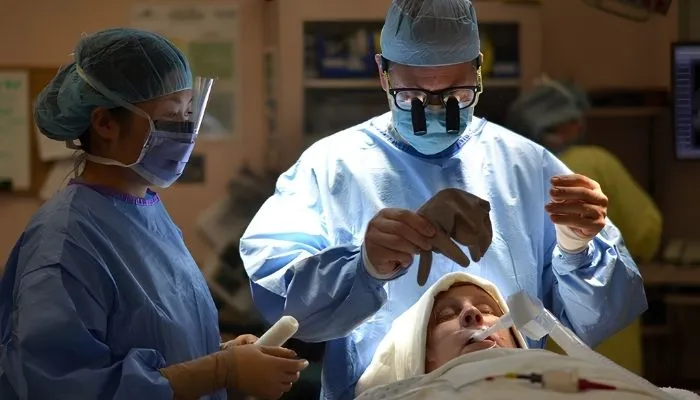
Head and neck cancers of the larynx, pharynx, oral cavity, salivary glands, thyroid, and paranasal sinuses are among the most technically demanding to resect, because they sit adjacent to structures essential for speech, swallowing, breathing, and facial function.
Head and Neck Cancer Surgery in Mumbai at Shree Hospitals prioritises larynx preservation through concurrent chemoradiotherapy where oncologically appropriate, and performs complex resections with immediate free flap reconstruction to restore form and function. Neck dissection removal of the regional lymph nodes draining the primary tumour is performed at the same operation. Transoral robotic surgery (TORS) is used for selected oropharyngeal tumours, avoiding mandibulotomy.
All cases are reviewed at a dedicated head and neck MDT with surgeons, oncologists, radiologists, pathologists, and speech therapists.
Book Appointment | Find Specialists
Quick facts
Type & Duration: Variable by site — oral cavity resection (2–4 hours); laryngectomy (4–6 hours); complex resection with free flap reconstruction (8–12 hours)
Hospital Stay: 5 to 10 days for major resection with reconstruction; 2 to 4 days for selective neck dissection alone
Recovery Time: 4 to 6 weeks post-major resection; speech and swallowing rehabilitation begins in hospital
Type of Anesthesia: General anaesthesia; awake fibreoptic intubation for compromised airway cases
Type of Surgery: Transoral or transcervical open resection; transoral robotic surgery for selected oropharyngeal cases; free flap reconstruction at same operation
Type of Assistance: MDT pre-operative review, PEG tube for nutritional support, speech and language therapy, oncology coordination for adjuvant chemoradiotherapy
What is Head and Neck Cancer Surgery?
Head and neck cancer encompasses malignancies of the oral cavity (tongue, floor of mouth, buccal mucosa, alveolus, palate), oropharynx (base of tongue, tonsil, soft palate), larynx, hypopharynx, nasopharynx, paranasal sinuses, and salivary glands.
The majority are squamous cell carcinomas, with HPV-related oropharyngeal cancer now representing a distinct and rapidly growing subtype with different biology and better prognosis.
Surgical treatment depends on tumour site, stage, and the critical functional structures involved. Early-stage oral cavity cancers are treated with primary surgical excision with adequate margins and elective neck dissection of regional lymph nodes.
Early-stage laryngeal cancers may be treated with laser microsurgery (larynx preservation) or radiotherapy alone. Advanced oropharyngeal and laryngeal cancers are frequently treated with concurrent chemoradiotherapy as definitive organ-preserving treatment surgery is reserved for residual or recurrent disease.
Where surgical resection creates a defect in the tongue, mandible, floor of mouth, pharynx, or soft palate, immediate free flap reconstruction using vascularised tissue transferred from the forearm (radial forearm free flap), thigh (anterolateral thigh flap), or fibula bone restores oral competence, swallowing function, and cosmetic appearance.
Transoral robotic surgery uses the da Vinci system to resect oropharyngeal tumours through the mouth under 3D magnification avoiding the facial access incisions and mandibulotomy previously required.
Head and Neck Cancer Sites Treated
- Oral cavity: tongue, floor of mouth, buccal mucosa, hard palate, gingiva — surgical resection + neck dissection; free flap reconstruction for large defects
- Oropharynx: base of tongue, tonsillar fossa, soft palate — HPV-positive tumours often treated with concurrent chemoradiotherapy; transoral robotic surgery for selected resectable cases
- Larynx and hypopharynx: larynx preservation chemoradiotherapy preferred for T2–T3; total laryngectomy for T4a or chemoradiotherapy failure
- Salivary glands: parotidectomy (superficial or total) with facial nerve preservation; submandibular and sublingual gland excision
- Thyroid: total thyroidectomy with central and lateral neck dissection for differentiated and medullary thyroid cancers (detailed under Thyroid Surgery)
- Paranasal sinuses and skull base: anterior skull base resection with reconstructive flap for sinonasal tumours involving the ethmoid or frontal sinus
Neck Dissection — Why and When
- Regional lymph node metastasis is the single most important prognostic factor in head and neck cancer — neck dissection is a critical component of surgical staging and treatment
- Selective neck dissection: removes specific nodal levels most at risk for each primary site; used for elective treatment of the clinically N0 neck (no palpable nodes) in oral cavity cancer
- Modified radical neck dissection: removes all five neck node levels while preserving the internal jugular vein, accessory nerve, and sternocleidomastoid muscle — for N+ neck (clinical nodal disease)
- Radical neck dissection: removes all five levels with IJV, accessory nerve, and SCM — reserved for tumours fixed to these structures
- Bilateral neck dissection: required for midline primaries (base of tongue, soft palate) and some supraglottic laryngeal cancers
- Sentinel node biopsy for oral cavity cancer: evidence-based alternative to elective neck dissection in T1–T2 cN0 — used at selected centres including Shree Hospitals
Free Flap Reconstruction — Restoring Function After Resection
- Free flap reconstruction transfers vascularised tissue from a donor site to the head and neck to reconstruct surgical defects — the blood supply is re-established by microsurgical anastomosis to neck vessels
- Radial forearm free flap (RFFF): thin, pliable soft tissue — ideal for tongue, floor of mouth, and soft palate reconstruction; restores oral mobility and speech function
- Anterolateral thigh (ALT) flap: large soft tissue volume — for pharyngeal and hypopharyngeal reconstruction; can be tubed to reconstruct the neopharynx after laryngopharyngectomy
- Fibula free flap: bone-containing flap — for mandibular reconstruction after segmental mandibulectomy; can be shaped and plated to restore mandibular contour
- Pectoralis major pedicled flap: simpler alternative for selected pharyngeal and neck defects; useful in patients not suitable for free flap due to comorbidities
- Free flap success rate over 95% at experienced centres — dedicated post-operative free flap monitoring (hourly Doppler check for 72 hours) prevents flap failure
Larynx preservation through concurrent chemoradiotherapy avoids total laryngectomy in eligible patients with laryngeal or hypopharyngeal cancer preserving the natural voice. At Shree Hospitals, the MDT evaluates every laryngeal cancer case for larynx preservation eligibility before surgery is recommended. Total laryngectomy is reserved for treatment failure after chemoradiotherapy or for T4a tumours invading the cricoid cartilage or thyroid cartilage.
Head and neck cancer surgery requires surgeons who can achieve clear oncological margins while preserving the structures that define speech, swallowing, and facial form. At Shree Hospitals, every case is reviewed at MDT before a surgical plan is made.
24×7 Emergency Care
Our Approach to Head and Neck Cancer Surgery
Our head and neck surgical oncology team at Shree Hospitals combines oncological resection with immediate free flap reconstruction, larynx preservation protocols, and MDT-coordinated adjuvant chemoradiotherapy.
24×7 Emergency Care
MDT and Organ Preservation Assessment
- Every new head and neck cancer case presented at dedicated weekly MDT — surgeons, oncologists, radiologists, pathologists, and speech therapists
- Larynx preservation eligibility assessed for all laryngeal and hypopharyngeal cancers — chemoradiotherapy offered where appropriate to avoid total laryngectomy
- HPV-positive oropharyngeal cancers: treatment de-intensification protocols where appropriate — concurrent chemoradiotherapy with lower toxicity regimens in favourable-risk patients
- Swallowing assessment by speech and language therapy pre-operatively — baseline function documented for rehabilitation planning
Surgical Resection and Margin Assessment
- Transoral laser microsurgery (TLM): CO2 laser resection for early glottic, supraglottic, and oropharyngeal tumours — preserves laryngeal function
- Transoral robotic surgery (TORS): base of tongue and tonsillar resections under 3D magnification — avoids mandibulotomy, reduces recovery time versus open approach
- Frozen section margin assessment intraoperatively — re-resection performed immediately if margin positive
- Mandibular resection: marginal mandibulectomy (preserves mandibular continuity) or segmental mandibulectomy where tumour invades cortex — fibula free flap reconstruction at same operation
Free Flap Reconstruction
- Pre-operative CT angiography of donor site vessels — radial forearm (RFFF), anterolateral thigh (ALT), or fibula mapped before surgery
- Simultaneous two-team approach: resection and free flap harvest proceed concurrently — reduces total operative time
- Microsurgical anastomosis under operating microscope: artery and vein of flap anastomosed to neck recipient vessels
- Post-operative hourly Doppler monitoring for 72 hours — immediate return to theatre for any compromise signal
Post-Operative Rehabilitation and Adjuvant Treatment
- PEG (percutaneous endoscopic gastrostomy) tube placed before major resection in patients requiring post-operative radiotherapy — provides nutritional support during mucositis
- Speech and language therapy daily from day 2 — early swallowing exercises, voice rehabilitation after total laryngectomy (tracheoesophageal voice prosthesis)
- Adjuvant post-operative chemoradiotherapy for high-risk features (positive margins, extracapsular nodal extension) — commences 4 to 6 weeks after surgery
- Post-treatment PET-CT at 12 weeks — assesses residual or recurrent disease in lymph nodes and primary site
Top Breast Cancer Surgeons in Mumbai
Our breast surgical oncology team at Shree Hospitals brings together surgeons trained at India's leading cancer centres, with expertise in breast conservation, oncoplastic surgery, and immediate reconstruction.
24×7 Emergency Care

Dr. Vivek Sukumar
Consultant Surgical Oncologist

Dr. Amit Gandhi
Consultant Surgical Oncologist
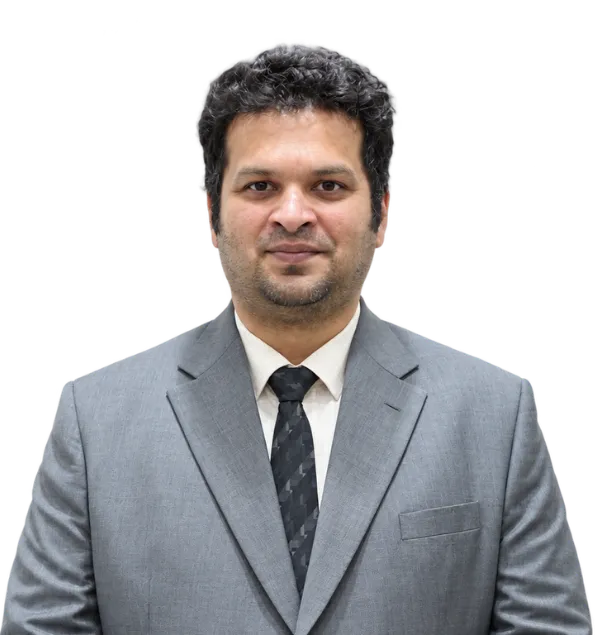
Dr. Prasad Kasbekar
Consultant Surgical Oncologist

Dr. Preetam Jain
Consultant Medical Oncology
Related Treatments
Head & Neck cancer surgery forms an integral part of a comprehensive cancer care pathway. From patients undergoing surgery for early-stage tumours to those requiring complex resections with reconstruction and multidisciplinary treatment, our programme provides seamless, precision-focused care across every stage of surgical management.
Radiation Therapy
Concurrent chemoradiotherapy; IMRT with parotid-sparing for head and neck cancer.
Chemotherapy
Concurrent cisplatin or cetuximab radiosensitisation for larynx and pharynx cancers.
Immunotherapy
PD-1 inhibitor therapy for recurrent/metastatic head and neck squamous cell carcinoma.
Radiation Therapy
Post-operative adjuvant radiotherapy after robotic cancer resections.
Thyroid Surgery
Expert thyroidectomy with IONM and central neck dissection for thyroid cancer.
Step by Step Process of Head and Neck Cancer Surgery at Shree Hospitals
Step 1 — MDT Review and Organ Preservation Assessment
Full staging workup CT neck and chest, MRI primary site, PET-CT for N+ or distant metastasis staging reviewed at MDT. Treatment intent and approach agreed: larynx preservation chemoradiotherapy vs surgical resection; transoral robotic surgery vs open; primary free flap reconstruction vs pedicled flap. Speech therapy swallowing baseline documented. PEG tube consent discussed for major resection with post-operative radiotherapy.
Step 2 — Airway Planning and Anaesthesia
Compromised airway (tumour obstructing larynx or pharynx): awake fibreoptic intubation or tracheostomy under local anaesthesia before general anaesthesia induction. Elective tracheostomy placed at start of operation for major oral cavity or pharyngeal resections allows safe post-operative airway management. Anaesthetic and free flap harvest teams coordinate positioning and IV access.
Step 3 — Resection and Neck Dissection
Tumour resected with clear margin transoral, transmandibular, or transcervical approach depending on site and extent. Frozen section margin assessment at key anatomical sites. Neck dissection performed at same operation selective levels for N0 neck; modified radical or radical for N+ disease. Specimens marked for pathologist orientation.
Step 4 — Free Flap Reconstruction and Post-Operative Care
Free flap harvest (concurrent with resection where two teams available). Microsurgical anastomosis to neck vessels. Skin paddle inset to repair mucosal or skin defect. Donor site closed primarily or with split-skin graft. Post-operative intensive care or high-dependency unit for first 24 to 48 hours.
Hourly flap Doppler monitoring for 72 hours. Speech therapy daily from day 2. Histopathology reviewed at MDT week 2 adjuvant treatment planned.
Patient Questions About Head and Neck Cancer Surgery
Will I Be Able to Speak After Head and Neck Cancer Surgery?
It depends on the cancer site and the surgery required. For oral cavity cancers (tongue, floor of mouth), free flap reconstruction with a radial forearm flap restores tongue volume and oral mobility — enabling speech rehabilitation, though articulation may be altered for large resections. For laryngeal cancer, the goal is larynx preservation through chemoradiotherapy, which maintains the natural voice. If is required, voice rehabilitation is possible through a tracheoesophageal voice prosthesis (TEP) a small one-way valve placed at the time of laryngectomy that allows air from the trachea to produce sound through the oesophagus. Electrolarynx devices are available as an immediate alternative. Speech and language therapists at Shree Hospitals begin rehabilitation from day 2 post-operatively and continue through the outpatient period.
What Is a Neck Dissection and Why Is It Necessary?
Neck dissection is the surgical removal of the regional lymph nodes in the neck that drain the primary head and neck tumour. It is necessary because head and neck squamous cell carcinomas spread first to the regional cervical lymph nodes and the presence or absence of nodal metastasis is the single most important factor determining prognosis and the need for adjuvant treatment. For a clinically node-negative neck (N0) in oral cavity cancer, selective neck dissection of the nodal levels at highest risk is recommended electively approximately 20–30% of apparently N0 necks contain micrometastases that only histology can reveal. For a clinically node-positive neck (N+), modified radical neck dissection removing all five nodal levels is performed. Neck dissection is performed at the same operation as primary tumour resection and typically adds 60 to 90 minutes to the operative time.
What Is a Free Flap and Will There Be a Donor Site Scar?
Free flap reconstruction transfers vascularised tissue from a distant donor site forearm, thigh, or leg to repair the defect created by tumour resection. For a radial forearm free flap (forearm donor), there is a linear scar on the inner forearm and occasionally a split-skin graft if primary closure is not possible. For an anterolateral thigh flap, there is a linear scar on the outer thigh, typically well-concealed under clothing. For a fibula free flap (used for mandibular reconstruction), there is a leg scar and the fibula bone is removed patients typically have full walking function because the fibula is not a weight-bearing bone. Donor site function is generally very well preserved. The decision on which flap to use is based on the size and type of defect, the patient's anatomy, and the reconstructive surgeon's expertise.
Can Head and Neck Cancer Be Treated Without Surgery?
In many cases, yes. Larynx preservation through concurrent chemoradiotherapy is the standard treatment for T2–T3 laryngeal and hypopharyngeal cancers, avoiding the need for total laryngectomy in eligible patients. HPV-positive oropharyngeal cancers which represent an increasing proportion of head and neck cancers respond very well to concurrent chemoradiotherapy and achieve high cure rates without primary surgery. Definitive chemoradiotherapy for nasopharyngeal cancer avoids surgery entirely in most cases. Where chemoradiotherapy is used as the primary treatment, the head and neck surgery team remains involved for salvage surgery if there is residual or recurrent disease. All treatment decisions are made at MDT — for some sites and stages, surgery remains the most effective first-line treatment, while for others, organ preservation with chemoradiotherapy is superior.
How Long Will Recovery Take After Major Head and Neck Cancer Surgery?
Recovery from major head and neck cancer surgery with free flap reconstruction takes 4 to 6 weeks before returning to normal daily activities, with specific milestones depending on the operation performed. Patients typically spend 7 to 10 days in hospital — the first 1 to 2 days in HDU or ICU for flap monitoring and airway management. Nasogastric tube or PEG tube feeding is used until oral swallowing is safe — typically 1 to 3 weeks for oral cavity reconstructions. Tracheostomy, if placed, is usually removed before discharge. Speech and swallowing rehabilitation with the speech therapist begins in hospital and continues as an outpatient for 3 to 6 months. Adjuvant post-operative radiotherapy — with or without chemotherapy — typically commences 4 to 6 weeks after surgery. Most patients return to meaningful social and professional activities at 2 to 3 months, though full speech and swallowing recovery may take 6 to 12 months for major reconstructions.

Evidence-Based Case Studies by Our Specialists
Would Recommend Us
Oral Tongue Cancer Successfully Treated with Surgery
"After being diagnosed with oral tongue cancer, my doctors recommended surgery to completely remove the tumour while preserving my speech and swallowing as much as possible. I underwent a wide local excision along with neck dissection, and reconstruction was performed using tissue from my forearm. The surgery went smoothly, my recovery progressed well, and I was discharged within eight days. After completing the recommended radiotherapy, my speech became clear and understandable, and I have returned to my normal daily activities with confidence."
Mr. Suresh, I
Laryngeal Cancer Successfully Managed with Organ Preservation Treatment
"Following my diagnosis of supraglottic laryngeal cancer, my multidisciplinary team recommended chemoradiotherapy to preserve my voice box instead of surgery. I completed the treatment with good support throughout, and my scans showed a complete response. My voice has been preserved, I did not require surgery, and I continue my regular follow-up visits with no evidence of disease."
Mr. Vijay, T
HPV-Positive Oropharyngeal Cancer Successfully Treated Without Surgery
"After being diagnosed with HPV-positive oropharyngeal cancer, I underwent combined chemotherapy and radiotherapy as recommended by my cancer team. My follow-up examinations and scans showed a complete response, and I did not need robotic surgery. Three years later, I remain disease-free, with excellent swallowing and a normal voice, allowing me to continue my everyday life."
Mrs. Meena, J
Patient
Resources

Schedule
consultation

Billing &
Payments

Hospital
Facilities
24×7 Emergency Care

1800-268-4000

Follow Us

Shree
Hospitals

Shree
Hospitals
