 Ghatkopar (East), Mumbai)


Oral Cancer
India bears a disproportionately high burden of oral cancer driven largely by tobacco and areca nut use and yet it remains one of the most treatable cancers when caught at the right stage. At Shree Hospitals, our head and neck oncology team provides complete oral cancer treatment in Mumbai India, from early lesion resection to complex reconstructive surgery and post-operative radiation, helping patients recover not just from cancer, but to full form and function.
(24×7 Emergency Care)
Our Approach
(24×7 Emergency Care)
Our Approach to Managing Oral Cancer
1. Diagnosis & Staging
- Clinical oral examination any lesion present for more than 2–3 weeks demands biopsy
- Incisional or punch biopsy for histological confirmation
- Contrast-enhanced CT or MRI of the oral cavity and neck to assess depth of invasion and nodal spread
- PET-CT in locally advanced and high-risk cases for distant staging
- Panendoscopy (examination under anaesthesia with scope) to rule out synchronous primary tumours
- HPV testing in younger patients with oropharyngeal involvement
2. Surgical Resection
Surgery is the primary modality for most oral cancers:
- Wide local excision of the primary tumour with clear margins minimum 1 cm on all sides
- Composite resection involving jaw bone (marginal or segmental mandibulectomy) when bone is involved
- Selective, modified radical, or radical neck dissection for nodal management
- Intra-oral closure for small defects; larger defects require planned reconstruction
3. Reconstruction
Reconstruction is an integral part of mouth cancer surgery at Shree Hospitals:
- Radial forearm free flap (RFFF) for soft tissue defects of the tongue and floor of mouth
- Fibula free flap for mandibular reconstruction after segmental bone resection
- Pectoralis major pedicled flap reliable option for large pharyngeal and neck defects
- Reconstruction planned pre-operatively with 3D imaging and dental team input
4. Radiation Therapy
Post-operative radiation is recommended in most intermediate and high-risk oral cancers:
- IMRT technique — precisely shaped dose to the operative bed and regional nodes
- Concurrent cisplatin chemotherapy for adverse pathological features (positive margins, extranodal extension)
- Dose of 60–66 Gy delivered over 6 weeks
- Mucositis management, nutritional support, and dental review throughout treatment
5. Chemotherapy
Used in combination with radiation or for palliative intent in advanced disease:
- Concurrent cisplatin — standard radiosensitiser during post-operative radiation
- TPF induction chemotherapy (docetaxel, cisplatin, 5-fluorouracil) in selected locally advanced cases
- Cetuximab as an alternative to cisplatin in patients with poor renal function or comorbidities
- Palliative platinum-based regimens for metastatic or unresectable tobacco-related cancer care cases
6. Rehabilitation & Survivorship
Oral cancer survivors need intensive post-treatment support:
- Speech and swallowing therapy — initiated before surgery and continued post-operatively
- Dental rehabilitation — implant-supported prostheses after jaw reconstruction
- Trismus physiotherapy — jaw-stretching exercises to prevent mouth-opening restriction post-radiation
- Tobacco cessation counselling — reducing recurrence risk and improving treatment tolerance
- Regular surveillance: clinical oral exam, imaging, and fibreoptic scope at each visit
How To Identify Oral Cancer?
India's high rates of tobacco and betel nut use make awareness of early oral cancer signs especially important. The earlier the lesion is detected, the simpler the treatment and the better the outcome:
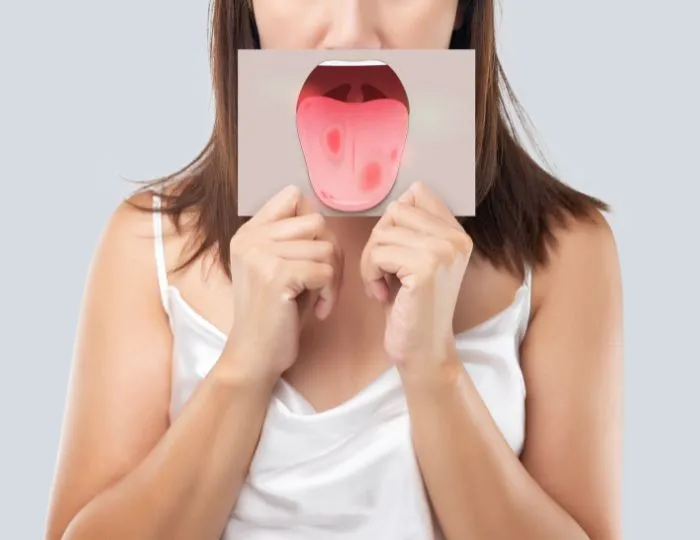
- Non-healing ulcer in the mouth — any ulcer that persists beyond 2–3 weeks requires evaluation
- White or red patch (leukoplakia or erythroplakia) on the gum, tongue, or inner cheek
- Persistent pain in the mouth — especially when swallowing, chewing, or speaking
- Lump or thickening inside the cheek, on the tongue, or in the neck
- Difficulty opening the mouth fully — trismus, a common feature of advanced buccal mucosa cancer
- Unexplained loosening of teeth — without obvious dental disease
- Change in voice or persistent hoarseness — involving the tongue base or larynx
Tobacco users in any form who experience any of these symptoms should consult an oral cancer specialist in Mumbai at Shree Hospitals immediately.
Important FAQs: Oral Cancer
What are the most common causes of oral cancer in India?
Tobacco use in any form cigarettes, bidi, smokeless tobacco, gutka is the leading cause. Areca nut (supari) and betel quid chewing are closely linked to oral submucous fibrosis and subsequent malignancy. Alcohol significantly amplifies the risk when combined with tobacco.
Can oral cancer be detected before it becomes invasive?
Yes. Pre-malignant lesions like leukoplakia, erythroplakia, and oral submucous fibrosis can be identified and treated before they become cancers. Regular oral examination by a dental surgeon or ENT physician is the simplest early detection strategy.
Will I be able to speak and eat normally after oral cancer surgery?
Most patients regain functional speech and swallowing, particularly after tongue and floor of mouth reconstruction. Rehabilitation with a speech therapist begins early and significantly improves outcomes. The quality of reconstruction is key.
Is oral cancer surgery disfiguring?
Advances in free flap reconstruction mean that even complex resections can now be rebuilt with results that closely approximate normal anatomy. 3D surgical planning and implant-based dental rehabilitation further improve cosmetic and functional outcomes.
How long does recovery take after oral cancer treatment?
Surgical recovery typically takes 4–6 weeks. Post-operative radiation adds another 6–7 weeks. Full functional rehabilitation — particularly swallowing and speech — may take 3–6 months. Our multidisciplinary team supports patients through every phase.
Does stopping tobacco after diagnosis make a difference?
Significantly. Patients who quit tobacco before and during treatment tolerate radiation better, have lower rates of wound complications, and have a meaningfully reduced risk of second primary cancers. Cessation support is offered to every patient at Shree Hospitals.
Treatments For Oral Cancer at Shree Hospitals
We offer a complete range of oral cancer treatment services, including advanced screening and diagnosis, personalised treatment plans, expert surgical management, reconstructive surgery where required, radiation therapy, chemotherapy, targeted therapy, immunotherapy, speech and swallowing rehabilitation, nutritional support, and long-term survivorship care designed to help patients achieve the best possible outcomes.
Wide Local Excision
Surgical removal of the oral cancer with clear margins. The cornerstone of curative mouth cancer surgery for all oral cavity tumours. Margin status directly impacts local recurrence risk and the need for post-operative radiation.
Top Oral Cancer Specialists in Mumbai

Dr. Vivek Sukumar
Consultant Surgical Oncologist
Dr. Amit Gandhi
Consultant Surgical Oncologist
Dr. Prasad Kasbekar
Consultant Surgical Oncologist
Dr. Preetam Jain
Consultant Medical Oncology
Our Teams at Shree Hospitals are board-certified and have an average of 15+ years of clinical experience.

For Appointment/Query
1800-268-4000

Tele consultation/2nd Opinion
Schedule Consultation

Follow Us

Shree
Hospitals

Shree
Hospitals
