 Ghatkopar (East), Mumbai)

Stomach Cancer
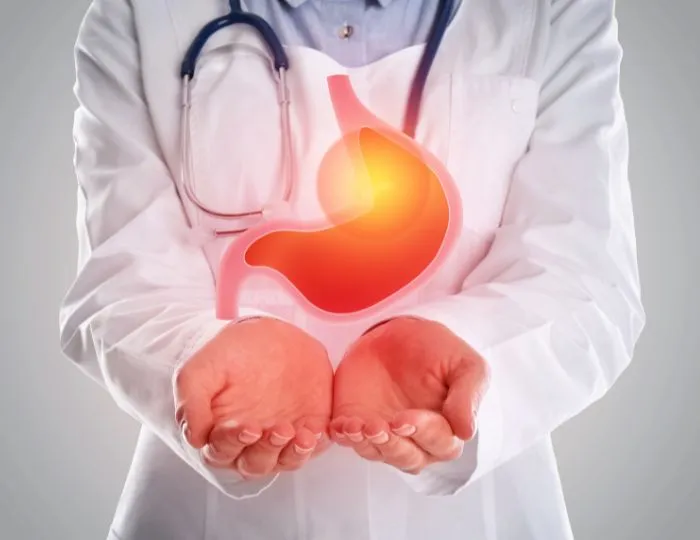
Stomach cancer also called gastric cancer is among the most challenging gastrointestinal malignancies, partly because it so rarely causes symptoms until it has grown significantly. At Shree Hospitals, our gastrointestinal oncology Mumbai team provides the full spectrum of stomach cancer treatment in Mumbai India: from early endoscopic resection of superficial lesions to total gastrectomy with D2 lymph node dissection and perioperative chemotherapy with outcomes benchmarked against international standards
(24×7 Emergency Care)
Our Approach
(24×7 Emergency Care)
Our Approach to Managing Stomach Cancer
Treating stomach cancer well requires a team that takes it seriously at every stage from the first upper endoscopy to the final surveillance scope. Our stomach cancer specialists in Mumbai work within a dedicated upper gastrointestinal oncology programme, bringing surgical, medical, and endoscopic expertise under one roof. Every patient's case is reviewed at our multidisciplinary tumour board before surgery or systemic therapy begins.
1. Diagnosis & Staging
- Upper gastrointestinal endoscopy with multiple biopsies essential for diagnosis and localisation
- EUS (Endoscopic Ultrasound) to assess depth of tumour invasion (T stage) and local nodal involvement
- Contrast-enhanced CT chest, abdomen, pelvis standard staging investigation
- PET-CT in selected cases particularly to exclude occult distant spread before planned resection
- Diagnostic laparoscopy performed routinely before gastrectomy to rule out peritoneal metastases
- HER2 testing on tumour tissue therapeutic relevance in advanced disease
2. Endoscopic Resection (Early Gastric Cancer)
For early gastric cancers confined to the mucosa:
- Endoscopic Submucosal Dissection (ESD) en-bloc resection of superficial tumours without surgery
- Avoids gastrectomy entirely in carefully selected early-stage lesions
- Curative when margins are clear and no lymphovascular invasion is present
- Requires expert endoscopist and meticulous histopathological assessment
3. Perioperative Chemotherapy
For resectable gastric cancer beyond early stage, chemotherapy surrounds surgery:
- FLOT regimen (docetaxel, oxaliplatin, leucovorin, 5-fluorouracil) 4 cycles before and 4 cycles after surgery
- Significantly improves overall survival compared to surgery alone
- Treatment feasibility assessed before surgery; chemotherapy re-started post-operatively once recovery is complete
- Nivolumab added to FLOT in PD-L1-positive tumours emerging new standard
4. Gastric Surgery
Surgery remains the only curative treatment for non-early, non-metastatic gastric cancer:
- Subtotal gastrectomy for distal (antrum/pylorus) tumours; preserves part of the stomach
- Total gastrectomy with Roux-en-Y oesophagojejunostomy for proximal and mid-gastric tumours
- D2 lymphadenectomy performed routinely the international standard for gastric tumour surgery
- Minimally invasive (laparoscopic) approach for selected cases reduced post-operative complications
5. Advanced & Metastatic Disease
Systemic therapy for Stage IV gastric cancer palliative but increasingly effective:
- First-line: FOLFOX or CAPOX with nivolumab (PD-L1 CPS ≥5) or trastuzumab (HER2+)
- Second-line: ramucirumab ± paclitaxel
Trastuzumab deruxtecan (T-DXd) for HER2-positive pretreated disease significant new option
Palliative surgery or stenting for gastric outlet obstruction when required
6. Nutrition & Rehabilitation
Gastrectomy permanently alters digestion nutritional support is non-negotiable:
- Pre-operative nutritional optimisation often with dietitian input and enteral supplements
- Post-operative small, frequent meals dietary counselling initiated from day one after surgery
- Vitamin B12, iron, and calcium supplementation lifelong after total gastrectomy
- Dumping syndrome management dietary and pharmacological strategies
- Regular dietitian follow-up as part of all gastrointestinal oncology Mumbai post-treatment care
Happy Patients & Their Case Stories
A 62-year-old with early gastric cancer identified at Shree Hospitals' endoscopy unit underwent ESD curative resection without surgery. Discharged on day 2, eating normally within a week.
A Mumbai-based patient with Stage II gastric cancer completed FLOT chemotherapy before and after total gastrectomy pathological complete response confirmed on surgical specimen.
How To Identify Stomach Cancer?
Stomach cancer often hides behind symptoms that seem ordinary indigestion, bloating, mild nausea. Knowing when symptoms are not ordinary can lead to earlier diagnosis:
- Persistent indigestion or heartburn — that doesn't respond to antacids or changes with meals
- Early satiety — feeling full after eating only a small amount
- Unexplained weight loss — not attributable to diet change or increased activity
- Nausea and vomiting — particularly vomiting old food, suggesting gastric outlet obstruction
- Blood in vomit — or black, tarry stools indicating upper gastrointestinal bleeding
- Persistent abdominal pain — especially in the upper abdomen, between meals
- Swollen lymph nodes above the left collarbone (Virchow's node) a sign of advanced disease
- Fatigue and anaemia — from chronic slow bleeding of an ulcerating gastric tumour
Anyone with persistent upper GI symptoms particularly H. pylori infection history, atrophic gastritis, or a family history of gastric cancer should consult a stomach cancer specialist in Mumbai at Shree Hospitals for a diagnostic upper endoscopy.
Important FAQs: Stomach Cancer
What is the connection between H. pylori and stomach cancer?
Helicobacter pylori infection is the single largest modifiable risk factor for gastric cancer. Chronic infection causes inflammation and atrophic gastritis, which over decades can progress to dysplasia and cancer. Eradication of H. pylori reduces but does not eliminate this risk.
Can stomach cancer be detected early?
Yes but only with endoscopy. There are no reliable blood tests or imaging modalities that detect early gastric cancer. Countries like Japan and South Korea with population endoscopy screening programmes have dramatically better early detection rates than India. High-risk individuals should discuss screening endoscopy at Shree Hospitals.
What does surgery for stomach cancer involve?
Depending on the location of the tumour, either part or all of the stomach is removed, along with surrounding lymph nodes. The digestive tract is then reconstructed to allow eating. Recovery takes 4–6 weeks for most patients.
Will I be able to eat normally after stomach surgery?
Eating habits change after gastrectomy. Patients eat smaller, more frequent meals and must avoid high-sugar foods (to prevent dumping syndrome). Most adapt well within 3–6 months. Lifelong vitamin supplementation is required after total gastrectomy.
What is the prognosis for stomach cancer?
Stage I and II gastric cancer have 5-year survival rates of 70–90% with curative surgery. Stage III drops to 30–50%. Stage IV is managed palliatively, with a median survival that continues to improve with new agents like trastuzumab deruxtecan and immune checkpoint inhibitors.
Is stomach cancer hereditary?
In about 1–3% of cases, diffuse-type gastric cancer is caused by a CDH1 gene mutation known as Hereditary Diffuse Gastric Cancer (HDGC). Lynch syndrome also increases risk. Genetic counselling is available for families with a pattern of early-onset gastric cancer.
Treatments For Stomach Cancer at Shree Hospitals
We offer a complete range of stomach cancer treatment services including advanced screening and diagnosis, personalised treatment plans, minimally invasive and advanced gastric surgery, chemotherapy, radiation therapy, targeted and immunotherapy, nutritional support, rehabilitation, and long-term survivorship care designed to help patients achieve the best possible outcomes.
Endoscopic Submucosal Dissection (ESD)
Minimally invasive endoscopic removal of early superficial gastric cancers no incisions, no general anaesthesia in most cases. Curative for selected mucosal lesions. Available at Shree Hospitals through our expert therapeutic endoscopy team.
Subtotal Gastrectomy
Surgical removal of the lower portion of the stomach for distal gastric cancers. Preserves part of the stomach and gastric function. Performed with D2 lymphadenectomy to maximise oncological clearance.
Total Gastrectomy
Complete removal of the stomach for proximal or extensive gastric tumours. Bowel is reconnected to allow normal eating over time. The definitive gastric tumour surgery for stomach cancers not amenable to partial resection.
FLOT Perioperative Chemotherapy
Four cycles before and four cycles after surgery the modern standard for resectable gastric cancer. Significantly extends survival compared to surgery alone. Delivered at Shree Hospitals' oncology day care unit with full supportive care.
Top Stomach Cancer Specialists in Mumbai

Dr. Vivek Sukumar
Consultant Surgical Oncologist

Dr. Amit Gandhi
Consultant Surgical Oncologist
Dr. Kaustubh Burde
Consultant Interventional Cardiologist

Dr. Prasad Kasbekar
AI & Robotic Cancer Surgery
Our Teams at Shree Hospitals are board-certified and have an average of 15+ years of clinical experience.

For Appointment/Query
1800-268-4000

Tele consultation/2nd Opinion
Schedule Consultation

News & Updates
Shree Hospitals is the first to perform robotic endo surgery.
Shree Hospitals Introduces Advanced Robotic Surgery for Better Patient Care
Shree Hospitals Expands Advanced Surgical Care With Latest Medical Technology


