 Ghatkopar (East), Mumbai)


Home > Orthopaedics > Rotator Cuff Repair
Rotator Cuff Repair Surgery in Mumbai
Shoulder pain that stops you reaching, lifting, sleeping, or simply raising your arm above your head is not something you should learn to live with. Rotator cuff repair in Mumbai at Shree Hospitals addresses the root cause not just the symptom.
A rotator cuff tear can occur suddenly through injury or develop gradually through overuse and age. Either way, when it does not heal with physiotherapy or injections, surgical repair is the most reliable path to restoring strength, eliminating pain, and returning to full shoulder function.
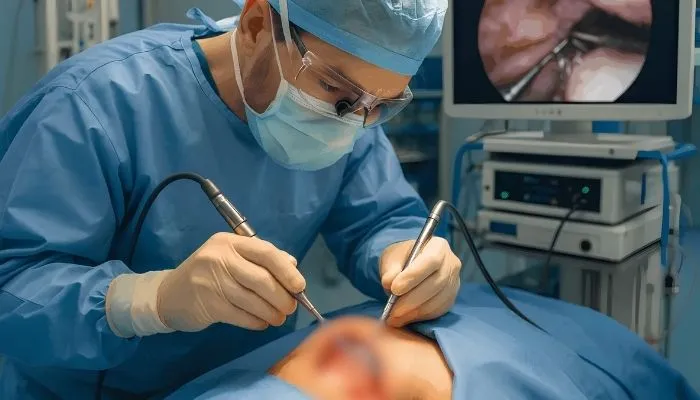
Our shoulder specialists perform shoulder arthroscopy repairs using anchor fixation techniques that reattach the torn tendon securely to the bone through incisions so small they rarely leave a visible scar.
Book Appointment | Find Specialists
Quick facts
Type & Duration:Arthroscopic rotator cuff repair; 1 to 2.5 hours depending on tear extent
Hospital Stay: 1 to 2 days
Recovery Time: Return to daily activity 6 to 8 weeks; full overhead sport 4 to 6 months
Type of Anesthesia: General anaesthesia with interscalene nerve block
Type of Surgery: Minimally invasive shoulder arthroscopy with anchor fixation
Type of Assistance: Pre-operative MRI review, arthroscopic tendon repair, structured shoulder physiotherapy programme from day 2
What is Rotator Cuff Repair Surgery?
The rotator cuff is a group of four muscles and their tendons supraspinatus, infraspinatus, teres minor, and subscapularis that surround the shoulder joint, hold the ball of the humerus within the socket, and power rotation and elevation of the arm.
When one or more of these tendons tears either partially or fully the shoulder loses strength and stability, often accompanied by pain that is worst at night, weakness with overhead activities, and a catching or grinding sensation during movement.
Rotator cuff tear surgery reattaches the torn tendon to its original footprint on the greater tuberosity of the humerus using small titanium or bioabsorbable suture anchors drilled into the bone. The procedure is almost always performed arthroscopically today making traditional open or mini-open surgery largely a technique of the past for most tear patterns.
At Shree Hospitals, supraspinatus repair and multi-tendon reconstructions are performed through a shoulder arthroscopy approach that allows the surgeon to simultaneously address associated pathologies including shoulder impingement, biceps tendon disease, acromioclavicular joint arthritis, and labral tears in the same anaesthetic. Patients benefit from a single recovery rather than staged procedures.
Signs You May Have a Rotator Cuff Tear
- Shoulder pain reaching overhead or behind the back
- Weakness lifting the arm or carrying objects
- Pain at night, especially lying on the affected side
- A painful arc of motion between 60 and 120 degrees
- Snapping or grinding sensation in the shoulder
- History of shoulder injury, fall, or repetitive overhead work
Is Rotator Cuff Surgery Right for You?
- Full-thickness or large partial-thickness rotator cuff tear on MRI
- Weakness and functional limitation despite 3 to 6 months of physiotherapy
- Active individual or worker who requires overhead shoulder function
- Acute traumatic tear in a younger patient
- Shoulder impingement syndrome with concurrent tendon pathology
- Desire to return to sport, gym, or physically demanding occupation
Why Delayed Surgery Risks More
- Full-thickness tears enlarge over time — a small tear becomes a massive tear
- Retraction of the torn tendon makes surgical reattachment progressively harder
- Muscle atrophy from prolonged disuse becomes irreversible after 12 to 18 months
- Massive irreparable tears may require tendon transfers — a far more complex procedure
- Cartilage damage from a chronically unstable shoulder accumulates silently
- Earlier repair means better tendon tissue quality and a more durable long-term result
Arthroscopic rotator cuff repair delivers equivalent tendon healing rates to open surgery but with significantly less post-operative pain, faster functional recovery, and lower risk of infection.
Shoulder pain that has not improved with physiotherapy or injections is telling you something. Our shoulder surgeons will give you an honest assessment of your rotator cuff and a clear path to recovery.
24×7 Emergency Care
Our Approach to Rotator Cuff Repair Surgery
Every rotator cuff repair is managed against a structured clinical framework from tear characterisation on MRI to the final stage of overhead rehabilitation. No two shoulders are treated identically.
24×7 Emergency Care
Comprehensive MRI-Based Tear Assessment
Tear size, retraction, fatty infiltration of the rotator cuff muscles, and biceps tendon status are all evaluated on pre-operative MRI. This information determines the surgical approach, number of anchors required, and whether the tear is primarily repairable or whether augmentation is needed critical decisions made before the patient enters theatre.
All-Arthroscopic Double-Row Repair
Where anatomy permits, we use a double-row anchor fixation technique that restores the full width of the supraspinatus repair footprint distributing load across a wider area for superior healing. Single-row repair is used for smaller tears. The choice is made intraoperatively based on tendon mobility and tear pattern.
Concurrent Pathology Management
A routine component of our shoulder arthroscopy is a thorough diagnostic survey before repair begins. Acromioplasty (removal of bone spurs causing shoulder impingement), biceps tenodesis, and labral repair are performed as required ensuring the shoulder functions optimally after healing, not just structurally repaired.
Evidence-Based Shoulder Rehabilitation
Shoulder rehab following rotator cuff repair is highly time-sensitive. Our physiotherapists use a phased protocol: passive range-of-motion for the first 6 weeks, progressive active movement from week 6, resistance strengthening from week 12, and sport or work-specific loading from month 4. Progression through each phase is objective-based, not calendar-based.
Orthopedic Shoulder Surgeon in Mumbai
24×7 Emergency Care
Dr. Amit Pandey
Consultant Orthopaedics
Dr. Neeraj Mishra
Consultant Orthopaedics

Dr. Tapan Shah
Consultant physiotherapist

Dr. Chirag Dalal
Consultant Orthopedic Surgeon
Related Shoulder & Orthopaedic Treatments at Shree Hospitals
The shoulder is one of the most complex joints in the body and our programme covers more than rotator cuff disease. Patients with shoulder instability, labral tears, arthritis, or frozen shoulder have access to a full range of surgical and non-surgical options:
Shoulder Stabilisation Surgery
Arthroscopic Bankart repair for recurrent anterior shoulder dislocations and labral tears.
Total Shoulder Replacement
Joint replacement for end-stage shoulder arthritis, using anatomic or reverse shoulder prostheses.
Frozen Shoulder Release
Arthroscopic capsular release for adhesive capsulitis unresponsive to physiotherapy.
Arthroscopic Surgery
Comprehensive keyhole evaluation and treatment of the shoulder joint for diagnostic and therapeutic purposes.
Step by Step Process of Rotator Cuff Repair Surgery
Step 1 — MRI Review, Surgical Planning & Pre-Operative Assessment
Your MRI is reviewed in detail tear size, muscle quality, and tendon retraction are all characterised. A surgery plan is formulated. Pre-operative investigations include blood tests, cardiac clearance, and anaesthetic review. You are educated on shoulder precautions post-surgery, the sling requirement, and what to expect during rehabilitation.
Step 2 — Anaesthesia & Positioning
General anaesthesia is administered in combination with an interscalene nerve block providing excellent post-operative pain control for the first 12 to 16 hours. You are positioned in the beach-chair or lateral position depending on the surgeon's preference. The shoulder is prepared and draped
Step 3 — Arthroscopic Repair & Anchor Fixation
The arthroscope is introduced and a diagnostic survey performed. The torn tendon edge is freshened and the bone footprint debrided to a bleeding surface. Suture anchors are placed in the bone and the sutures passed through the tendon to reattach it under appropriate tension. For supraspinatus repair with double-row fixation, medial row anchors are placed first, followed by lateral row anchors completing the repair. Associated pathologies biceps, impingement are addressed in the same sitting.
Step 4 — Sling Application, Recovery & Rehabilitation Commencement
The shoulder is placed in a sling or abduction pillow immediately post-operatively. The sling is worn for 4 to 6 weeks to protect the repair. Pendulum and passive physiotherapy exercises begin within 48 hours under physiotherapist guidance. Active assisted movement commences at 6 weeks. The sling is discarded progressively as strength and confidence return.
Patient Questions About Rotator Cuff Repair
Can a Rotator Cuff Tear Heal Without Surgery?
Partial-thickness tears in older, low-demand patients can sometimes be managed effectively with physiotherapy, anti-inflammatory medication, and steroid injections. However, full-thickness tears particularly in patients under 65 with functional demands do not reliably heal without surgical intervention. A rotator cuff tear that has failed 3 to 6 months of physiotherapy, or that is causing significant weakness and functional limitation, warrants surgical assessment. Our surgeons will give you a frank recommendation based on your specific tear pattern and lifestyle requirements.
How Long Must I Wear a Sling After Rotator Cuff Surgery?
The standard sling or abduction pillow duration after shoulder tendon surgery is 4 to 6 weeks for most repairs. This immobilisation period is critical the tendon-to-bone healing process is most vulnerable in the first 6 weeks post-surgery. Removing the sling prematurely significantly increases the risk of re-tear. After 6 weeks, the sling is progressively weaned as physiotherapy advances through active range-of-motion exercises.
What Is the Success Rate of Rotator Cuff Repair?
Clinical success defined as significant pain reduction and return to functional activity is achieved in over 85 to 90% of patients following shoulder arthroscopy and rotator cuff repair. Structural healing rates (confirmed on post-operative MRI) are highest for small and medium tears and lowest for large or massive tears. Age, tear size, muscle quality, and adherence to rehabilitation all influence outcomes. Our surgeons will give you a realistic expectation based on your specific injury characteristics at consultation.
Patient
Resources

Schedule
consultation

Billing &
Payments

Hospital
Facilities
24×7 Emergency Care

1800-268-4000

Follow Us

Shree
Hospitals

Shree
Hospitals
