 Ghatkopar (East), Mumbai)

Home > Orthopaedics > Spinal Decompression Surgery
Spinal Decompression Surgery in Mumbai
Numbness in your legs. Pain that radiates from your back into your buttocks, thighs, or feet.
Difficulty walking more than a few minutes before you need to stop and rest. These are the hallmarks of spinal stenosis a narrowing of the spinal canal that compresses the nerves running through it, and one of the most common causes of debilitating back and leg pain in adults over 50.
Spinal decompression surgery in Mumbai at Shree Hospitals restores space for those compressed nerves, offering patients relief that no amount of physiotherapy or medication can match once the canal has narrowed to a critical degree.
Our spine surgeons perform laminectomy and foraminotomy procedures with a precision and efficiency that comes from managing some of Mumbai's most complex spinal presentations.
Book Appointment | Find Specialists
Quick facts
Type & Duration: Spinal decompression (laminectomy / foraminotomy); 1 to 3 hours
Hospital Stay: 3 to 5 days
Recovery Time: Return to light activity in 4 to 6 weeks; full recovery 8 to 12 weeks
Type of Anesthesia: General anaesthesia
Type of Surgery: Open or minimally invasive posterior decompression nerve decompression via bone and ligament removal
Type of Assistance: Pre-operative MRI and CT assessment, surgical decompression, structured physiotherapy and core rehab programme
What is Spinal Decompression Surgery?
The spinal canal is the bony tunnel running down the centre of the spine through which the spinal cord and nerve roots travel. When this canal narrows through bone spurs, thickened ligaments, bulging discs, or a combination of all three the condition is called spinal stenosis.
The compressed nerves respond by causing pain, numbness, weakness, and reduced walking tolerance.
Spinal decompression surgery is the definitive surgical treatment for spinal stenosis and other forms of nerve compression in the lumbar or cervical spine.
The two core procedures are laminectomy removal of the lamina (the roof of the spinal canal) to widen the canal and foraminotomy enlargement of the foraminal openings through which nerve roots exit the spine.
Together or individually, these procedures create space for the nerves, relieving the compression responsible for the patient's symptoms.
Nerve decompression at Shree Hospitals is performed with a precision microscope or endoscopic visualisation tools ensuring thorough decompression without unnecessarily destabilising the spine.
For patients with concurrent instability or spondylolisthesis, fusion instrumentation may be added to the decompression our spine surgeons will advise the appropriate surgical strategy based on your specific imaging and clinical presentation.
Understanding the difference between lumbar disc disease and canal stenosis is critical because the treatment strategies differ. Our team takes time to explain your diagnosis fully before any decision is made.
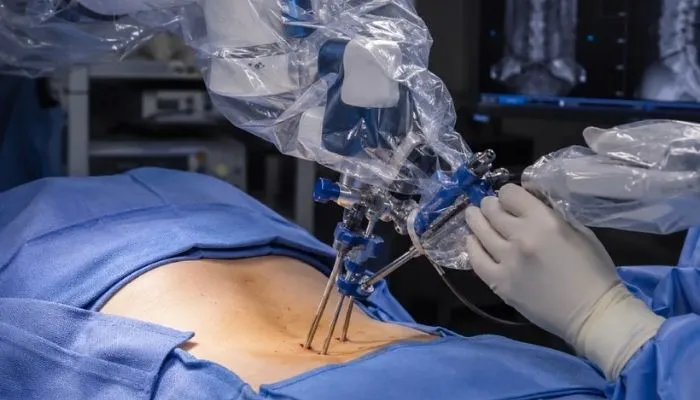
Symptoms That Suggest Spinal Nerve Compression
- Back and leg pain that worsens with standing and walking
- Relief when sitting or leaning forward (neurogenic claudication)
- Numbness or tingling in the buttocks, thighs, or lower legs
- Weakness in the legs that makes climbing stairs difficult
- Bladder or bowel changes — a surgical emergency requiring urgent review
- Symptom pattern reproducible with exertion and relieved by rest
Is Spinal Decompression Surgery Right for You?
- MRI-confirmed spinal stenosis or foraminal narrowing correlating with symptoms
- Significant limitation in walking distance or daily function
- Failure of physiotherapy, epidural injections, and pain management over 3 to 6 months
- Progressive neurological deficit — weakness, foot drop, or bladder involvement
- No absolute surgical contraindication
- Absence of gross instability (or instability managed concurrently with fusion)
Why Progressive Nerve Compression Cannot Be Ignored
- Prolonged compression causes permanent nerve damage — recovery becomes incomplete
- Cauda equina syndrome from untreated stenosis is a surgical emergency
- Muscle weakness from chronically compressed nerves is often irreversible after 12 to 18 months
- Lumbar disc disease combined with canal stenosis accelerates spinal degeneration
- Quality of life deteriorates significantly — reduced mobility leads to cardiovascular and metabolic decline
- Earlier decompression, before nerve changes become established, delivers the best outcomes
Over 80% of patients with symptomatic spinal stenosis experience significant improvement in walking tolerance and leg pain following surgical decompression particularly those who have failed conservative management.
Walking less than a block before your legs give out is not just inconvenient it is a sign that your spinal nerves need attention. Our spine surgeons will tell you exactly what is compressing your nerves and how to fix it.
24×7 Emergency Care
Our Approach to Spinal Decompression Surgery
Decompression surgery succeeds when the right nerves are freed, the spine is not unnecessarily destabilised, and the patient's recovery is actively managed from the day of surgery. Our approach is built on all three.
24×7 Emergency Care
Comprehensive Pre-Operative Spinal Assessment
Every patient undergoes MRI and standing lumbar X-ray review before a surgical plan is finalised. CT myelogram is added where complex anatomy or prior surgery complicates MRI interpretation. We identify the exact level(s) and type of nerve compression — ensuring decompression targets the correct pathology and that adjacent, non-symptomatic levels are not operated on unnecessarily.
Microsurgical Precision in Decompression
Our surgeons perform laminectomy and foraminotomy under microscopic magnification delivering thorough decompression of neural structures while removing the minimum bone and ligament necessary to preserve spinal stability. Preserving the facet joints and limiting bone removal reduces the risk of post-decompression instability requiring fusion.
Fusion Decision-Making
Not all decompression procedures require fusion. We make the fusion decision based on pre-operative imaging evidence of segmental instability, degree of spondylolisthesis, and the amount of bone removal required. For stable spines, decompression alone is preferred avoiding the additional recovery burden and risks of instrumentation.
Active Physiotherapy-Led Rehabilitation
Our post-operative programme for nerve decompression patients begins with gentle mobilisation on day one walking short distances, sitting out of bed, and beginning log-roll technique for safer bed transfers. Formal physiotherapy for core strength, postural correction, and spinal stabilisation begins at 2 to 3 weeks post-surgery, scaled progressively over the following 8 to 10 weeks.
Top Spinal Decompression Surgeons in Mumbai
Our spine team at Shree Hospitals manages lumbar disc disease, spinal stenosis, spondylolisthesis, and complex multi-level spinal conditions backed by fellowship training in spinal surgery and a case volume that reflects years of subspecialty practice.
Patients referred to us from across Maharashtra include straightforward decompression cases and high-complexity revision spine scenarios alike.
24×7 Emergency Care

Dr. Tapan Shah
Physiotherapist

Dr. Chirag Dalal
Orthopedic Arthroscopy & Trauma Surgeon

Dr. Mayur Rabhadiya
Robotic Knee & Hip Replacement Surgeon

Dr. Mandar Agashe
Paediatric Orthopedics
Related Spine Treatments
at Shree Hospitals
Spinal decompression is the starting point for many patients in our spine programme but some conditions require additional or alternative surgical interventions. Our full spinal surgery offering includes
Endoscopic Spine Surgery
Keyhole decompression for disc herniation and foraminal stenosis, with same-day or next-day discharge.
Spinal Fusion Surgery
Posterior or anterior instrumented fusion for spondylolisthesis, instability, or post-decompression scoliosis.
Vertebroplasty & Kyphoplasty
Cement augmentation procedures for vertebral compression fractures in osteoporotic patients.
PRP Therapy for Spine Pain
Regenerative injection option for chronic discogenic pain without significant structural compression.
Step by Step Process of Spinal Decompression Surgery
Step 1 — Pre-Operative Workup & Surgical Consent
Following your decision to proceed, a full pre-operative workup is conducted: blood tests, cardiac screening, anaesthetic review, and any additional imaging required.
Your surgeon walks through the operative plan indicating exactly which spinal level(s) are being addressed, whether fusion is planned, and expected outcomes. Written consent is taken and a surgery date confirmed.
Step 2 — Decompression Under Microscopic Visualisation
A posterior midline or paramedian incision is made and muscles retracted to expose the lamina. Using a high-magnification microscope, the laminectomy is performed — removing the lamina and thickened ligamentum flavum to open the spinal canal.
Foraminotomy is added at any levels where nerve root exit is narrowed. Meticulous haemostasis is maintained. The decompressed dural sac and nerve roots are confirmed free and mobile before closure.
Step 3 — Endoscopic Decompression Under Direct Vision
The high-definition endoscope is introduced and the disc, bone spur, or compressive tissue is visualised directly. Endoscopic discectomy is performed removing the herniated disc material or bony overgrowth compressing the nerve root.
The exiting nerve is confirmed decompressed under direct vision. In awake patients, relief of radicular symptoms is confirmed by patient feedback during the procedure itself.
Step 4 — Wound Closure, Drain Placement & Early Mobilisation
Muscles are approximated, a drain is placed, and the wound is closed in layers. Within 4 to 6 hours of surgery, patients are assisted to sit up in bed.
Gentle walking with a physiotherapist begins the following morning. Drains are removed on day 2. Most patients are discharged on days 3 to 5, depending on the extent of the procedure and the recovery progress.
Patient Questions About Spinal Decompression Surgery
Will Spinal Decompression Surgery Cure My Back Pain?
Spinal decompression surgery is most reliably effective for leg pain and neurological symptoms caused by nerve compression not primarily for axial (central) back pain. Patients with a predominant leg pain or walking limitation from spinal stenosis typically achieve the best results. Back pain is improved in many patients but is less predictably resolved than radicular symptoms. Your surgeon will give you an honest assessment of what surgery is likely and unlikely to achieve for your specific symptom pattern.
Is Spinal Decompression Surgery Dangerous?
All surgery carries risk and spinal surgery is no exception. The specific risks of laminectomy include dural tear (a small hole in the covering of the spinal cord, which can usually be repaired intraoperatively), nerve root injury, infection, haematoma, and the rare risk of incomplete recovery of pre-existing neurological deficits. These risks are low in experienced hands. Our team will discuss your individual risk profile in detail before surgery is confirmed.
What Is the Difference Between Spinal Decompression and Spinal Fusion?
Decompression removes the tissue compressing the nerves bone, ligament, or disc material to create space. Fusion adds instrumentation (rods and screws) to lock two or more vertebrae together, eliminating motion at that segment. Fusion is added to decompression when the spine is unstable, when decompression alone would create instability, or when spondylolisthesis is the underlying cause. Nerve decompression without fusion is preferred where spinal stability can be maintained it carries a shorter recovery and avoids the risks of metalwork.

Evidence-Based Case Studies by Our Specialists
Would Recommend Us
"For years, walking even short distances became increasingly difficult because of severe pain in both my legs. I could barely walk 50 metres before I had to stop and rest. After my two-level lumbar laminectomy, my recovery progressed steadily. By 8 weeks, I was comfortably walking 2 kilometres without pain or needing to stop. I have regained the freedom to enjoy my daily activities again."
Mr. A., 71 (Two-Level Lumbar Laminectomy for Spinal Stenosis)
"My left foot became progressively weaker over several months, making walking difficult and causing me to worry about permanent nerve damage. After my surgeon recommended urgent surgery, I underwent a lumbar foraminotomy to relieve the pressure on the nerve. Within a few weeks, my strength began to return, and by 4 months, my foot function was back to normal. Acting quickly made all the difference."
Mrs. Leela, 58 (Lumbar Foraminotomy for Foraminal Stenosis)
"Persistent lower back pain and pain in both legs had made everyday activities difficult. Imaging showed that one of my vertebrae had slipped forward and was compressing the nerves. I underwent spinal decompression with instrumented fusion, and my recovery was smooth. I was discharged on the fifth day, walking independently within two weeks, and by four months I had returned to enjoying light recreational sports with confidence."
Mr. Sanjay, 64 (Lumbar Decompression & Instrumented Fusion for Spondylolisthesis)
Patient
Resources

Schedule consultation

Billing & Payments

Health Packages

Hospital Facilities
24×7 Emergency Care

1800-268-4000

News & Updates
Shree Hospitals is the first to perform robotic endo surgery.
Shree Hospitals Introduces Advanced Robotic Surgery for Better Patient Care
Shree Hospitals Expands Advanced Surgical Care With Latest Medical Technology
Health Center
Exploring the Future of Telemedicine: What’s Next for Healthcare?
The Rise of Renewable Energy: Innovations in Sustainability
Follow Us

Shree
Hospitals

Shree
Hospitals
