 Ghatkopar (East), Mumbai)

Home >Paediatrics > Febrile Seizures
Febrile Seizures
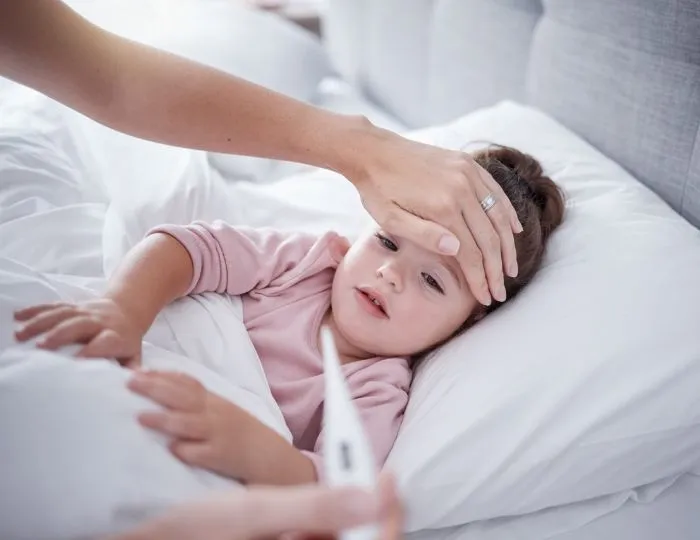
Watching your child convulse during a fever is one of the most terrifying experiences a parent can face - and one of the most misunderstood. Febrile seizures are convulsions triggered by a rapid rise in body temperature, most commonly in children between six months and five years of age. While alarming in appearance, most febrile seizures are brief, self-limiting, and leave no lasting harm. But every seizure deserves expert evaluation to confirm it is truly febrile in nature, to identify the underlying fever cause, and to assess epilepsy risk after febrile fit in each individual child. At Shree Hospitals, our paediatric neurology team delivers precise Febrile Seizures treatment in Mumbai, India - from emergency management to long-term counselling and paediatric febrile convulsion management and prevention.
(24×7 Emergency Care)
Our Approach
(24×7 Emergency Care)
Our Approach to Managing Febrile Seizures
Stay calm. Act fast. Understand fully.
The moment a child falls to the ground shaking during a fever, the parent's world stops. But the vast majority of febrile seizures - though visually frightening - last under three minutes, stop spontaneously, and cause no brain damage. The clinical priority is not the seizure itself but what lies beneath: what is causing the fever, is this truly a simple febrile seizure or something more complex, and what does this mean for the child's neurological future?
At Shree Hospitals, our approach to childhood fever seizure diagnosis and emergency care in Mumbai begins in the emergency department with structured seizure classification - distinguishing simple vs complex febrile seizure based on duration, focal features, and recurrence within the same febrile illness. This classification directly guides investigation depth, admission decisions, and the family counselling that follows.
- Emergency Seizure Management
- Immediate seizure first aid - positioning on side, protecting from injury, timing the seizure duration
- Oxygen administration via face mask to all children post-seizure until fully recovered
- IV or rectal diazepam for seizures lasting beyond five minutes - preventing progression to status epilepticus
- Buccal midazolam as a fast-acting, parenterally administered rescue medication for prolonged febrile convulsions
- Blood glucose measurement at the bedside - hypoglycaemia can both cause and complicate febrile seizures
- Antipyretic therapy initiated promptly to reduce fever once the seizure has terminated
- Classification: Simple vs Complex Febrile Seizure
The distinction between simple vs complex febrile seizure is the most important clinical decision in febrile seizure management:
Simple Febrile Seizure:
- Generalised tonic-clonic convulsion lasting under 15 minutes
- Single episode within a 24-hour febrile illness
- Complete recovery within one hour with no residual neurological deficit
Complex Febrile Seizure:
- Duration exceeding 15 minutes
- Focal features - one-sided limb jerking, eye deviation, or unilateral weakness post-seizure
- Recurrence within the same febrile illness
- Incomplete or prolonged post-seizure recovery
Complex features mandate a more thorough investigation as part of childhood fever seizure diagnosis and emergency care in Mumbai.
- Fever Source Investigation
- Thorough clinical examination to identify the cause of fever driving the febrile seizure
- Urine culture and analysis - urinary tract infection is a common and frequently missed fever trigger in young children
- Blood culture and inflammatory markers for children with high fever and toxicity
- Lumbar puncture considered for infants below 12 months, children with meningeal signs, or prolonged post-seizure altered consciousness
- Chest X-ray and throat assessment as clinically indicated based on examination findings
- Neurological Investigation - When and What
Neurological investigation is not routine for simple febrile seizures:
- EEG not recommended after a first simple febrile seizure - does not predict recurrence or epilepsy risk after febrile fit reliably
- MRI brain for children with complex febrile seizures, focal features, or developmental concerns
- EEG considered after a complex febrile seizure or where clinical features suggest an underlying seizure disorder rather than a purely febrile trigger
- Genetic testing in selected children with family history of generalised epilepsy with febrile seizures plus (GEFS+)
- Recurrence Risk Counselling & Prevention
Approximately 30% of children will have a recurrence - and families deserve accurate, evidence-based information:
- Risk factors for recurrence - age below 18 months, low fever at seizure onset, short fever-to-seizure interval, family history of febrile seizures
- Intermittent rectal or oral diazepam during subsequent febrile illnesses for high-risk children - reducing recurrence risk without daily medication
- Continuous anticonvulsant prophylaxis not routinely recommended for simple febrile seizures - risk-benefit does not justify daily medication
- Written seizure first aid for children plan provided to every family and school/daycare at discharge
- Long-Term Prognosis & Epilepsy Risk
- Epilepsy risk after febrile fit - approximately 2 to 4% after simple febrile seizures; 10 to 15% after complex febrile seizures
- Risk factors for epilepsy development - complex seizure features, family history of epilepsy, pre-existing neurodevelopmental abnormality
- Regular developmental and neurological follow-up for high-risk children as part of paediatric febrile convulsion management and prevention
- Clear communication: the vast majority of children with febrile seizures develop entirely normally and never develop epilepsy
Happy Patients & Their Case Stories
A two-year-old from Borivali had her first febrile seizure during a viral fever at home. Her parents rushed her to Shree Hospitals, where the seizure was classified as simple and the fever source identified as a urinary tract infection. She recovered fully - and her parents left equipped with a written seizure first aid for children plan.
Mr. Manish . L
This 18-month-old boy experienced a prolonged febrile seizure lasting 22 minutes - classified as complex. MRI and EEG at Shree Hospitals as part of childhood fever seizure diagnosis and emergency care in Mumbai were normal. His parents were counselled on recurrence risk and an intermittent diazepam plan was provided.
Mr. Satish . J
How to Identify Febrile Seizures?
Febrile seizures are often the first seizure a family witnesses - and the experience is unforgettable. Knowing what you are looking at, and what to do in the moment, is invaluable:
What a Febrile Seizure Looks Like:
- Sudden loss of consciousness - the child falls or slumps without warning during a fever
- Rhythmic jerking of all four limbs - tonic-clonic convulsion affecting the whole body simultaneously in a simple febrile seizure
- Eyes rolling back or fixed deviation - common during generalised convulsions
- Breath-holding or blue lips during the seizure - temporary and resolves as the seizure ends; not a sign of suffocation
- Limpness following the seizure - the post-ictal phase, lasting minutes to an hour, where the child is drowsy and unresponsive
- Focal jerking of one arm or leg - a feature of complex febrile seizure requiring urgent specialist evaluation
Warning Signs Requiring Emergency Attendance:
- Seizure lasting more than five minutes - treat as a medical emergency; call ambulance immediately
- Focal features during or after the seizure - one-sided weakness, eye deviation, or asymmetric movements
- Child not recovering to baseline consciousness within one hour post-seizure
- Second seizure occurring within the same febrile illness
- Neck stiffness, photophobia, or persistent irritability after the seizure - raise suspicion for meningitis
Seizure First Aid for Children - What to Do:
- Lay the child on their side on a flat surface - prevent aspiration
- Clear the area of hard objects - prevent injury
- Do NOT put anything in the child's mouth
- Time the seizure from the moment it starts
- Call emergency services if the seizure exceeds five minutes
Important FAQs -Febrile Seizures
Will my child get epilepsy after a febrile seizure?
The epilepsy risk after febrile fit for a child with a simple febrile seizure is only slightly above the general population - approximately 2 to 3%. The risk is higher after complex febrile seizures, particularly those with focal features or prolonged duration. Our paediatric neurologist assesses individual risk at every follow-up appointment.
Should I give fever medicine to prevent febrile seizures?
Antipyretic medicines reduce fever discomfort but do not reliably prevent febrile seizures - the seizure can occur with the first rapid temperature rise before parents have had time to act. The focus of paediatric febrile convulsion management and prevention is on parent education, rescue medication for high-risk children, and prompt fever source treatment.
How is a simple febrile seizure different from epilepsy?
A simple vs complex febrile seizure classification helps distinguish febrile convulsions from epilepsy. Febrile seizures occur exclusively with fever in children under six years and carry a normal neurological examination and development. Epilepsy involves unprovoked seizures - occurring without fever - and may require long-term anticonvulsant therapy.
Do febrile seizures cause brain damage?
Simple febrile seizures - even repeated ones - do not cause brain damage, intellectual disability, or learning difficulties. Prolonged seizures lasting more than 30 minutes (febrile status epilepticus) carry a small risk of hippocampal injury. This is precisely why seizure first aid for children and prompt emergency treatment for prolonged episodes matters.
When should I call an ambulance for a febrile seizure?
Call immediately if the seizure lasts more than five minutes, if your child does not recover within one hour, if a second seizure occurs during the same illness, or if focal features are present. For Febrile Seizures treatment in Mumbai, India, our emergency paediatric team is available around the clock.
Treatments for Febrile Seizures at Shree Hospitals
Acute Seizure Termination
IV diazepam or buccal midazolam for seizures lasting more than five minutes - administered by our emergency team immediately upon arrival. Rapid seizure termination prevents progression to status epilepticus and its associated risks, the most critical element of Febrile Seizures treatment in Mumbai, India.
Fever Source Treatment
Identifying and treating the underlying infection driving the febrile seizure is as important as managing the seizure itself. Urinary tract infections, viral throat infections, and ear infections are common culprits - treated with targeted antibiotic or supportive therapy as part of childhood fever seizure diagnosis and emergency care in Mumbai.
Intermittent Rescue Diazepam Protocol
For children with identified high recurrence risk, a home rescue diazepam plan allows parents to administer rectal or oral diazepam at the onset of fever above 38.5°C during subsequent illnesses - reducing the likelihood of a repeat febrile seizure as part of paediatric febrile convulsion management and prevention.
Neurological Investigation & Follow-Up
MRI brain, EEG, and genetic testing where clinically indicated for children with complex febrile seizures or atypical features - identifying the small number of children whose presentation signals an underlying epilepsy syndrome and elevated epilepsy risk after febrile fit requiring ongoing management.
Top Paediatric Specialists In Mumbai

Dr. Shruti Ghatalia
Paediatricians
Every Surgeon & Specialist at Shree Hospitals brings years of specialised experience to each case.

For Appointment/Query
1800-268-4000

Tele consultation/2nd Opinion
Schedule Consultation

News & Updates
Shree Hospitals is the first to perform robotic endo surgery.
Shree Hospitals Introduces Advanced Robotic Surgery for Better Patient Care
Shree Hospitals Expands Advanced Surgical Care With Latest Medical Technology


