 Ghatkopar (East), Mumbai)


Laser Kidney Stone Surgery in Mumbai
No Open Surgery | Holmium Laser Precision | Same-Day Discharge
Kidney stone pain is one of the most severe a person can experience - arriving without warning and capable of stopping life completely in its tracks. Laser kidney stone surgery in Mumbai at Shree Hospitals offers patients a fast, precise, and minimally invasive path to being stone-free. Using advanced holmium laser technology, our urologists fragment stones of any size into fine dust - without a single external incision.
Whether your stone is lodged in the kidney, ureter, or bladder, our team selects the right endoscopic approach for your anatomy and stone burden, delivering results that used to require open surgery in a procedure that most patients recover from in a day.
Don't Ignore Urinary Symptoms. Get Timely Urology Care Today.
Quick facts
Type & Duration: Laser lithotripsy; 30 to 60 minutes depending on stone location and size
Hospital Stay: Day surgery or 1-night admission
Recovery Time: Return to normal activity in 1 to 3 days; full recovery in 1 week
Type of Anaesthesia: General, spinal, or local anaesthesia with sedation
Type of Surgery: Endoscopic kidney stone treatment - no external incision
Type of Assistance: Pre-operative CT stone mapping, laser fragmentation procedure, post-procedure stent management and follow-up imaging
What is Laser Kidney Stone Surgery?
Kidney stones - or renal calculi - form when minerals crystallise inside the kidneys and grow into solid masses. Small stones may pass on their own with fluids and pain relief. Larger stones, stones causing obstruction, or stones associated with infection require active treatment. Laser surgery has transformed how we manage stones across every location in the urinary tract - from the kidney to the ureter to the bladder.
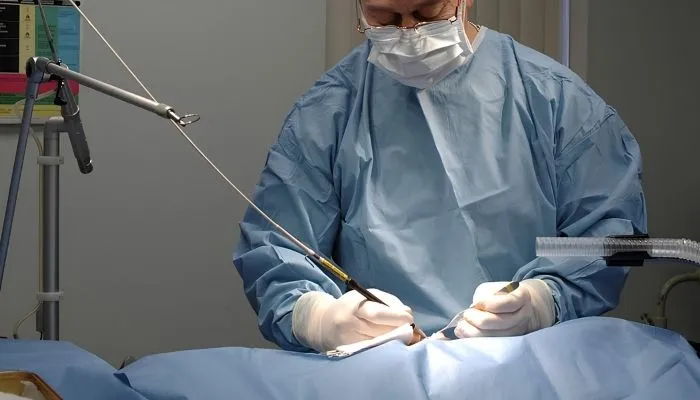
In laser kidney stone surgery, a thin flexible or semi-rigid telescope is passed through the natural urinary passage - urethra → bladder → ureter - and advanced to the stone under direct camera vision. A holmium laser fibre is then deployed through the telescope and fired in rapid pulses directly at the stone, fragmenting it into microscopic dust particles (dusting technique) or small pieces that can be extracted with a retrieval basket. The entire procedure is performed without any external cuts.
At Shree Hospitals, the choice of lithotripsy technique - whether semi-rigid ureteroscopy for lower ureteric stones, flexible RIRS for kidney stones, or laser via PCNL for large stone burdens - is determined after detailed CT imaging of the stone's size, location, density, and the patient's anatomy. A ureteric stone at the junction between ureter and kidney demands a different approach from a 15mm stone lodged deep in the renal pelvis. Our urologists plan every procedure to match the stone's specific profile, not apply a single technique to all cases.
Signs You May Have a Kidney Stone
- Sudden, severe pain in the flank, back, or lower abdomen
- Pain that radiates into the groin or inner thigh
- Nausea, vomiting, or cold sweats alongside pain episodes
- Blood in the urine - pink, red, or brown discolouration
- Frequent urge to urinate with burning or difficulty
- Fever and chills - indicating a stone with associated infection (urgent)
Is Laser Stone Surgery Right for You?
- Stone confirmed on ultrasound, X-ray, or CT scan
- Stone size too large to pass spontaneously (typically above 6mm)
- Obstruction causing hydronephrosis (kidney swelling)
- Failed medical expulsion therapy after 4 to 6 weeks
- Infection or impaired kidney function associated with stone
- Ureteric stone causing persistent colic or blockage
Why Timely Treatment Prevents Complications?
- Prolonged obstruction leads to irreversible kidney damage
- Infected obstructed kidneys can become life-threatening within hours
- Stones left untreated grow larger and become harder to treat
- Recurrent colic episodes affect work, sleep, and quality of life
- Early treatment with a small stone is far simpler than waiting until it enlarges
- Untreated renal calculi increase the risk of chronic kidney disease
You do not have to suffer through it.
Kidney stone pain does not wait for a convenient moment - and neither does our urology team. Emergency stone surgery is available around the clock at Shree Hospitals.
24×7 Emergency Care
Our Approach to Laser Kidney Stone Surgery
Not every stone is the same - and not every patient is the same. Our approach to laser kidney stone treatment starts with precise characterisation of the stone and ends only when imaging confirms a stone-free result.
24×7 Emergency Care
CT-Based Stone Mapping Before Every Procedure
A low-dose CT KUB (kidneys, ureters, bladder) is our pre-operative gold standard. It identifies stone number, size, location, density (Hounsfield units), and any anatomical variations that might influence the surgical approach. We do not rely on plain X-ray alone - CT mapping gives us the full picture.
Right Technique for the Right Stone
We offer the full spectrum of endoscopic stone surgery - semi-rigid ureteroscopy for ureteric stones, flexible RIRS for renal stones up to 2cm, and holmium laser via PCNL for large or staghorn stones. Technique selection is based on stone characteristics and patient anatomy - not convenience. The right tool for the right stone produces a higher stone-free rate and fewer repeat procedures.
High-Power Holmium Laser Platform
Our operating theatres are equipped with high-power holmium laser systems capable of stone dusting at pulse settings that minimise retropulsion and thermal injury. Stone dusting - reducing the stone to sub-millimetre particles that pass spontaneously - eliminates the need for fragment retrieval and significantly reduces residual fragment rates.
Stent Management & Stone Analysis
Where a ureteral stent is placed post-procedure, we provide a clear management plan - stent removal date, activity restrictions, and symptom expectations. All retrieved stone fragments are sent for biochemical analysis to identify stone composition - the cornerstone of personalised prevention advice to reduce recurrence risk.
Our urology team at Shree Hospitals has dedicated significant clinical volume to endoscopic kidney stone treatment - managing cases ranging from a single 8mm ureteric stone to complex bilateral staghorn renal calculi requiring multi-stage surgery. Patients with recurrent stone disease and those who have failed treatment elsewhere represent a significant part of our practice.
24×7 Emergency Care

Dr. Shyam Mohan
Robotic Urological Surgery, Uro-Oncology

Dr. Alap Mehendale
Urologist, Andrologist, Kidney Transplant Surgeon
Related Urology Treatments at Shree Hospitals
Laser kidney stone surgery is one technique within a comprehensive stone management programme. Depending on stone size, location, and complexity, the following procedures may be recommended:
RIRS (Retrograde Intrarenal Surgery)
Flexible ureteroscopy with holmium laser for kidney stones up to 2cm. No incision, no nephrostomy.
PCNL (Percutaneous Nephrolithotomy)
For large or staghorn renal calculi requiring direct kidney access through a small back puncture.
Ureteroscopy (URS)
Semi-rigid scope approach for ureteric stone removal in the lower and mid ureter.
ESWL (Shockwave Lithotripsy)
External shockwave fragmentation for suitable stones - no anaesthesia, outpatient procedure.
Step by Step Process of Laser Kidney Stone Surgery
Step 1 - Assessment, Imaging & Pre-Op Preparation
A CT KUB is reviewed to confirm stone location, size, and surgical plan. Blood tests, urine culture, and anaesthetic assessment are completed. Urine infection, if present, is treated with antibiotics before surgery is scheduled - operating on an infected obstructed system is dangerous. You fast from the night before and arrive the morning of your procedure.
Step 2 - Anaesthesia & Endoscope Placement
General or spinal anaesthesia is administered. You are positioned in the lithotomy position (lying on your back, legs in stirrups). The urologist introduces the ureteroscope through the urethra, passes it through the bladder, and advances it up the ureter to the stone under continuous camera vision. No skin incision is required at any point.
Step 3 - Holmium Laser Fragmentation
The holmium laser fibre is deployed through the telescope's working channel and positioned against the stone. Laser energy is applied in controlled pulses - dusting the stone into fine particles or fragmenting it into retrievable pieces depending on size. The ureter and surrounding tissue are carefully protected throughout. Any significant fragments are removed with a stone retrieval basket.
Step 4 - Stent Placement, Recovery & Discharge
A ureteral stent - a thin plastic tube running from kidney to bladder - is placed in most cases to prevent post-operative swelling from blocking the ureter. You are monitored for 1 to 2 hours in recovery. Most patients are discharged the same day or the following morning. The stent is removed in clinic under local anaesthesia at 1 to 2 weeks. A post-operative CT confirms stone-free status at 4 to 6 weeks.
Patient Questions About Laser Kidney Stone Surgery
Is laser kidney stone surgery painful?
The procedure itself is performed under anaesthesia - you feel nothing during surgery. Post-operatively, the most common source of discomfort is the ureteral stent, which can cause bladder irritation, urinary frequency, and mild flank discomfort. These symptoms are typically well-managed with oral anti-spasm medication and analgesia. Most patients describe the stent as more uncomfortable than the surgery itself. Stent removal at 1 to 2 weeks provides rapid relief.
How long does recovery take after laser stone surgery?
Most patients return to light activity and desk work within 1 to 3 days of laser lithotripsy. The ureteral stent remains in place for 1 to 2 weeks and is removed in a brief outpatient procedure. Full physical recovery - including return to manual work or sport - typically occurs within 1 to 2 weeks of stent removal. A post-operative CT at 4 to 6 weeks confirms stone-free status.
Will my kidney stones come back after surgery?
Kidney stone recurrence is common - approximately 50% of patients will form another stone within 5 to 7 years without preventive measures. The most important step after kidney stone treatment is biochemical stone analysis of the retrieved fragments. This identifies the stone composition - calcium oxalate, uric acid, struvite, or cystine - allowing personalised dietary and medical prevention advice. Adequate daily fluid intake (2.5 to 3 litres), dietary modification, and in some cases preventive medication can significantly reduce recurrence risk.
Patient
Resources

Schedule
consultation

Billing &
Payments

Hospital
Facilities
24×7 Emergency Care

1800-268-4000

Follow Us

Shree
Hospitals

Shree
Hospitals
