 Ghatkopar (East), Mumbai)


Urinary Tract Infection (UTI) Treatment in Mumbai
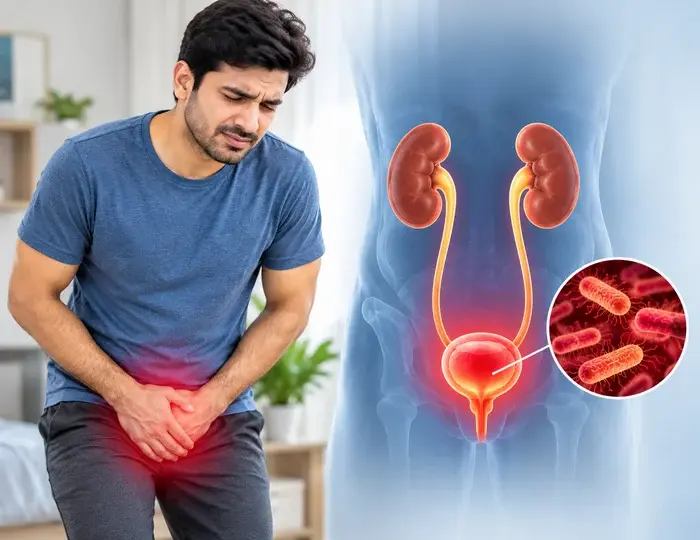
That burning sensation when you urinate. The urgency that sends you rushing to the bathroom every hour. The dull ache deep in the pelvis. UTIs are among the most common bacterial infections - affecting women far more frequently than men, but impacting both. When they recur or ascend to the kidneys, they become a serious health concern.
At Shree Hospitals, our urology team provides expert UTI treatment in Mumbai, from single episodes to complex, recurrent, and hospital-acquired urinary infections - with culture-guided therapy and a clear plan to prevent them coming back.
(24×7 Emergency Care)
Our Approach
(24×7 Emergency Care)
Our Approach In Managing Urinary Tract Infections
Treat accurately. Prevent reliably. Stop the cycle.
UTIs are frequently undertreated - antibiotics prescribed without culture, infections partially resolved, and recurrences never investigated. Our approach is evidence-based and thorough, particularly for patients with recurring infections, structural abnormalities, or infections ascending to the kidneys.
- Clinical Assessment & Symptom Classification
Proper classification guides appropriate therapy:
- Lower UTI (cystitis) - confined to bladder; dysuria, frequency, urgency, suprapubic discomfort
- Upper UTI (pyelonephritis) - kidney involvement; flank pain, fever, rigors, nausea and vomiting
- Complicated UTI - any infection in a patient with structural abnormality, indwelling catheter, pregnancy, diabetes, or male sex
- Uncomplicated UTI - in a non-pregnant, structurally normal, immunocompetent woman
- Urine Dipstick, Microscopy & Culture
Accurate microbiology is the cornerstone of UTI management:
- Urine culture and sensitivity - identifies the causative organism and its antibiotic susceptibility profile
- Mid-stream urine (MSU) collected under proper technique to avoid contamination
- Urine microscopy - pyuria (>10 WBC/hpf) confirms infection; casts suggest renal involvement
- Blood cultures for pyelonephritis with fever and systemic features
- Antibiotic Therapy - Culture-Directed
Empirical antibiotics are started while awaiting culture results, then adjusted:
- Uncomplicated cystitis - nitrofurantoin, trimethoprim, or fosfomycin; 3–7 day course
- Complicated or catheter-associated UTI - broader spectrum therapy based on local resistance patterns
- Pyelonephritis - oral fluoroquinolone or IV cephalosporin; 7–14 day course
- IV antibiotics for septic patients - meropenem or piperacillin-tazobactam adjusted to culture sensitivity
- Imaging for Complicated or Recurrent UTI
Investigation is essential for infections that don't resolve or keep returning:
- Ultrasound of kidney, ureter, and bladder - for structural abnormalities, hydronephrosis, or abscess
- CT urogram for suspected perinephric abscess, emphysematous pyelonephritis, or anatomical cause
- Micturating cystourethrogram (MCUG) for vesicoureteric reflux assessment in children
- Cystoscopy for bladder infection treatment investigation in patients with persistent haematuria or suspected bladder lesion
- Management of Recurrent UTI
Defined as 2 or more UTIs in 6 months or 3 in 12 months:
- Identification of modifiable risk factors - sexual activity, contraception method, voiding habits, hydration
- Low-dose prophylactic antibiotic (nitrofurantoin, trimethoprim) - continuous or post-coital
- D-mannose supplementation - evidence-based non-antibiotic prevention for E. coli UTIs
- Recurrent UTI specialist in Mumbai India evaluation for anatomical or functional causes - cystocele, incomplete bladder emptying, urethral diverticulum
- UTI in Special Populations
Management differs significantly by patient group:
- Pregnancy - UTI poses risk of preterm labour; prompt treatment with safe antibiotics (cephalexin, nitrofurantoin); longer course; test of cure mandatory
- Male UTI - always considered complicated; investigation for structural cause (BPH, prostatitis, calculus) required
- Catheter-associated UTI (CAUTI) - treatment only if symptomatic; catheter change as part of management
- Diabetes and immunocompromised - higher risk of complicated infection, emphysematous cystitis, and fungal UTI
- Prevention Programme & Lifestyle Guidance
Urinary burning and frequency prevention is as important as treatment:
- Fluid intake optimisation - 2–2.5 litres daily; consistent voiding frequency
- Voiding before and after sexual intercourse - most evidence-based behavioural intervention
- Proper wiping technique and genital hygiene education
- Topical vaginal oestrogen for post-menopausal women with recurrent UTIs - significantly reduces recurrence
- Vaccination with uromune (OM-89 immunostimulant) for patients with frequent recurrences
How To Identify Urinary Tract Infection?
UTI symptoms vary depending on which part of the urinary tract is affected:
Lower UTI (Cystitis) - Bladder Infection:
- Burning or stinging sensation on urination - the most characteristic symptom
- Urgency - sudden, intense need to urinate with little warning
- Frequency - passing small amounts of urine very often
- Suprapubic discomfort - lower abdominal ache or pressure
- Cloudy, dark, or strong-smelling urine
- Blood in urine - pink or red tinge; haematuria common in cystitis
Upper UTI (Pyelonephritis) - Kidney Infection:
- Flank or back pain - one-sided pain below the ribs, over the affected kidney
- High fever - typically above 38.5°C with chills and rigors
- Nausea and vomiting alongside urinary symptoms
- Feeling generally unwell or confused - particularly in elderly patients
Pyelonephritis is a serious infection requiring prompt medical evaluation. Fever with urinary burning and frequency should never be managed at home with leftover antibiotics - proper urine culture and sensitivity testing is essential.
.
Treatments For UTI At Shree Hospitals
Culture-Directed Antibiotic Therapy
Targeted antibiotic treatment based on urine culture and sensitivity results - eliminates the guesswork of empirical prescribing and ensures the right drug, right dose, right duration for complete cure.
IV Antibiotic Therapy (Inpatient)
For pyelonephritis with systemic sepsis, vomiting preventing oral medications, or complicated UTI in high-risk patients - IV cephalosporins, fluoroquinolones, or carbapenems based on culture.
DJ Stent Insertion / Ureteric Decompression
For UTI causing obstructed kidney - emergency ureteric stent to restore drainage alongside antibiotic therapy. Definitively addresses the anatomical cause once infection resolves.
Low-Dose Antibiotic Prophylaxis Programme
For recurrent UTIs, continuous low-dose or post-coital antibiotic prophylaxis may be considered using medicines such as nitrofurantoin or trimethoprim, based on individual patient needs and in consultation with our urology team.
Top Urologists in Mumbai

Dr. Shyam Mohan
Robotic Urological Surgery, Uro-Oncology

Dr. Alap Mehendale
Urologist, Andrologist, Kidney Transplant Surgeon

For Appointment/Query
1800-268-4000

Tele consultation/2nd Opinion
Schedule Consultation
Important FAQs: Urinary Tract Infection (UTI)
Why do women get UTIs more often than men?
Women have a shorter urethra (approximately 4cm versus 20cm in men), meaning bacteria from the perineal area have a much shorter distance to travel to reach the bladder. Additionally, the proximity of the urethral opening to the anus increases bacterial exposure. Sexual activity, contraception, and hormonal changes (particularly post-menopause) further increase risk. These anatomical realities explain why urinary tract infection treatment for women Mumbai is one of our most common consultations.
Should I always take antibiotics for a UTI?
Not always - and not without culture guidance. The growing problem of antibiotic resistance means that empirical antibiotics (prescribed without testing) are increasingly likely to be inappropriate for your specific infection. A urine culture and sensitivity test takes 48–72 hours and identifies exactly which antibiotic will work. For mild cystitis with typical symptoms in a healthy young woman, short-course empirical therapy is often appropriate - but recurrent or complicated UTIs always require culture.
What makes a UTI "complicated"?
A UTI is considered complicated when it occurs in a patient with a structural or functional abnormality of the urinary tract, in a man, in a pregnant woman, in a diabetic or immunocompromised patient, or in the presence of an indwelling catheter or urinary stent. Complicated UTIs require longer antibiotic courses, broader spectrum agents, and investigation of the underlying cause. Simple home treatment is rarely sufficient and our recurrent UTI specialist in Mumbai India will guide appropriate management.
Can UTIs cause permanent kidney damage?
Single, well-treated episodes of pyelonephritis rarely cause permanent damage. However, severe, repeated, or inadequately treated kidney infections can cause renal scarring - particularly in children with vesicoureteric reflux. In adults, recurrent pyelonephritis associated with obstruction, stones, or structural abnormalities can progressively damage renal function if the underlying cause is not identified and addressed.
What can I do to prevent UTIs from recurring?
Evidence-based prevention strategies include: drinking 2–2.5 litres of fluid daily, voiding before and after sexual intercourse, wiping front to back, avoiding spermicidal contraception, and using topical vaginal oestrogen if post-menopausal. For persistent recurrence despite behavioural measures, our team offers low-dose prophylactic antibiotics, D-mannose supplementation, immunoprophylaxis (uromune), and cystoscopy to exclude structural causes.
(24×7 Emergency Care)

News & Updates
Shree Hospitals Expands Paediatric Surgical Care With Latest Technology
Shree Hospitals Installs a Robotic-Assisted Surgical System for Better Patient Care


