 Ghatkopar (East), Mumbai)


Home > Obstetrics Gynaecology >Ovarian Cysts
Ovarian Cysts Treatment in Mumbai
At Shree Hospitals, we provide careful, evidence-based evaluation and personalised management for women with ovarian cysts. Most ovarian cysts are benign, functional, and resolve on their own without any treatment. However, some cysts require monitoring, medical intervention, or surgery depending on their size, appearance, growth behaviour, and the symptoms they cause.
Our gynaecology team uses high-resolution ultrasound assessment and internationally recognised risk stratification tools to make accurate recommendations, ensuring that women with simple cysts are not over-treated and that women with complex or suspicious cysts receive the timely evaluation they need.
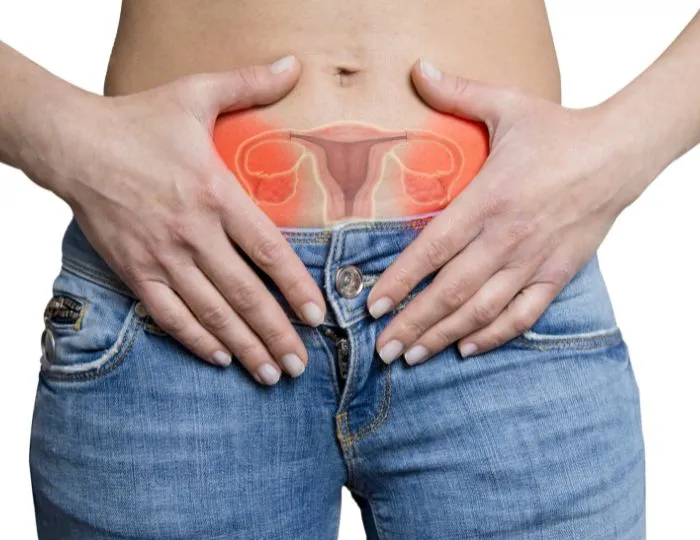
Pelvic pain or discomfort, abdominal bloating, irregular periods, pain during intercourse, and a feeling of fullness in the lower abdomen are common symptoms reported by women with significant ovarian cysts.
(24×7 Emergency Care)
Our Approach
(24×7 Emergency Care)
Our Approach In Managing Ovarian Cysts
Careful Assessment. Proportionate Treatment. Ovary Preserved Where Possible.
At Shree Hospitals, we follow the principle that the most appropriate management for an ovarian cyst is always proportionate to the actual risk or symptom burden.
Not every cyst needs surgery. Not every cyst can safely wait. Our specialists use the most reliable assessment tools and their extensive clinical experience to make the right recommendation for each individual patient based on her age, symptoms, ultrasound findings, and tumour marker results.
- Thorough Ovarian Cyst Assessment and Risk Stratification
The most important initial step in managing an ovarian cyst is characterising it accurately. The ultrasound appearance of a cyst, combined with the woman's age, menopausal status, and CA-125 tumour marker level, provides the information needed to categorise the cyst as low, intermediate, or high risk. This determines whether the cyst can be safely monitored, should be managed medically, or requires surgical removal.
- High-Resolution Transvaginal Ultrasound and IOTA Classification
- CA-125, HE4, and ROMA Score for Ovarian Malignancy Risk Assessment
- RMI (Risk of Malignancy Index) Calculation for Surgical Planning
- MRI Pelvis for Characterisation of Indeterminate Cysts on Ultrasound
- Conservative Monitoring for Simple and Functional Cysts
Simple ovarian cysts in premenopausal women, particularly those under five centimetres in size with a smooth wall and no solid components, are very commonly functional cysts that are part of the normal menstrual cycle. These almost always resolve spontaneously within two to three menstrual cycles and require only a follow-up ultrasound to confirm resolution rather than any active treatment.
- Follow-Up Ultrasound at 6 to 12 Weeks to Confirm Cyst Resolution
- Symptom Monitoring and Clinical Review Between Scans
- Contraceptive Pill Consideration to Prevent New Functional Cyst Formation
- Reassurance and Clear Patient Education on Expected Natural Resolution
- Laparoscopic Ovarian Cystectomy With Ovarian Preservation
For ovarian cysts that require surgical removal, laparoscopic ovarian cystectomy is the preferred approach in the vast majority of cases. Our specialist surgeons remove the cyst through small keyhole incisions while carefully preserving as much healthy ovarian tissue as possible, particularly in younger women and those who wish to preserve their fertility and ovarian function.
- Laparoscopic Cystectomy Preserving Maximum Healthy Ovarian Tissue
- Intraoperative Cyst Fluid Handling to Minimise Peritoneal Spillage
- Frozen Section Histology During Surgery for Unexpected Suspicious Findings
- Oophorectomy Reserved for Cases Where Ovarian Preservation Is Not Achievable
- Surgical Management of Ovarian Cyst Complications
Ovarian cysts can sometimes cause acute complications that require emergency surgical intervention. The most common acute complications are ovarian torsion, where the ovary twists on its blood supply, causing severe sudden pain, and cyst rupture with internal bleeding.
Both require urgent laparoscopic surgery. Our emergency gynaecology team is available 24 hours a day to manage these complications with speed and surgical expertise.
- Emergency Laparoscopic Detorsion for Ovarian Torsion
- Ovarian Conservation After Detorsion Even When the Ovary Looks Ischaemic
- Laparoscopic Haemostasis for Ruptured Haemorrhagic Cyst With Bleeding
- Post-Emergency Recovery and Follow-Up Cyst Assessment After Stabilisation
- Oncology Referral and Comprehensive Cancer Care for Suspicious Cysts
A small proportion of ovarian cysts have features on ultrasound or elevated tumour markers that raise concern for ovarian cancer.
These cases are prioritised urgently and referred to our gynaecologic oncology team for rapid assessment, definitive surgical staging, and treatment planning within the framework of our multidisciplinary tumour board.
- Urgent Gynaecologic Oncology Referral for High RMI Score Cysts
- Staging Laparoscopy or Staging Laparotomy for Suspicious Ovarian Masses
- Multidisciplinary Tumour Board Review Before Any Definitive Ovarian Cancer Surgery
- Full Gynaecologic Oncology Management for Confirmed Ovarian Malignancy
How To Identify Ovarian Cysts?
An ovarian cyst is a fluid-filled sac that develops within or on the surface of an ovary. They are extremely common, and many women develop at least one ovarian cyst at some point during their reproductive years without ever experiencing any symptoms.
The vast majority of ovarian cysts found in premenopausal women are benign and resolve without any treatment.
Many ovarian cysts cause no symptoms at all and are discovered only when a pelvic ultrasound is performed for an unrelated reason, such as investigating period irregularity or as part of a routine gynaecological check-up.
When symptoms do occur, the most common is a dull, aching, or intermittent pain or discomfort in the lower abdomen on the side where the cyst is located. Some women describe a feeling of pressure or fullness in the pelvis, particularly with larger cysts. Bloating, difficulty with full meals, and urinary frequency from the cyst pressing on the bladder are also reported.
Irregular or altered menstrual periods can occur when ovarian cysts affect ovarian hormone production, as is seen with endometriomas and hormone-secreting cysts.
The two most serious and acute presentations of an ovarian cyst are torsion and rupture. Ovarian torsion occurs when the ovary twists around its supporting ligaments, cutting off its blood supply. This causes a sudden onset of severe, often constant, one-sided pelvic pain, frequently accompanied by nausea and vomiting.
This is a gynaecological emergency requiring immediate surgical intervention to save the ovary. Cyst rupture, particularly of a haemorrhagic cyst, can cause sudden sharp pain followed by ongoing pelvic discomfort and, in some cases, significant internal bleeding requiring emergency surgery.
Any new pelvic pain, particularly sudden and severe one-sided pain, warrants immediate medical evaluation. Gradual or intermittent pelvic discomfort with known or suspected ovarian cysts should be discussed with a gynaecologist for appropriate assessment and monitoring guidance.
Contact Shree Hospitals for an ovarian cyst evaluation or emergency gynaecology consultation in Mumbai today.
Important FAQs:Ovarian Cysts
Do all ovarian cysts need surgery?
No. The majority of ovarian cysts found in premenopausal women, particularly simple cysts under five centimetres with no internal solid areas or septations, are functional cysts that resolve spontaneously within two to three menstrual cycles without any treatment. Surgery is recommended when a cyst is large, growing, causing significant symptoms, shows complex or suspicious features on ultrasound, is associated with elevated tumour markers, or causes an acute complication such as torsion or rupture with bleeding. Our ovarian cyst care in India programme follows internationally recognised evidence-based protocols to ensure every cyst is managed proportionately.
Can an ovarian cyst affect fertility?
It depends on the type and size of the cyst. Simple functional cysts generally do not affect fertility. Large endometriomas or complex cysts occupying a significant portion of the ovary can reduce the amount of healthy ovarian tissue available for egg development and may lower the ovarian reserve as measured by AMH. Cysts that distort the pelvic anatomy or block the fallopian tubes may also affect natural conception. Surgical removal of significant cysts can improve fertility, but surgery itself also carries a risk of reducing ovarian reserve, which is why a careful balance between removing the cyst and protecting the remaining ovarian tissue is essential.
How do I know if my ovarian cyst is cancerous?
The vast majority of ovarian cysts in premenopausal women are benign. Features that raise concern for malignancy include solid or mixed solid and cystic components within the cyst, multiple internal septations, irregular or thick walls, presence of blood flow within solid areas on Doppler ultrasound, and elevated CA-125 or HE4 tumour markers. Postmenopausal women with any ovarian cyst, even if it appears simple, warrant a more careful evaluation than premenopausal women because new ovarian cysts after menopause are less likely to be functional. Our specialist team uses validated risk scoring tools to assess every ovarian cyst accurately.
Can ovarian cysts come back after surgery?
Recurrence after ovarian cystectomy depends on the type of cyst removed. Simple functional cysts very rarely recur after surgical removal. Endometriomas have a higher recurrence rate, particularly if the underlying endometriosis was not fully treated at the same time as the cystectomy. Post-operative hormonal suppression with the contraceptive pill or progestin therapy can significantly reduce the risk of endometrioma recurrence. For women with recurrent cysts despite conservative surgery, laparoscopic assessment of the complete pelvic cavity and optimisation of medical suppression may be recommended.
What is the difference between an ovarian cyst and ovarian cancer?
An ovarian cyst is a fluid-filled sac on or within the ovary and is almost always benign, particularly in premenopausal women. Ovarian cancer is a malignant tumour of the ovary that grows and spreads in a way that a simple cyst does not. Not all ovarian cancers start as cysts, and the vast majority of ovarian cysts are not cancer. The distinction between a benign cyst and a potentially cancerous ovarian mass is made using a combination of ultrasound characterisation, tumour markers, and in some cases surgical histology. A concerning ultrasound appearance and elevated tumour markers together indicate a higher risk of malignancy and require prompt specialist surgical assessment.
Is it safe to exercise with an ovarian cyst?
For most women with small to moderate simple ovarian cysts, gentle exercise is safe and appropriate. High-impact activities, vigorous twisting movements, or exercises that put pressure on the abdomen may increase the risk of cyst rupture or provoke torsion in women with larger cysts, particularly if the cyst is greater than five to six centimetres. Our gynaecology team provides specific advice on safe activity levels based on your cyst size, type, and symptoms. Women with large or complex cysts should avoid strenuous exercise until a management plan has been clearly established.
When should I go to hospital immediately for an ovarian cyst?
Go to Shree Hospitals emergency department immediately if you develop sudden, severe one-sided pelvic pain especially if accompanied by nausea and vomiting, as this could indicate ovarian torsion. Also seek immediate care if you experience sudden sharp pain followed by fainting or dizziness, which could indicate cyst rupture with internal bleeding. Call our ovarian cyst treatment centre in Mumbai India on 1800-268-4000 for urgent guidance if you are unsure whether your symptoms require emergency assessment. These are time-sensitive emergencies where delay can result in loss of the ovary.
Treatments For Ovarian Cysts At Shree Hospital
Ovarian cyst treatment in Mumbai at Shree Hospitals ranges from watchful waiting with serial ultrasound monitoring for simple functional cysts to expert laparoscopic ovarian cystectomy with ovarian preservation for larger or symptomatic cysts, emergency surgical intervention for torsion and rupture, and full gynaecologic oncology care for cysts with suspicious features requiring cancer staging and treatment.
Advanced Ovarian Cyst Ultrasound Assessment and Risk Scoring
Our gynaecology imaging team uses high-resolution transvaginal ultrasound with IOTA characterisation and ADNEX model risk scoring to evaluate every ovarian cyst with the greatest possible accuracy. Combined with tumour marker testing including CA-125 and HE4, this gives our specialists a precise and evidence-based assessment of the malignancy risk associated with every ovarian mass we evaluate.
Laparoscopic Ovarian Cystectomy
Laparoscopic cystectomy is the preferred surgical approach for removing ovarian cysts in the vast majority of cases. Our surgeons remove the cyst through small keyhole incisions using meticulous tissue-handling techniques to preserve as much healthy ovarian tissue as possible. Intraoperative frozen section histology is available to provide immediate guidance if an unexpected finding raises concern during the procedure.ent alongside lifestyle changes.
Emergency Ovarian Torsion Surgery
Ovarian torsion is a gynaecological emergency that requires immediate laparoscopic surgery to detorse the twisted ovary and restore its blood supply. Our emergency gynaecology team is available around the clock and operates on all confirmed torsion cases as rapidly as possible to maximise the chance of ovarian salvage. Even when the ovary appears ischaemic at surgery, we attempt detorsion first as recovery of blood supply and ovarian function is often possible..
Gynaecologic Oncology Assessment for Complex and Suspicious Cysts
Ovarian cysts with complex features on ultrasound, elevated CA-125 or HE4 levels, or a high RMI score are assessed urgently by our gynaecologic oncology team. Our best ovarian cyst specialist in Mumbai ensures that all potentially malignant ovarian masses receive prompt, expert evaluation, multidisciplinary tumour board review, and definitive surgical staging or treatment at our fully equipped gynaecologic oncology centre.
Obstetricians & Gynaecologists in Mumbai

Dr. Jay Mehta
Consultant Obstetrics & Gynaecology

Dr. Sharda Arvind
Consultant Gynaecologist & Lap. Surgeon
Dr. Juhi Kedare
Obstetric & Gynaecologist

Dr. Sandhya Saharan
Obstetrician & Gynaecologist

For Appointment/Query
1800-268-4000

Tele consultation/2nd Opinion
Schedule Consultation

Follow Us

Shree
Hospitals

Shree
Hospitals
