 Ghatkopar (East), Mumbai)


Tooth Decay Treatment in Mumbai
Tooth decay is the world's most prevalent chronic disease - and yet it remains almost entirely preventable. What begins as a microscopic softening of tooth enamel from acid-producing bacteria can, if left unaddressed, progress through layers of the tooth until it reaches the nerve, causing significant pain and ultimately threatening the tooth's survival. The tragedy of dental caries is not how serious it can become but how many people tolerate early symptoms until they have no choice but to seek care.
At Shree Hospitals, our experienced dental decay specialists provide prompt, comprehensive Tooth Decay treatment in Mumbai, India - from accurate dental caries diagnosis and tooth restoration in Mumbai through cavity filling and decay prevention care that protects every tooth for the long term.
(24×7 Emergency Care)
Our Approach
(24×7 Emergency Care)
Our Approach In Treating Tooth Decay (Dental Caries)
Catch it early. Restore the tooth. Prevent the next cavity.
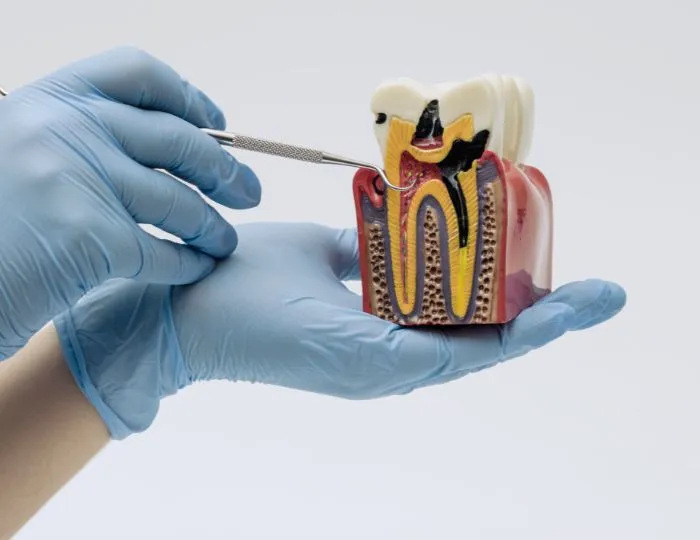
Tooth decay follows a predictable, staged progression that creates multiple opportunities for intervention at every point along the way. The earliest stage - a white spot lesion where enamel mineral has been lost but the surface is still intact - can sometimes be reversed entirely without any drilling. A shallow cavity confined to enamel can be restored with a minimal filling. A deeper lesion extending into dentine needs a more substantial restoration. And a decay that has reached the pulp requires root canal treatment to save the tooth. The single most important variable determining which treatment a patient needs is how soon they present.
At Shree Hospitals, our approach to dental caries diagnosis and tooth restoration in Mumbai rewards early presentation with simpler, more conservative treatment - and our team works equally hard to ensure that every patient who has needed more extensive treatment leaves with a prevention plan that protects their remaining teeth going forward.
- Thorough Diagnostic Assessment
- Comprehensive clinical examination - visual and tactile assessment of all tooth surfaces under magnification
- Bitewing and periapical dental X-rays - identifying interproximal cavities between teeth that clinical examination cannot detect
- DIAGNOdent laser caries detection - quantifying the mineral content of suspicious tooth surfaces before deciding on intervention
- Caries risk assessment - evaluating diet, hygiene habits, saliva quality, and fluoride exposure to categorise each patient's individual caries risk level
- Charting of all existing restorations and identifying secondary decay developing around previous fillings
- Non-Operative Remineralisation for Early Lesions
The most conservative possible intervention - reversing early decay before a cavity forms:
- Professional fluoride treatment for teeth - high-concentration fluoride varnish application recharging enamel mineral content
- Silver Diamine Fluoride (SDF) application - particularly valuable for arresting active decay in children or anxious patients
- Casein Phosphopeptide-Amorphous Calcium Phosphate (CPP-ACP) remineralising paste prescription for home use
- Strict dietary counselling - reducing frequency of fermentable carbohydrate exposure that feeds decay-causing bacteria
- Oral hygiene optimisation - technique correction and appropriate fluoride toothpaste use
- Composite Tooth-Coloured Fillings
For cavities requiring operative restoration:
- Minimal access cavity preparation - removing only decayed tissue while conserving maximum healthy tooth structure
- Composite resin tooth-coloured restorations - providing both structural restoration and aesthetically invisible results
- Layered bonding technique ensuring maximum adhesion strength and restoration longevity
- Shade matching to surrounding natural tooth for completely natural appearances in visible areas
- Glass ionomer cement restorations for specific clinical situations, including deciduous teeth or moisture-controlled environments
- Root Canal Treatment for Deep Decay
When decay has reached or is threatening the dental pulp:
- Precise pulp vitality testing confirming the need for root canal for severe decay before proceeding
- Thorough pulp chamber access and complete removal of infected pulp tissue
- Electronic apex locator and digital X-ray guided canal length determination
- Rotary nickel-titanium instrumentation for smooth, efficient canal shaping
- Warm vertical condensation obturation ensuring complete three-dimensional canal sealing
- Crown placement following root canal treatment - protecting the restored tooth from fracture
- Preventive Programme & Recall
Treatment without prevention simply means treating the same patient again in a few years:
- Individualised preventive protocol based on each patient's caries risk category
- Professional fluoride treatment for teeth at every recall visit - frequency determined by risk level
- Fissure sealant application for newly erupted posterior teeth in children and young adults
- Dietary diary review and specific sugar frequency reduction advice
- Tailored oral hygiene instruction with personalised tool selection - electric toothbrush, interdental brushes, or floss depending on individual need
- Comprehensive Caries Management for Children
- Paediatric-adapted dental assessment with a calm, trust-building approach
- Early childhood caries management - a particularly aggressive decay pattern affecting very young children
- Preventive resin restorations and fissure sealants for at-risk children
- Clear parent education on dietary habits, feeding practices, and tooth cleaning for infants and toddlers
Happy Patients & Their Case Stories
A 28-year-old graphic designer from Bandra had avoided the dentist for years out of anxiety, finally presenting with several cavities. Gentle, unhurried cavity filling and decay prevention care at Shree Hospitals - including tooth-coloured composite fillings - left her with a complete, pain-free smile and, for the first time, no anxiety about returning.
Mr. Suraj. L
This 35-year-old man arrived with severe toothache from a deeply decayed molar. Root canal for severe decay at Shree Hospitals removed the infected pulp completely, followed by crown placement - saving a tooth he had assumed was beyond repair.
Mr. Deshmukh. M
How To Identify Tooth Decay (Dental Caries)?
Tooth decay is often more advanced than patients realise before symptoms appear - which is why regular professional assessment matters alongside self-awareness:
- White or chalky spots on the tooth surface - the earliest visible sign of enamel demineralisation, often reversible at this stage with appropriate fluoride treatment for teeth
- Visible dark spots, pits, or holes - indicating an established cavity that has progressed through the enamel surface
- Sensitivity to sweet foods or drinks - dentinal sensitivity from decay exposing tubules in the layer beneath the enamel
- Sharp pain when biting - a cavity deep enough to cause pressure changes at the pulp level
- Persistent toothache - particularly if spontaneous, continuous, or waking you from sleep, suggesting pulp involvement requiring prompt root canal for severe decay evaluation
- Bad breath or unpleasant taste - from bacterial activity within active decay sites
- Pain to hot and cold temperatures - temperature sensitivity persisting beyond a few seconds is a warning sign of advancing decay
The absence of symptoms does not mean the absence of decay - many cavities cause no pain until they are significantly advanced. Regular dental examination is the only reliable way to catch early decay when cavity filling and decay prevention care is simplest and most conservative.
Important FAQs: Tooth Decay (Dental Caries)
Can tooth decay be reversed without a filling?
Yes - very early enamel lesions showing demineralisation but no cavitation can be remineralised through professional fluoride treatment for teeth combined with dietary change and improved oral hygiene. Once a cavity has broken through the enamel surface, however, operative restoration is required.
How long does a filling last?
Well-placed composite fillings typically last 7 to 10 years with good oral hygiene and regular professional monitoring. Our cavity filling and decay prevention care programme includes recall visits specifically to assess existing restorations for any wear or secondary decay.
Is root canal treatment painful?
Modern root canal for severe decay treatment performed under adequate local anaesthesia is generally no more uncomfortable than having a filling placed. The discomfort patients associate with root canal treatment is typically the toothache preceding it, not the procedure itself.
How often should I visit the dentist for decay check-ups?
Six-monthly visits are appropriate for most patients. Higher-risk individuals may benefit from three to four monthly professional check-ups combined with fluoride treatment for teeth - your individual recall frequency is established during our caries risk assessment.
What foods cause the most tooth decay?
Frequent sugary and acidic food and drink consumption provides the substrate that decay-causing bacteria ferment into enamel-attacking acid. It's the frequency of exposure rather than the total amount that matters most - our dental caries diagnosis and tooth restoration in Mumbai team provides specific dietary guidance based on individual eating patterns.
Treatments For Tooth Decay (Dental Caries) at Shree Hospitals
We offer a complete range of tooth decay (dental caries) treatment in Mumbai services, including comprehensive dental examinations, advanced diagnostic imaging, personalised treatment planning, tooth-coloured fillings, root canal treatment when required, preventive fluoride therapy, oral hygiene counselling, and long-term follow-up programmes designed to restore dental health, prevent further decay, and help every patient maintain a healthy, confident smile.
Top Tooth Decay (Dental Caries) Specialists in Mumbai

Dr. Prashant Shah
Dentist
Dr. Saraswati Shanbhag
Cosmetic Dentist, Periodontist & Implantologist
Dr. Reiyaal Goveas
Maxillofacial Prosthetics, Facial Reconstruction
Dr. Aatish Shah
Consultant Prosthodontist & Implantologist
Board-certified Surgeons and Specialists with an average of 15+ years of experience in their areas of expertise.

For Appointment/Query
1800-268-4000

Tele consultation/2nd Opinion
Schedule Consultation

News & Updates
Shree Hospitals Expands Paediatric Surgical Care With Latest Technology
Shree Hospitals Installs a Robotic-Assisted Surgical System for Better Patient Care


