 Ghatkopar (East), Mumbai)


Lung Cancer
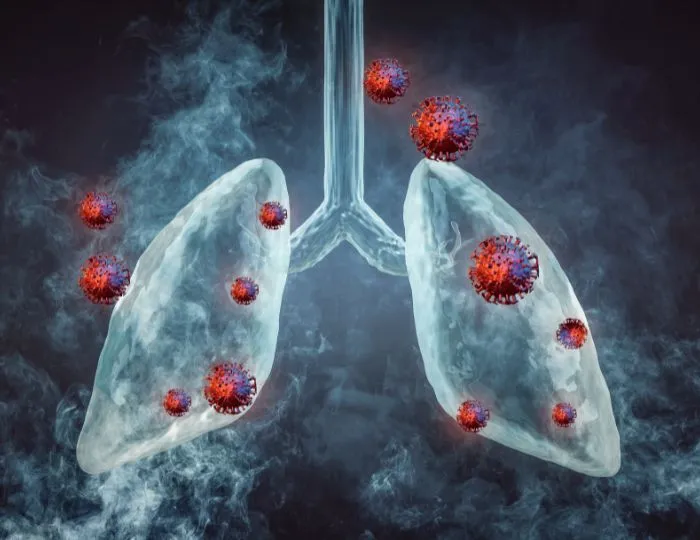
Lung cancer remains one of the leading causes of cancer-related mortality worldwide yet outcomes improve dramatically when it is caught early and treated at a centre equipped for the full spectrum of care.
At Shree Hospitals, our thoracic oncology team delivers comprehensive lung cancer treatment in Mumbai India, from minimally invasive surgery to advanced systemic therapies and targeted molecular treatment.
(24×7 Emergency Care)
Our Approach
(24×7 Emergency Care)
Our Approach to Managing Lung Cancer
Lung cancer doesn't announce itself early which is why the diagnostic speed and clinical depth of the team you choose matters enormously. Our lung cancer specialists in Mumbai work within a dedicated thoracic oncology unit where radiology, pathology, surgery, and medical oncology converge. Every patient is discussed at our multidisciplinary tumour board before a treatment path is finalised.
1. Diagnosis & Molecular Profiling
& Staging
Precision treatment starts with precision diagnosis:
- CT scan of the chest with contrast as first-line imaging
- PET-CT scan for staging and detection of distant spread
- Bronchoscopy or CT-guided biopsy for tissue confirmation
- Molecular testing: EGFR, ALK, ROS1, PD-L1 — essential for targeted therapy decisions
- Pulmonary function tests to assess surgical fitness
2. Surgical Treatment
Surgery remains the best option for early-stage non-small cell lung cancer (NSCLC):
- Video-Assisted Thoracoscopic Surgery (VATS) lobectomy — minimally invasive, faster recovery
- Open thoracotomy for complex or centrally located tumours
- Wedge resection or segmentectomy for smaller peripheral tumours
- Mediastinal lymph node dissection performed routinely for accurate staging
3. Chemotherapy
Systemic chemotherapy plays a role across all stages of lung cancer:
- Platinum-based combination regimens for NSCLC
- Concurrent chemoradiation for locally advanced, inoperable disease
- Neoadjuvant chemotherapy to downstage tumours before surgery
- Small cell lung cancer (SCLC) managed primarily with chemotherapy and radiation
4. Targeted Therapy
For patients with actionable mutations, targeted therapy has transformed outcomes in pulmonary oncology care:
- EGFR inhibitors (erlotinib, osimertinib) for EGFR-mutated NSCLC
- ALK inhibitors for ALK-rearranged tumours
- Third-generation agents now available for patients who progress on first-line TKIs
Oral medications with significantly fewer side effects than conventional chemotherapy
5. Immunotherapy
Checkpoint inhibitors have redefined treatment for advanced lung cancer:
- PD-1/PD-L1 inhibitors (pembrolizumab, nivolumab) — used alone or in combination
- PD-L1 testing done on all eligible patients to guide immunotherapy selection
- Significantly improved overall survival in high-expressers
- Combination chemo-immunotherapy for appropriate patients
6. Radiation Therapy
Used across multiple clinical scenarios:
- Stereotactic Body Radiation Therapy (SBRT) for early-stage patients unfit for surgery
- Concurrent chemoradiation for Stage III disease
- Palliative radiation for symptom control in advanced cases (bone pain, haemoptysis)
- Brain radiation for patients with CNS metastases
How To Identify LUNG CANCER?
Many patients with lung cancer have no symptoms in its earliest, most treatable stages. When symptoms do appear, they are often dismissed as respiratory infections. Knowing early lung cancer symptoms can save lives:
- Persistent cough lasting more than 3 weeks that doesn't respond to antibiotics
- Blood in sputum — even a small amount warrants immediate investigation
- Unexplained breathlessness — worsening over weeks without a clear respiratory cause
- Chest or shoulder pain that is constant and worsens with deep breathing
- Hoarseness — especially new-onset in someone with no throat condition
- Unexplained weight loss and persistent fatigue
- Recurrent chest infections — pneumonia that keeps coming back in the same area
Smokers and ex-smokers over 50 should discuss low-dose CT lung cancer screening with a lung cancer specialist in Mumbai at Shree Hospitals.
Important FAQs: Lung Cancer
Does lung cancer only affect smokers?
No. While smoking is the leading risk cause, nearly 20% of lung cancer patients have never smoked. Passive smoke exposure, air pollution, radon gas, and occupational carcinogens also increase risk significantly.
What is the difference between NSCLC and SCLC?
Non-small cell lung cancer (NSCLC) is the most common type (85% of cases) and includes adenocarcinoma, squamous cell, and large cell subtypes. Small cell lung cancer (SCLC) is rarer but grows faster and is managed differently — primarily with chemotherapy and radiation.
Is lung cancer operable?
Surgery is possible in early stages (Stage I and II) and selected Stage III cases. Patients are assessed for surgical fitness using pulmonary function tests and imaging. Minimally invasive VATS surgery has expanded the pool of eligible patients.
What does molecular testing mean for my treatment?
Molecular profiling identifies specific gene mutations or protein expressions in your tumour. This allows your oncologist to match your cancer to targeted drugs that are more effective and less toxic than standard chemotherapy.
How long does lung cancer treatment last?
It varies. Surgery is a single procedure with recovery of 3–6 weeks. Chemotherapy runs in cycles over 3–6 months. Targeted therapy and immunotherapy are often continued long-term as maintenance. Your oncologist will outline a personalised plan.
When should I get a lung cancer screening?
High-risk individuals smokers over 50 with a 20+ pack-year history should consider annual low-dose CT screening. Speak to our lung cancer specialist in Mumbai to assess your personal risk profile.
Treatments For Lung Cancer at Shree Hospitals
We offer a comprehensive range of lung cancer treatment services, including advanced screening and early diagnosis, detailed staging and molecular testing, personalised treatment plans, minimally invasive and complex thoracic surgery, chemotherapy, radiation therapy, targeted therapy, immunotherapy, pulmonary rehabilitation, supportive and palliative care, regular follow-up, and long-term survivorship care all designed to help patients achieve the best possible outcomes while maintaining their quality of life.
VATS Lobectomy
Video-Assisted Thoracoscopic Surgery to remove a lobe of the lung through small incisions. Less pain, shorter hospital stay, and faster recovery than open surgery with equivalent oncological outcomes for early-stage disease.
Chemotherapy
Systemic treatment used alone or in combination with surgery and radiation. Essential for small cell lung cancer and advanced NSCLC. Regimen chosen based on histology, stage, and patient's performance status.
Targeted Therapy
Oral or IV drugs that specifically target cancer-driving mutations like EGFR or ALK. Key part of lung cancer treatment in Mumbai India for patients with actionable molecular markers. Fewer side effects, higher tumour response rates.
Immunotherapy
Checkpoint inhibitors that unleash the immune system against cancer cells. Used in advanced NSCLC with high PD-L1 expression. Can produce durable long-term remissions in select patients.
Top Lung Cancer Specialists in Mumbai

Dr. Vivek Sukumar
Consultant Surgical Oncologist

Dr. Amit Gandhi
Consultant Surgical Oncologist

Dr. Prasad Kasbekar
Consultant Surgical Oncologist

Dr. Preetam Jain
Consultant Medical Oncology

For Appointment/Query
1800-268-4000

Tele consultation/2nd Opinion
Schedule Consultation

News & Updates
Shree Hospitals Opens Its Doors to Comprehensive Multispeciality Healthcare in Mumbai
Shree Hospitals Strengthens Emergency and Critical Care Services With 24/7 Support


