 Ghatkopar (East), Mumbai)


Home > Orthopedics > Shoulder Dislocation
Shoulder Dislocation Treatment in Mumbai
At Shree Hospitals, we combine rapid orthopedic assessment with advanced shoulder care to treat shoulder dislocation and rotator cuff injuries in Mumbai.
Our dedicated shoulder specialists, orthopedic surgeons, sports medicine physicians, and rehabilitation therapists evaluate each patient thoroughly, identify the exact nature and extent of the injury, and deliver a targeted treatment plan that restores shoulder strength, stability, and full range of motion.
Sudden severe pain in the shoulder following a fall or impact, a visibly displaced or "out of socket" joint, inability to raise or rotate the arm, weakness, and a tearing or popping sensation are common signs of shoulder joint instability or a rotator cuff tear. Early expert evaluation prevents repeated dislocations and progressive muscle damage.
(24×7 Emergency Care)
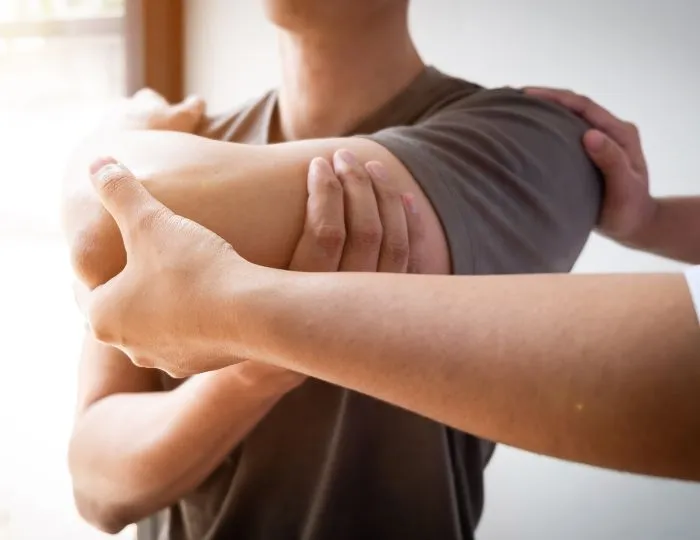
Our Approach
(24×7 Emergency Care)
Our Approach to Managing Shoulder Dislocation
Stability. Strength. Pain-Free Movement.
At Shree Hospitals, we combine expert clinical assessment with the latest shoulder care techniques to manage shoulder dislocation and rotator cuff injuries in Mumbai across all severity levels, from a first-time dislocation in a young athlete to a massive rotator cuff tear in an older patient with chronic shoulder pain.
Our shoulder team evaluates each case individually, determines the precise injury pattern, and recommends the most appropriate treatment, prioritising joint preservation and early return to function.
When a patient presents with a shoulder dislocation or suspected rotator cuff injury, our specialists conduct an immediate clinical examination followed by targeted imaging, X-rays to confirm joint position and MRI to map the extent of soft tissue, labral, and tendon damage.
This diagnostic precision is essential because shoulder injuries that look similar on the surface often require fundamentally different treatments, and the correct pathway from the outset determines long-term outcomes for shoulder pain treatment.
- X-rays in multiple planes to confirm dislocation, fracture, or bone loss
- High-resolution MRI for rotator cuff tendon, labrum, and capsule assessment
- MRI arthrogram for subtle labral tears and partial-thickness rotator cuff injuries
- Shoulder ultrasound for dynamic assessment of tendon integrity during movement
- Shoulder stability testing — Apprehension, Load & Shift, and Sulcus sign examination
- EMG for cases involving associated axillary nerve or brachial plexus injury
International shoulder care guidelines confirm that the choice between surgical and non-surgical management hinges on patient age, activity level, injury chronicity, and bone loss assessment (Journal of Shoulder and Elbow Surgery, 2024). Our specialists use all available evidence to make the decision that is right for each individual patient.
- Personalised treatment plans based on injury type, severity, and patient activity demands
- Minimally invasive arthroscopic techniques for most soft tissue repairs
- Structured sport-specific rehabilitation for athletes
- Comprehensive follow-up to monitor shoulder stability and strength progression
Our shoulder care team is available 24×7 because dislocations and acute rotator cuff injuries do not wait for scheduled appointments.
1. Advanced Diagnostic Imaging & Shoulder Assessment
Accurate characterisation of the shoulder injury whether a dislocation, rotator cuff tear, labral injury, or combination is the cornerstone of effective treatment planning. Our imaging protocols are specifically tailored to the shoulder's complex anatomy.
- AP, scapular Y, and axillary X-rays for dislocation confirmation, Hill-Sachs lesion, and glenoid bone loss assessment
- 3T MRI for full rotator cuff tear mapping — identifying which tendons are torn, tear size, tendon quality, and degree of muscle atrophy
- MRI arthrogram (with contrast injection) for partial tears and superior labral (SLAP) lesions
- CT scan with 3D reconstruction for glenoid bone loss quantification — critical for Latarjet surgery planning
- Dynamic shoulder ultrasound for tendon impingement and dynamic instability assessment
- Axillary nerve conduction studies where post-dislocation nerve injury is suspected
This thorough imaging assessment eliminates diagnostic uncertainty and ensures that surgical planning if required is based on accurate, complete anatomical data.
2. Non-Surgical & Conservative Management
For many shoulder dislocation and rotator cuff injury patients particularly first-time dislocations in older patients, partial-thickness rotator cuff tears, and mild impingement syndromes structured conservative management delivers excellent outcomes without surgery.
- Closed Reduction (Emergency Dislocation Relocation) — The dislocated shoulder is gently guided back into the socket using specific manoeuvres (Cunningham, FARES, or Milch technique) under pain relief or procedural sedation. Performed in the emergency bay with no incision required.
- Sling Immobilisation — Post-reduction immobilisation for 3–4 weeks to allow the stretched capsule and labrum to heal, particularly in first-time dislocators over 40.
- Physiotherapy & Rotator Cuff Strengthening — Progressive rotator cuff and scapular stabiliser strengthening exercises to restore dynamic shoulder stability — the primary defence against re-dislocation.
- Corticosteroid Injections — Subacromial or glenohumeral joint injections for acute pain relief in rotator cuff tendinopathy, impingement, and bursitis.
- Platelet-Rich Plasma (PRP) Therapy — Autologous growth factor injections to promote tendon healing in partial-thickness rotator cuff tears and chronic tendinopathy.
- Activity Modification & Ergonomic Guidance — Reducing overhead loading, correcting throwing mechanics, and modifying work tasks to offload the injured shoulder during healing.
Conservative management is reassessed at 6–8 weeks. Persistent instability, ongoing pain, or failed non-surgical treatment after 3 months are indicators for surgical evaluation.
3. Minimally Invasive Shoulder Arthroscopy
Shoulder arthroscopy is the cornerstone of modern shoulder surgery a minimally invasive technique that allows our surgeons to diagnose and treat the full range of shoulder pathologies through two to four small incisions (portals), each under 1 cm.
- High-definition 4K arthroscopic camera with 360° joint visualisation
- Arthroscopic washout and debridement for acute haemarthrosis or loose body removal
- Subacromial decompression (acromioplasty) for chronic impingement syndrome
- Biceps tenodesis or tenotomy for biceps tendon tears and SLAP lesions
- Arthroscopic capsular release for frozen shoulder (adhesive capsulitis)
- Arthroscopic Bankart repair for anterior shoulder instability (see section 4)
- Arthroscopic rotator cuff repair for full-thickness tears (see section 4)
Most arthroscopic procedures are performed as day-care surgeries under general anaesthesia with an interscalene nerve block, allowing patients to return home the same day with minimal post-operative pain.
4. Surgical Repair — Rotator Cuff, Labrum & Shoulder Stabilisation
For recurrent dislocations, full-thickness rotator cuff tears, significant bone loss, or cases that fail conservative management, definitive surgical repair is required to restore shoulder anatomy and prevent long-term dysfunction.
For Shoulder Instability (Recurrent Dislocation):
- Arthroscopic Bankart Repair — The torn labrum (Bankart lesion) is reattached to the glenoid rim using suture anchors, restoring the shoulder's anterior bumper. Gold standard for first-time surgical stabilisation with adequate bone stock. 90–95% success rate in preventing re-dislocation.
- Latarjet Procedure (Bone Block Stabilisation) — A segment of the coracoid bone is transferred to the front of the glenoid socket to restore bone stock and create a dynamic sling effect. Indicated when glenoid bone loss exceeds 20–25% or after failed Bankart repair.
- Remplissage Procedure — Arthroscopic filling of the Hill-Sachs lesion (humeral head bone defect) with soft tissue to prevent engagement. Often combined with Bankart repair for large bone defects.
For Rotator Cuff Tears:
- Arthroscopic Rotator Cuff Repair — Torn tendon edges are reattached to the humeral head using suture anchors in a single-row or double-row configuration. Double-row repair provides a stronger, more anatomical footprint restoration for large and massive tears.
- Superior Capsule Reconstruction (SCR) — For massive, irreparable rotator cuff tears, a graft (dermal allograft or fascia lata autograft) is used to reconstruct the superior capsule, restoring the fulcrum mechanism and reducing pain.
- Tendon Transfer — For massive irreparable tears in younger patients, nearby tendons (latissimus dorsi, lower trapezius) are transferred to restore lost rotator cuff function.
For End-Stage Shoulder Arthritis or Failed Repair:
- Total Shoulder Replacement (Anatomic TSA) — The ball and socket are resurfaced with metal and polyethylene components. Ideal for arthritis with an intact rotator cuff.
- Reverse Total Shoulder Replacement (RSA) — The ball and socket are switched, allowing the deltoid muscle to compensate for a non-functional rotator cuff. Gold standard for cuff tear arthropathy and massive irreparable tears in older patients.
5. Shoulder Rehabilitation & Return to Function
Shoulder surgery is only half the journey structured, progressive rehabilitation is what restores strength, stability, and the confidence to return to sport, work, and daily life.
- Phase 1 (0–6 weeks): Sling protection, passive range-of-motion exercises, pendulum swings, ice and pain management
- Phase 2 (6–12 weeks): Active-assisted range-of-motion, early rotator cuff activation, scapular stabilisation exercises
- Phase 3 (3–6 months): Progressive rotator cuff strengthening, proprioception and neuromuscular control training, sport-specific drills
- Phase 4 (6–12 months): Full return-to-sport protocol with sport-specific load progression and functional testing
- MRI follow-up at 6 and 12 months to confirm tendon healing and implant integrity
- Ongoing maintenance programme to prevent recurrence and maintain shoulder health
Our physiotherapy team specialises in post-shoulder surgery rehabilitation and works closely with your surgeon to ensure each phase is advanced safely and at the right pace.
How To Identify a Shoulder Dislocation?
Recognising a shoulder injury early and distinguishing between a dislocation and a rotator cuff tear helps determine the urgency of care required.
The clearest sign of a shoulder dislocation is sudden, severe pain after a fall or impact, with the shoulder appearing visibly misshapen or "out of place" the humeral head is no longer seated within its socket.
A rotator cuff tear, by contrast, typically causes pain on the outer shoulder and a specific loss of ability to raise or rotate the arm.
Key warning signs to watch for:
- Visible shoulder deformity or squaring off — the normal rounded contour of the shoulder is lost; the joint appears flat or displaced
- Inability to move the arm in any direction following a traumatic event — characteristic of acute dislocation
- Sudden weakness raising the arm above shoulder level — a hallmark of a significant rotator cuff tear
- A popping, tearing, or snapping sensation at the time of injury
- Pain on the outer (lateral) shoulder, worse with overhead activity or lying on the shoulder at night — classic rotator cuff pattern
- Shoulder "giving way" or a sense of the joint sliding out during overhead activity — indicating chronic shoulder joint instability
- Numbness or tingling down the outer arm — suggesting associated axillary nerve stretch from a dislocation
- Progressive difficulty with daily tasks such as combing hair, reaching behind the back, or lifting objects — indicating rotator cuff weakness
Any acute shoulder trauma with a visibly displaced joint requires emergency orthopaedic attention. Rotator cuff symptoms that persist beyond 2–4 weeks warrant specialist evaluation.
Important FAQs: Shoulder Dislocation
What is the difference between a shoulder dislocation and a rotator cuff injury?
A shoulder dislocation occurs when the head of the humerus (upper arm bone) is forced out of the glenoid socket most commonly forwards (anterior dislocation) after a fall with the arm outstretched. A rotator cuff injury involves tearing of one or more of the four muscles and tendons that surround the shoulder joint most commonly the supraspinatus causing pain, weakness, and restricted arm elevation. Both can occur together following a traumatic shoulder injury, particularly in patients over 40.
What are the symptoms of shoulder dislocation vs. a rotator cuff tear?
Shoulder dislocation presents with sudden severe pain, a visible "out of place" shoulder contour, and complete inability to move the arm after a traumatic event. Rotator cuff tears typically present with aching outer shoulder pain worse with overhead activity and at night combined with specific weakness in raising or rotating the arm. Rotator cuff tears may develop acutely (from trauma) or gradually (from wear and degeneration). Both conditions can cause shoulder instability and significant functional loss.
How is a shoulder injury diagnosed at the hospital?
Diagnosis begins with a detailed clinical examination assessing joint position, range of motion, impingement signs, and rotator cuff strength testing. X-rays are taken immediately to confirm dislocation, identify fractures, and assess glenoid bone loss. An MRI is then performed to evaluate the rotator cuff, labrum, and capsule in detail. An MRI arthrogram (with contrast) may be requested for subtle SLAP or partial-thickness tears. CT scan with 3D reconstruction is used when bone loss assessment is critical for surgical planning.
Can shoulder dislocation and rotator cuff injuries heal without surgery?
First-time shoulder dislocations in patients over 40 and most partial-thickness rotator cuff tears can be managed successfully without surgery through immobilisation and structured physiotherapy. However, recurrent dislocation in young, active patients and full-thickness rotator cuff tears particularly in physically active patients typically do not heal spontaneously and benefit significantly from surgical repair. The longer a full-thickness tear goes unrepaired, the more the tendon retracts and the muscle atrophies, reducing the chance of successful surgical repair later.
What treatments are available at Shree Hospitals for these injuries?
We offer the full spectrum from emergency closed reduction and conservative physiotherapy for first presentations, to corticosteroid and PRP injections for tendon pain, to arthroscopic Bankart repair and Latarjet procedure for instability, to arthroscopic double-row rotator cuff repair for tendon tears, and total or reverse shoulder replacement for end-stage arthritis or irreparable cuff tears. Every treatment decision is personalised based on injury type, bone stock, patient age, and functional goals.
How long does recovery take after shoulder surgery?
Recovery timelines vary by procedure. Arthroscopic Bankart repair requires 4–6 months before return to contact sport. Rotator cuff repair patients are in a sling for 6 weeks, begin strengthening at 3 months, and return to full activity at 6–9 months with large tears taking closer to 12 months. Latarjet procedure patients typically return to sport at 4–6 months. Shoulder replacement patients regain functional use within 6–12 weeks, with full recovery at 6 months. Adherence to the rehabilitation programme is the single greatest determinant of outcome quality.
When should I see a shoulder specialist?
See a shoulder specialist immediately after any traumatic shoulder injury particularly if the joint looks deformed, you cannot move the arm, or you felt a pop or tearing sensation. For non-traumatic shoulder pain, seek evaluation if pain persists beyond 2–4 weeks, wakes you at night, causes weakness raising the arm, or is limiting daily activities. Rotator cuff tears that go untreated can become massive and irreparable early repair consistently delivers better outcomes than delayed intervention.
Treatments for Shoulder Dislocation at Shree Hospitals
We provide comprehensive treatment for shoulder dislocation and rotator cuff injuries, including accurate diagnosis, personalised treatment plans, minimally invasive surgery, rehabilitation, physiotherapy, and follow-up care to restore strength, mobility, and shoulder function.
Closed Reduction
Emergency, non-surgical relocation of the dislocated shoulder back into its socket using controlled manoeuvres under pain relief performed immediately in the emergency bay.
Physiotherapy & Rotator Cuff Strengthening
Structured rotator cuff and scapular stabiliser rehabilitation programme to restore dynamic shoulder stability and prevent recurrence after dislocation or tendon injury.
Corticosteroid & PRP Injections
Targeted injections into the subacromial space or glenohumeral joint for rapid pain relief in rotator cuff tendinopathy, bursitis, and partial tears.
Shoulder Arthroscopy
Minimally invasive keyhole surgery using a high-definition camera to diagnose and treat labral tears, impingement, loose bodies, biceps pathology, and early rotator cuff lesions.
Arthroscopic Rotator Cuff Repair
Arthroscopic reattachment of torn rotator cuff tendons to the humeral head using suture anchors double-row technique for large and massive tears.
Minimally Invasive / Anterior Approach THR
Muscle-sparing direct anterior approach total hip replacement no muscles cut, no hip precautions, day 1–2 discharge, and the fastest recovery profile of all hip replacement approaches.
Total Shoulder Replacement (Anatomic)
Resurfacing of the ball and socket with precision implants for end-stage glenohumeral arthritis with an intact rotator cuff.
Reverse Total Shoulder Replacement
Reversed ball-and-socket implant that allows the deltoid to compensate for a non-functioning rotator cuff gold standard for cuff tear arthropathy in older patients.
Orthopaedics Specialists in Mumbai
Dr. Amit Pandey
Consultant Orthopaedics
Dr. Neeraj Mishra
Consultant Orthopaedics

Dr. Tapan Shah
Consultant physiotherapist

Dr. Chirag Dalal
Consultant Orthopedic Surgeon

For Appointment/Query
1800-268-4000

Tele consultation/2nd Opinion
Schedule Consultation

News & Updates
Shree Hospitals Opens Its Doors to Comprehensive Multispeciality Healthcare in Mumbai
Shree Hospitals Strengthens Emergency and Critical Care Services With 24/7 Support


