 Ghatkopar (East), Mumbai)


Home > Orthopedics > Sports Injuries (ACL, Meniscus)
Sports Injury Treatment in Mumbai (ACL and Meniscus Injuries)
At Shree Hospitals, we combine rapid sports injury assessment with advanced orthopaedic and sports medicine expertise in Mumbai to treat ACL tears, meniscus injuries, and complex knee ligament injuries across all levels from recreational athletes to elite sports professionals.
Our dedicated sports injury team evaluates each patient thoroughly, identifies the precise injury pattern, and delivers a personalised treatment plan focused on one goal: getting you back to full activity, safely and permanently.
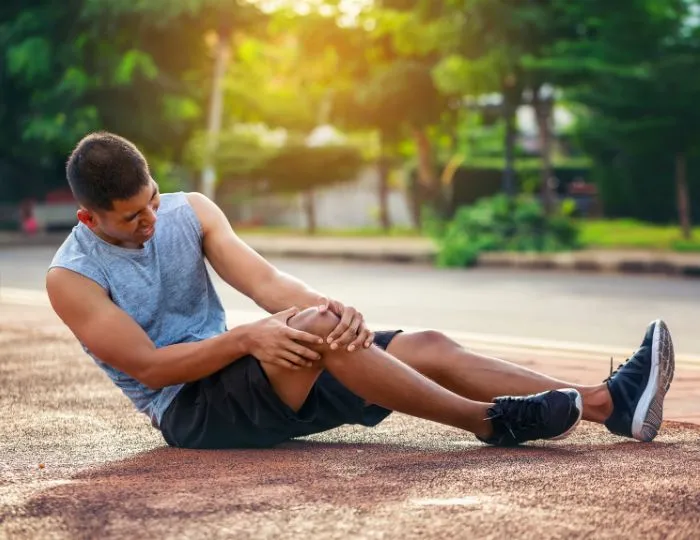
A sudden popping sensation in the knee during a pivot, jump landing, or tackle followed by immediate swelling, pain, and instability is the hallmark presentation of an ACL tear.
A sharp pain along the inner or outer knee joint line, locking, clicking, or catching with movement, and swelling that develops over hours are characteristic signs of a meniscus injury. Both injuries demand prompt specialist evaluation to prevent long-term joint damage.
(24×7 Emergency Care)
Our Approach
(24×7 Emergency Care)
Our Approach In Managing Sports Injuries (ACL, Meniscus)
Speed. Precision. Back in the Game.
At Shree Hospitals, we combine cutting-edge sports medicine with advanced arthroscopic surgical expertise to manage ACL tears and meniscus injuries in Mumbai at every level of severity.
Our multidisciplinary sports injury team comprising orthopaedic knee surgeons, sports medicine physicians, and certified sports physiotherapists treats each athlete as an individual, considering not just the injury itself but the sport, position, competitive level, and functional goals that define what full recovery means for that person.
When a patient presents with a suspected knee ligament injury or meniscus tear, our sports medicine specialists perform an immediate on-field-style clinical assessment alongside high-resolution MRI imaging.
This combination allows us to distinguish between an isolated ACL tear, a combined ACL and meniscus injury, a multi-ligament knee dislocation, or a purely cartilaginous meniscal lesion each of which has a fundamentally different treatment pathway and recovery timeline.
- High-resolution 1.5T MRI of the knee for ACL, meniscus, cartilage, and collateral ligament assessment
- Lachman test, anterior drawer, and pivot shift examination for ACL integrity grading
- McMurray, Thessaly, and joint line tenderness testing for meniscal pathology
- Varus and valgus stress testing for collateral ligament involvement
- Standing long-leg alignment X-rays for associated varus or valgus malalignment
- KT-1000 arthrometer measurement for objective ACL laxity quantification
Timely assessment and appropriate ACL tear treatment and meniscal injury management can help address knee instability and support joint function. Treatment recommendations depend on the type and severity of the injury, the patient's activity level and clinical assessment.
- Patient-specific treatment plans based on injury pattern, age, sport, and activity level
- Anatomic ACL reconstruction using gold-standard graft options
- Meniscus preservation as the primary surgical philosophy repair over removal
- Sport-specific rehabilitation with objective return-to-play criteria
- Comprehensive follow-up including functional movement screening and MRI at 6 months
Our sports injury team treats athletes from school level to national representation with the same standards of care applied to every patient, regardless of background.
1. Advanced Sports Injury Diagnosis & Knee Assessment
Accurate diagnosis is the foundation of every successful sports injury outcome. Not all knee injuries are the same, and the difference between an isolated ACL tear, a combined ACL-meniscus injury, or a multi-ligament disruption determines the entire treatment strategy.
- 1.5T MRI knee with dedicated sports injury protocol — visualising ACL fibre disruption, meniscal tear pattern, bone bruise, cartilage status, and collateral ligament integrity
- MRI arthrogram for complex chondral (cartilage) and subtle meniscal root tears
- Weight-bearing standing X-rays to assess joint space and limb alignment
- KT-1000 arthrometer testing for objective, reproducible anterior tibial translation measurement
- Pivot shift grading under examination under anaesthesia (EUA) at the time of surgery
- KOOS (Knee injury and Osteoarthritis Outcome Score) and IKDC scoring for functional baseline documentation
- Functional movement screening — landing mechanics, single-leg squat, and neuromuscular control assessment
This precise, multi-modal diagnostic approach eliminates ambiguity and ensures that every surgical plan is based on complete, accurate anatomical and functional data.
2. Non-Surgical Sports Injury Management
Not every ACL tear or meniscus injury requires surgery. For partial ACL tears, meniscal contusions, isolated low-grade collateral ligament injuries, and carefully selected complete ACL tears in older or low-demand patients, structured non-surgical management can achieve satisfactory outcomes.
- RICE Protocol & Early Swelling Management — Rest, Ice, Compression, and Elevation in the first 48–72 hours to control acute haemarthrosis and reduce joint inflammation.
- Crutches & Functional Bracing — Off-loading the injured knee while maintaining mobility; customised hinged knee braces for collateral ligament injuries.
- Physiotherapy & Neuromuscular Rehabilitation — Progressive quadriceps and hamstring strengthening, proprioceptive retraining, and dynamic knee stabilisation exercises — the cornerstone of conservative ACL management.
- Platelet-Rich Plasma (PRP) Injections — Autologous biologic therapy to accelerate soft tissue healing in partial ACL tears, meniscal contusions, and associated cartilage injuries.
- Hyaluronic Acid Injections — For associated chondral softening or early degenerative change in older athletes with meniscal pathology.
- Activity Modification & Sport-Specific Load Management — Gradual return-to-sport progression under physiotherapist supervision, with objective functional testing before clearance.
Conservative management is monitored with clinical reassessment and repeat MRI at 3 months. Patients with persistent instability, recurrent swelling, or functional limitation despite adequate rehabilitation are referred for surgical evaluation.
Conservative management is reassessed at 6–8 weeks. Persistent instability, ongoing pain, or failed non-surgical treatment after 3 months are indicators for surgical evaluation.
3. Arthroscopic ACL Reconstruction
ACL reconstruction is the gold standard treatment for complete ACL tears in active patients who wish to return to pivoting, cutting, or contact sports.
Our surgeons perform anatomic, single-bundle and double-bundle reconstructions using the graft options best suited to each patient's anatomy, age, and sport.
Graft Options:
- Hamstring Tendon Autograft (STG — Semitendinosus & Gracilis) — The most commonly used graft worldwide. Harvested from the patient's own hamstring tendons, quadrupled and fixed with adjustable cortical buttons. Minimal donor site morbidity and excellent long-term outcomes.
- Bone-Patellar Tendon-Bone (BPTB) Autograft — The historic gold standard, particularly favoured for high-level contact athletes. Bone-to-bone healing provides the fastest fixation strength and the lowest re-tear rate.
- Quadriceps Tendon Autograft — Increasingly popular for revision ACL surgery and patients with large grafts required. Avoids hamstring or patellar tendon harvest in cases where these are compromised.
- Allograft (Donor Tendon)—Used selectively in older, lower-demand patients or multi-ligament reconstructions where autograft tissue is insufficient.
Surgical Technique:
- Anatomic tunnel placement using the native ACL footprint as reference—restoring the ACL's natural oblique orientation for rotational stability
- All-inside technique for minimal tibial bone loss
- Double-bundle reconstruction (anteromedial + posterolateral bundle) for high-level athletes requiring maximum rotational control
- Concurrent lateral extra-articular tenodesis (LET) or anterolateral ligament (ALL) reconstruction for high-grade pivot shift — significantly reduces re-tear risk in young athletes returning to sport
Combined Procedures (where indicated):
- Simultaneous meniscus repair during ACL reconstruction is strongly recommended, as meniscal preservation reduces long-term osteoarthritis risk
- Medial or lateral collateral ligament repair for multi-ligament knee injuries
- Microfracture or cartilage restoration procedures for associated chondral lesions
All ACL reconstructions at Shree Hospitals use intraoperative fluoroscopy and arthroscopic guidance to confirm anatomic tunnel placement before graft fixation.
4. Arthroscopic Meniscus Surgery (Repair & Meniscectomy)
The meniscus is not just a shock absorber; it is a critical load-sharing and joint-stabilising structure. Preserving as much meniscal tissue as possible is our primary surgical philosophy, because every millimetre of meniscus lost accelerates cartilage wear.
Meniscus Repair (Preservation):
- All-Inside Meniscal Repair—Suture-based devices (FasT-Fix, Meniscal Cinch) are inserted arthroscopically to approximate and secure the torn meniscal edges. No incisions required. Indicated for peripheral, vascular (red-red and red-white zone) tears — particularly in young patients and when performed simultaneously with ACL reconstruction.
- Inside-Out Meniscal Repair — Sutures are passed arthroscopically from inside the joint and tied over the capsule through a small accessory incision. Used for larger, complex posterior horn tears.
- Outside-In Repair — For anterior horn tears. Sutures are passed from outside-in and tied arthroscopically.
Repaired menisci require 4–6 months for healing — during which weight-bearing and range of motion are carefully restricted according to repair zone and technique.
Partial Meniscectomy (When Repair is Not Possible):
- For degenerative or complex tears in the avascular zone that cannot be reliably repaired, the minimum amount of unstable meniscal tissue is resected arthroscopically, preserving the peripheral rim
- Preserving even a small rim of meniscal tissue maintains load distribution and delays joint degeneration
- Partial meniscectomy patients are typically mobilised the same day and return to sport in 4–8 weeks
Meniscal Root Repair:
- Meniscal root tears — equivalent biomechanically to a total meniscectomy — are repaired using trans-tibial pull-through suture technique to restore hoop stress and prevent rapid joint-space narrowing
Meniscal Allograft Transplantation:
- For patients who have undergone prior total or near-total meniscectomy and are developing medial or lateral compartment pain and early degeneration, a size-matched cadaveric meniscus allograft is transplanted arthroscopically to restore joint protection
5. Sports Rehabilitation & Return to Play
ACL reconstruction and meniscus surgery are not complete until the athlete has passed objective criteria for return to sport — not just a calendar date. Our sports rehabilitation programme is criteria-based, progressive, and sport-specific.
ACL Reconstruction Rehabilitation:
- Phase 1 (0–2 weeks): Swelling control, quad activation, full knee extension, partial weight-bearing
- Phase 2 (2–6 weeks): Full weight-bearing, stationary cycling, closed-chain strengthening
- Phase 3 (6–12 weeks): Running progression begins, single-leg balance, proprioception training
- Phase 4 (3–6 months): Sport-specific agility, change of direction, jumping and landing mechanics
- Phase 5 (6–9 months): Return-to-sport testing — limb symmetry index >90%, psychological readiness, sport-specific clearance
- Return to full contact training: typically 9–12 months post-surgery
Meniscus Repair Rehabilitation:
- 0–4 weeks: Non-weight-bearing, passive range-of-motion only
- 4–8 weeks: Partial weight-bearing, stationary cycling with low resistance
- 8–16 weeks: Full weight-bearing, progressive strengthening
- 4–6 months: Return to running and sport-specific training
- 5–6 months: Return to full sport
Objective Return-to-Play Criteria:
- Limb Symmetry Index (LSI) >90% on quadriceps and hamstring isokinetic testing
- Single-leg hop test symmetry >90%
- Y-Balance Test within normal limits
- Psychological readiness assessment (ACL-RSI score)
- Satisfactory pivot shift elimination on clinical examination
Our sports physiotherapy team uses validated functional testing protocols, not just time, to determine when an athlete is genuinely ready to return, minimising re-injury risk.
How to Identify Sports Injuries (ACL, Meniscus)?
Identifying an ACL tear or meniscus injury promptly after a sports incident is critical continuing to play on an undiagnosed knee injury significantly worsens the damage and complicates surgical repair.
The classic presentation of an ACL tear is a non-contact pivoting or hyperextension mechanism the athlete feels or hears a distinct "pop," the knee immediately swells within 1–2 hours (haemarthrosis), and the joint feels unstable or "gives way" with any lateral movement.
A meniscus injury typically causes joint-line pain, delayed swelling, and mechanical symptoms such as locking or clicking.
Key warning signs to watch for:
- Audible "pop" at the moment of injury — the most specific symptom of an ACL rupture; reported in up to 70% of complete tears
- Immediate, rapid knee swelling (within 2 hours) — indicates haemarthrosis from ACL or vascular meniscal tear
- Knee instability or "giving way" — the sensation that the knee is about to buckle, particularly on stairs, uneven surfaces, or lateral movements
- Joint-line pain along the inner (medial) or outer (lateral) knee edge — the hallmark of meniscal pathology
- Locked knee — inability to fully straighten the knee due to a displaced bucket-handle meniscal tear obstructing the joint
- Clicking, catching, or clunking with knee flexion and extension movements
- Delayed swelling (developing over 12–24 hours) — more typical of meniscal tears without vascular involvement
- Pain on squatting, twisting, or deep knee bending — loading the torn meniscal tissue
If you experience a popping injury with immediate swelling and instability, or persistent joint-line pain with mechanical symptoms, do not return to play. Seek specialist evaluation immediately; continuing to play risks converting a repairable meniscal tear into an irreparable one.
Important FAQs: Sports Injuries (ACL, Meniscus)
What exactly is an ACL tear and why does it happen?
The Anterior Cruciate Ligament (ACL) is one of the four major ligaments of the knee, running diagonally through the joint to control forward tibial movement and rotational stability. ACL tears most commonly occur during non-contact sports movements pivoting, sudden deceleration, jumping and landing with the knee in valgus particularly in football, cricket, basketball, badminton, and skiing. The ligament can also tear in contact injuries. Complete tears (Grade III) do not heal on their own, as the torn ends retract and cannot reappose within the synovial fluid-filled joint environment.
What is a meniscus injury and how does it differ from an ACL tear?
The menisci are two C-shaped fibrocartilage discs (medial and lateral) that sit between the femur and tibia, acting as shock absorbers, load distributors, and joint stabilisers. Meniscal tears occur through a twisting mechanism on a weight-bearing knee often in the same incident as an ACL tear or through gradual degeneration in older patients. Unlike ACL tears, which cause instability, meniscal tears cause mechanical symptoms: joint-line pain, swelling, locking, and catching. Peripheral tears in the vascular zone are repairable; central tears in the avascular zone typically require partial removal.
How are ACL and meniscus injuries diagnosed at the hospital?
Diagnosis combines a structured clinical examination — Lachman test, anterior drawer, and pivot shift for the ACL; McMurray test and joint-line palpation for the meniscus with high-resolution 3T MRI of the knee. MRI identifies the ACL tear grade, meniscal tear pattern, bone bruising, cartilage status, and any collateral ligament involvement, providing the complete picture needed for surgical planning. Objective ACL laxity is measured with a KT-1000 arthrometer.
Can ACL or meniscus injuries heal without surgery?
Partial ACL tears (Grade I & II) in low-demand patients can often be managed with structured physiotherapy to develop compensatory dynamic stability. However, complete ACL tears in active patients who wish to return to pivoting sports almost universally require reconstruction — the torn ligament will not heal spontaneously. For meniscal injuries, peripheral tears in the vascular (red-red) zone can potentially heal with conservative management or are repaired surgically. Central, avascular zone tears do not heal and are treated with partial meniscectomy when symptomatic.
What is ACL reconstruction surgery and what graft will I need?
ACL reconstruction involves removing the torn ligament and replacing it with a tendon graft that replicates the ACL's anatomy and function. The three main autograft options are: hamstring tendon (most commonly used minimal donor site morbidity), patellar tendon bone-to-bone (fastest fixation preferred in contact athletes), and quadriceps tendon (increasingly favoured for revision surgery and larger graft requirements). Graft selection is discussed with each patient based on their sport, age, anatomy, and prior surgery history. The procedure is arthroscopic, takes 60–90 minutes, and most patients go home the same day.
How long does recovery take after ACL surgery, and when can I return to sport?
ACL graft ligamentisation the biological process by which the tendon transforms into a functioning ligament takes 9–12 months. Return to training typically begins at 6 months and return to full contact sport at 9–12 months, guided by objective functional testing (limb symmetry index, hop tests, pivot shift re-examination). Rushing this timeline is the primary cause of ACL re-tears. Meniscus repair patients are non-weight-bearing for 4–6 weeks and typically return to sport at 5–6 months.
When should I see a sports medicine specialist after a knee injury?
See a specialist immediately if your knee swells rapidly after a sports incident (within 1–2 hours), you felt or heard a pop, the knee feels unstable or gives way, you cannot straighten the knee fully (locked knee), or you have persistent joint-line pain after a twisting injury. Do not return to play without specialist clearance continuing to play with an undiagnosed ACL tear or meniscal tear accelerates cartilage damage and converts a clean, repairable injury into a complex one.
Treatments for Sports Injuries (ACL, Meniscus) at Shree Hospitals
We provide comprehensive treatment for sports injuries, including ACL and meniscus injuries, with accurate diagnosis, personalised treatment plans, advanced arthroscopic surgery, structured rehabilitation, physiotherapy, and follow-up care to restore knee stability, strength, mobility, and help you safely return to sports and daily activities.
RICE Protocol & Functional Bracing
Immediate rest, ice, compression, and elevation to control acute swelling and haemarthrosis, combined with a customised hinged knee brace to protect the injured ligament during early recovery.
Physiotherapy & Neuromuscular Rehabilitation
Structured progressive rehabilitation targeting quadriceps strength, hamstring co-contraction, proprioception, and dynamic knee stability essential for both conservative management and post-surgical recovery.
PRP (Platelet-Rich Plasma) Injections
Biologic growth factor injections derived from the patient's own blood to accelerate healing in partial ACL tears, meniscal contusions, and associated cartilage lesions.
Knee Arthroscopy
Minimally invasive diagnostic and therapeutic keyhole surgery the platform for all ACL and meniscus surgical procedures, using high-definition 4K cameras through sub-centimetre portals.
ACL Reconstruction (Hamstring / BPTB / Quad Tendon)
Anatomic single or double-bundle ACL reconstruction using patient-selected autograft restoring knee stability and rotational control. Combined with LET or ALL reconstruction for high-grade pivot shift.
Arthroscopic Meniscus Repair
All-inside, inside-out, or outside-in suture repair of repairable meniscal tears preserving the meniscus and its load-distributing function. Strongly preferred over removal in all eligible tears.
Multi-Ligament Knee Reconstruction
Simultaneous reconstruction of two or more torn knee ligaments (ACL + PCL, ACL + MCL, etc.) for high-energy knee dislocations using a combination of autograft, allograft, and staged surgical approaches.
Orthopedic Surgeon in Mumbai
Dr. Amit Pandey
Consultant Orthopaedics
Dr. Neeraj Mishra
Consultant Orthopaedics

Dr. Tapan Shah
Consultant physiotherapist

Dr. Chirag Dalal
Consultant Orthopedic Surgeon

For Appointment/Query
1800-268-4000

Tele consultation/2nd Opinion
Schedule Consultation

News & Updates
Shree Hospitals Opens Its Doors to Comprehensive Multispeciality Healthcare in Mumbai
Shree Hospitals Strengthens Emergency and Critical Care Services With 24/7 Support


