 Ghatkopar (East), Mumbai)

Home > Orthopaedics > Knee Osteoarthritis
Knee Osteoarthritis (Knee Joint Degeneration)
At Shree Hospitals, we combine precise orthopaedic assessment with advanced joint care to reduce cartilage damage and improve long-term mobility. Our specialists use evidence-based diagnostics and targeted interventions from minimally invasive therapies to robotic-assisted knee replacement because early treatment determines how well you recover.
Persistent knee pain, morning stiffness, swelling, a grinding or clicking sensation in the joint, and difficulty bending or straightening the knee are common signs of knee osteoarthritis. Timely care prevents further joint deterioration.
(24×7 Emergency Care)

Our Approach
(24×7 Emergency Care)
Our Approach In Managing Knee Osteoarthritis
Spirit. Precision. Pain-Free Living
At Shree Hospitals, we combine patient-centred care with advanced orthopaedic expertise to treat knee osteoarthritis in Mumbai. Our multidisciplinary team, comprising senior orthopaedic surgeons, sports medicine specialists, and physiotherapy experts, conducts a thorough evaluation of your knee joint, identifies the stage of degenerative joint disease, and curates a personalised treatment plan aimed at restoring mobility and relieving chronic pain.
When a patient with knee osteoarthritis arrives at our centre, our orthopaedic team promptly assesses the degree of knee cartilage damage through high-resolution MRI and weight-bearing X-rays. This enables accurate staging from mild to severe osteoarthritis, guiding our approach from non-surgical management to advanced surgical intervention, ensuring the right treatment at the right time.
- Weight-bearing X-rays & MRI for precise joint assessment
- Blood tests to rule out inflammatory or rheumatoid arthritis
- Gait analysis and functional mobility evaluation
- Comprehensive patient history and lifestyle assessment
- BMI and musculoskeletal risk profiling
Early intervention in knee osteoarthritis significantly slows progression and improves long-term outcomes (American College of Rheumatology, 2023). We remain committed to evidence-based protocols and the latest advances in knee pain treatment to deliver optimal results for every patient.
- Personalised care plans tailored to your stage of arthritis
- Minimally invasive procedures with faster recovery times
- Comprehensive rehabilitation support post-procedure
- Coordinated follow-ups to monitor progress and adjust treatment
Our 24/7 orthopaedic care team is available at every step to guide, reassure, and ensure your recovery stays on track.
1. Advanced Diagnostic Imaging & Biomechanical Assessment
Accurate diagnosis is the cornerstone of effective knee osteoarthritis management. We use a combination of digital X-rays, 3D MRI, and diagnostic ultrasound to evaluate cartilage loss, bone spur formation, and the integrity of surrounding ligaments and menisci.
- 3D MRI to visualise cartilage, meniscus, and ligament health
- Bilateral weight-bearing X-rays for accurate joint space measurement
- Bone density scan (DEXA) for patients at osteoporosis risk
- KOOS (Knee Injury and Osteoarthritis Outcome Score) functional testing
- Gait analysis to assess biomechanical stress on the joint
This comprehensive diagnostic workup ensures no underlying pathology is missed, allowing for a treatment plan that is both targeted and effective.
2. Non-Surgical Therapies & Injection-Based Treatments
For mild to moderate joint inflammation, our specialists prioritise evidence-based non-surgical options before considering surgery maximising patient comfort and functional recovery without the risks of an operation.
- Hyaluronic Acid (Viscosupplementation) Injections — Restores the knee joint's natural lubrication, reducing painful bone-on-bone friction and improving mobility.
- Platelet-Rich Plasma (PRP) Therapy — Growth factors extracted from your own blood are injected into the joint to stimulate cartilage repair and reduce inflammation.
- Corticosteroid Injections — Rapid anti-inflammatory relief for acute flare-ups and persistent swelling.
Custom Knee Bracing & Orthotics — Offloads stress from the damaged compartment, reducing pain during daily activities. - Physiotherapy & Exercise Therapy — Structured strengthening of quadriceps, hamstrings, and hip stabilisers to reduce joint load and improve function.
These therapies are often combined for a synergistic effect, particularly in patients who are not yet candidates for surgery.
3. Arthroscopic Knee Surgery
Where conservative treatments provide inadequate relief, arthroscopic (keyhole) surgery offers a minimally invasive option with significantly shorter recovery compared to open procedures. Our surgeons use high-definition arthroscopic cameras for millimetre-level precision.
- Arthroscopic debridement to remove loose cartilage fragments and bone spurs
- Meniscus repair or partial meniscectomy for co-existing meniscal tears
- Microfracture surgery to stimulate new cartilage growth in focal defects
- Chondroplasty for smoothing damaged cartilage surfaces
Our team has performed over 2,000 arthroscopic knee procedures with an excellent safety record and high patient satisfaction.
4. Knee Replacement Surgery (Partial & Total)
For advanced knee osteoarthritis where cartilage loss is extensive and quality of life is significantly impacted knee replacement surgery remains the gold standard. We offer multiple approaches tailored to each patient's anatomy and severity.
- Partial Knee Replacement (Unicompartmental) — Resurfaces only the damaged compartment, preserving healthy bone, ligaments, and tissue. Results in a more natural-feeling knee with faster recovery.
- Total Knee Replacement (TKR) — Replaces the entire knee joint surface with high-grade prosthetic implants. Indicated for end-stage osteoarthritis affecting multiple compartments.
- Computer-Navigated & Robotic-Assisted TKR — Sub-millimetre implant alignment for optimal biomechanics and reduced long-term revision risk.
- Minimally Invasive TKR — Smaller incisions, less blood loss, faster rehabilitation, and a shorter hospital stay.
Each procedure is performed under enhanced recovery protocols, including nerve blocks and multimodal pain management, to minimise post-operative discomfort and accelerate mobilisation.
5. Long-Term Rehabilitation & Follow-Up Care
Recovery from knee osteoarthritis whether managed conservatively or surgically requires a structured, long-term rehabilitation programme designed to restore full strength, mobility, and confidence.
- Supervised physiotherapy commencing within 24 hours of surgery
- Hydrotherapy and aquatic exercise for low-impact joint mobilisation
- Personalised home exercise programme with regular progress reviews
- Nutritional guidance and weight management support to reduce ongoing joint load
- Annual follow-up imaging to monitor implant integrity and disease progression
- Lifestyle coaching and fall-prevention strategies, particularly for older patients
Our rehabilitation specialists work closely with your orthopaedic surgeon to ensure a seamless transition from hospital to home and from pain to full function.
Happy Patients & Their Case Stories
From diagnosis to discharge — a 58-year-old homemaker with Grade 3 knee osteoarthritis underwent robotic-assisted TKR at Shree Hospitals. She resumed full daily activities and climbing stairs independently within 6 weeks.
From diagnosis to discharge — a 65-year-old retired professional with bilateral end-stage knee osteoarthritis had staged bilateral TKR performed 8 weeks apart. He now walks 4 km daily without pain or aids.
How To Identify Knee Osteoarthritis?
Identifying knee osteoarthritis early is critical to preventing accelerated joint deterioration and avoiding the need for surgery.
Common symptoms of knee osteoarthritis include persistent, deep joint pain that intensifies during or after activity, particularly when climbing stairs, squatting, kneeling, or rising from a seated position.
Other key warning signs to watch for:
- Morning stiffness lasting more than 30 minutes that eases with movement
- Swelling or warmth around the knee joint, indicating active inflammation
- Crepitus — a grinding, clicking, or popping sensation when bending or straightening the knee
- Reduced range of motion — difficulty fully extending or flexing the knee
- Visible joint deformity — progressive bow-legged or knock-kneed alignment changes
- Weakness or giving way when bearing weight or walking on uneven surfaces
- Pain at rest in more advanced stages, including at night
If you or a family member notices any combination of these signs, seek orthopaedic evaluation promptly. Early-stage osteoarthritis is significantly more manageable — and more reversible — than advanced disease.
Important FAQs Knee Osteoarthritis
What are the early warning signs of knee osteoarthritis?
Early signs include persistent knee pain that worsens with activity, morning stiffness (especially within the first hour of waking), swelling around the knee, a grinding or clicking sensation during movement (crepitus), and gradual difficulty fully bending or straightening the knee. Many patients first notice the pain when climbing stairs or rising from a chair.
What should I do if I suspect I have knee osteoarthritis?
Consult an orthopaedic specialist as early as possible. Avoid high-impact activities that aggravate pain, apply ice to manage swelling, and use over-the-counter pain relief only as directed. Self-medicating long-term without a proper diagnosis can mask worsening damage. An early assessment significantly improves treatment outcomes.
How is knee osteoarthritis diagnosed at the hospital?
Diagnosis involves a detailed physical examination, functional mobility assessment, weight-bearing X-rays to measure joint space narrowing, and — where needed — an MRI for detailed cartilage and soft tissue evaluation. Blood tests may also be ordered to exclude rheumatoid arthritis or other inflammatory joint conditions.
What treatments are available for knee osteoarthritis?
Treatment options span a wide spectrum: physiotherapy, PRP injections, hyaluronic acid injections, and bracing for early to moderate stages; arthroscopic surgery for intermediate cases; and partial or total knee replacement for advanced, end-stage osteoarthritis. The right treatment depends on your age, activity level, overall health, and the severity of joint damage.
Can knee osteoarthritis be treated without surgery?
Yes — particularly in early and moderate stages. Many patients achieve substantial pain relief and improved function through physiotherapy, weight management, injection therapies, and bracing. Surgery is considered only when conservative measures no longer provide adequate relief and quality of life is significantly compromised.
How long does recovery take after knee replacement surgery?
Most patients are walking — with assistance — within 24 hours of surgery. You can typically resume daily activities within 4–6 weeks. Full recovery, including return to low-impact exercise, takes approximately 3 months. Adherence to your physiotherapy programme is the single most important factor in recovery speed
When should I see an orthopaedic specialist for knee pain?
Seek specialist evaluation if your knee pain persists beyond 2 weeks, interferes with daily activities, is accompanied by swelling, warmth, or instability, or if you notice progressive changes in your walking pattern. Early diagnosis prevents further cartilage damage and keeps more treatment options open.
Treatments For Knee Osteoarthritis at
Shree Hospitals
We provide comprehensive knee osteoarthritis treatment, including medications, physiotherapy, PRP injections, viscosupplementation, arthroscopic procedures, and advanced knee replacement surgery, with personalised rehabilitation to relieve pain and restore mobility.
Top Orthopedic Specialists in Mumbai

Dr. Tapan Shah
Physiotherapist

Dr. Chirag Dalal
Orthopedic Arthroscopy & Trauma Surgeon
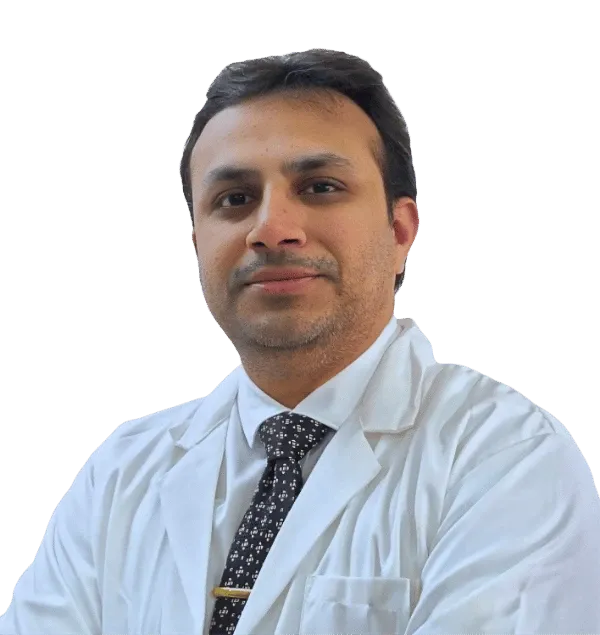
Dr. Mayur Rabhadiya
Robotic Knee & Hip Replacement Surgeon

Dr. Mandar Agashe
Paediatric Orthopedics
Our Teams at Shree Hospitals is board-certified and has an average of 15+ years of clinical experience

For Appointment/Query
1800-268-4000

Tele consultation/2nd Opinion
Schedule Consultation

News & Updates
Shree Hospitals is the first to perform robotic endo surgery.
Shree Hospitals Introduces Advanced Robotic Surgery for Better Patient Care
Shree Hospitals Expands Advanced Surgical Care With Latest Medical Technology


